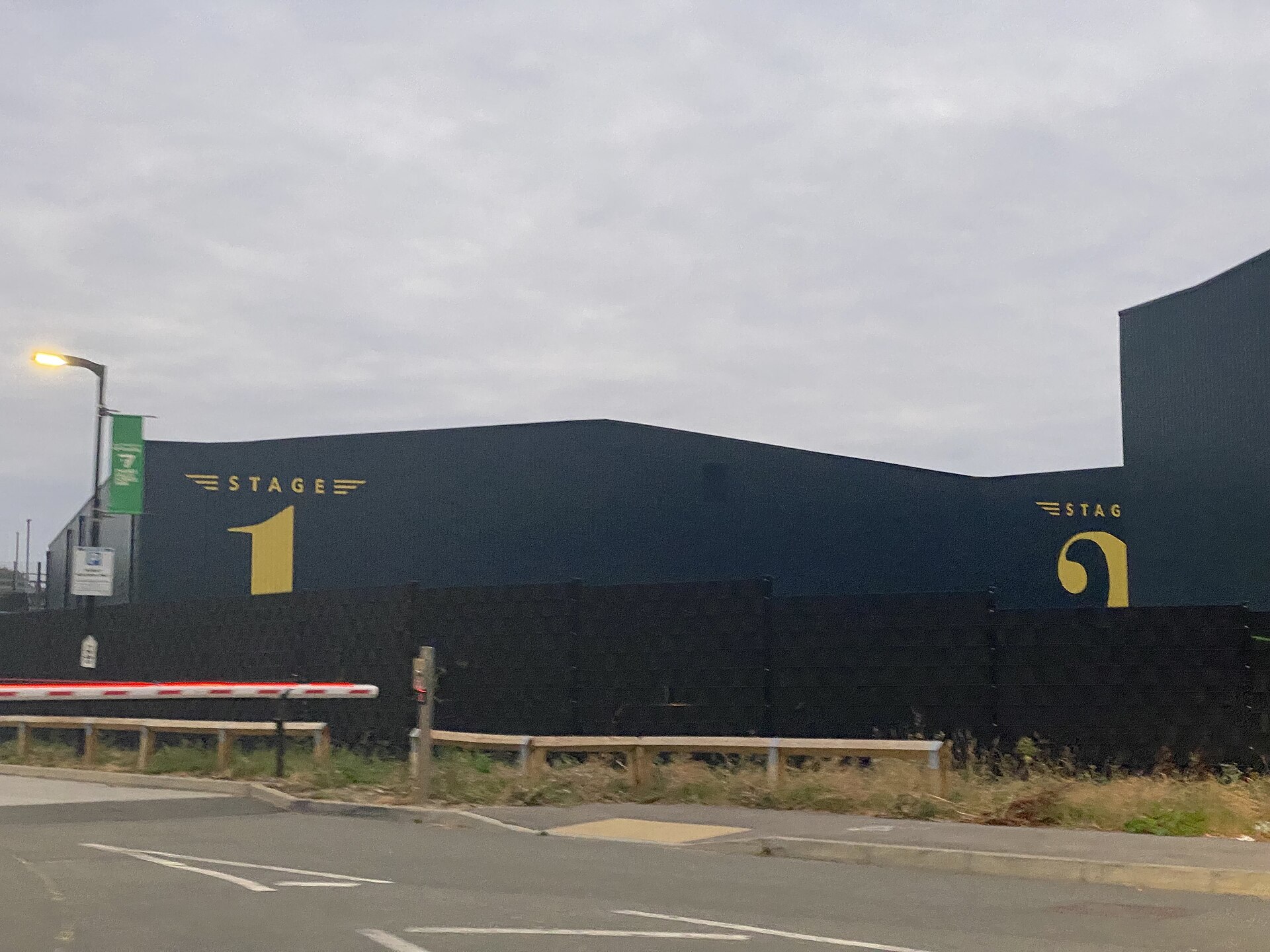
HOLLYWOOD — The talk started, as this kind of talk usually does, on a lunch break: a grip heard from an electrician who heard from someone in the front office that Stage 7, one of the oldest soundstages on its lot, might not be a soundstage much longer.
For weeks the rumor has moved through the neighborhood’s film workers faster than any official word — that the studio is quietly exploring whether the aging stage and the land around it might be worth more as something other than a place to make movies. No redevelopment application has been filed with the city. The studio, asked directly, declined to comment. And yet the story will not die, because in a year this lean, it is exactly the story people are braced to hear.
“When work is good, nobody starts these rumors, because nobody’s scared,” said Lorne Fitzwilliam, a set electrician who has worked the lot on and off for two decades. “Right now everybody’s scared. So every closed door looks like a demolition. Maybe it’s nothing. But we’ve watched stages come down before, and they never announce it until it’s decided.”
Stage 7 carries the kind of history that preservationists mobilize around. Films that people can name were shot inside it; the building predates most of what surrounds it. That pedigree cuts two ways: it makes the stage a candidate for landmark protection, and it makes the land beneath it valuable enough that owners periodically wonder whether history is paying its way.
“You cannot replace a stage like that, and everyone involved knows it, which is precisely why the quiet is worth worrying about,” said Ottilie Vasquez, who advocates for preserving the neighborhood’s studio architecture. “We are not opposing anything, because officially there is nothing to oppose. We are just asking, loudly, that if there is a plan, we hear about it before the wrecking permit, not after.”
The unease sits inside a larger anxiety. Production in the neighborhood has slowed for more than a year, crews have left for work in other states and countries, and the people who remain read every development as a verdict on whether Hollywood still intends to be a place where things are physically made. A rumor about one stage becomes a referendum on all of them.
Some in the industry have begun floating remedies, among them an idea gaining quiet traction: that the city waive or slash the fees it charges to film on public streets, as a small way to lure shoots back before more stages go dark. The proposal is early and unofficial, more grievance than policy, but it is being said aloud in places it was not being said a year ago.
For now there is only the rumor, the studio’s silence, and a lot of people whose livelihoods hang on which turns out to be true. Fitzwilliam said he plans to keep showing up to work and keep his ear to the ground. Asked what he thought would actually happen to Stage 7, he considered it for a while, then said he had learned not to guess out loud, because on this lot the guesses have a way of coming true.