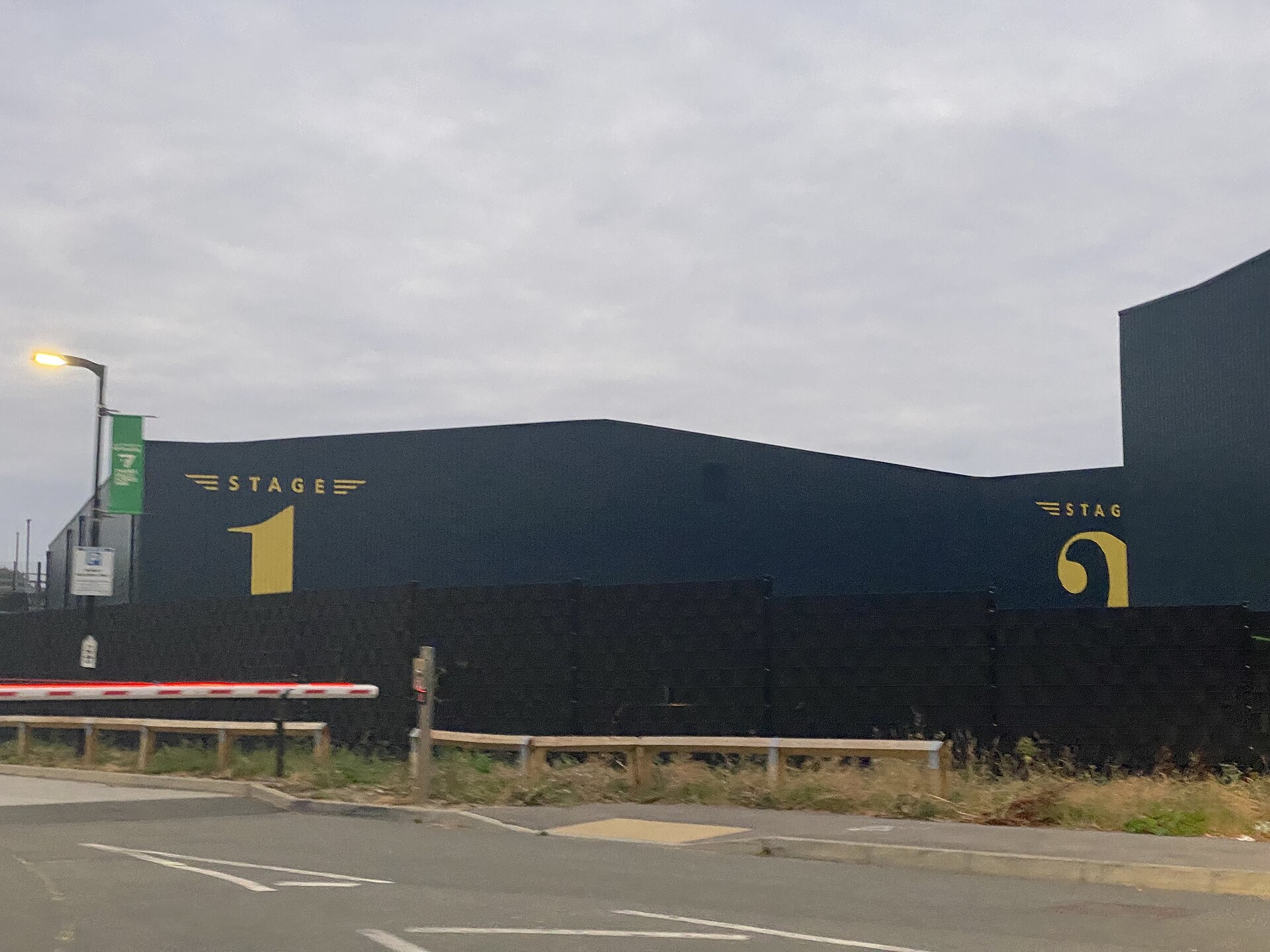
HOLLYWOOD — The commercial production house that has occupied Stage 7 since the spring confirmed this week that its shoot wraps on August 28. Behind that date, the stage’s booking calendar shows nothing at all — no production, no hold, not a penciled week — as far forward as anyone with access to it can see.
An empty calendar is not, on most lots and in most years, a story. Stages breathe; tenants wrap; the next one loads in. But three facts sit beside this particular gap, and the people who work the eastern edge of the lot arranged them in order before lunch. Stage 7 has not sat dark for longer than two weeks at any point in the past several years. In each of the last three years, its autumn was fully booked by Labor Day. And at ten in the morning on September 17, the Cultural Heritage Commission will hear the application to make it a Historic-Cultural Monument.
The studio’s account of the gap is that there is nothing to account for. Production in this city is having a genuinely thin year — soundstage vacancy across the county is at levels operators say they have not seen in a decade, and this paper has spent the summer writing about idle location scouts and post-houses cutting shifts. In that climate, the studio says, a quiet September is a quiet September. Booking inquiries for the stage, a spokesman said, “are being handled in the normal course.”
Every word of that may be true. None of it addresses the arithmetic the crews performed on their own. The case for Stage 7 has never been sentimental; the whole argument, made at every meeting since the landmark application was filed in July, is that a 1928 building with a column-free span still earns its keep in 2026. An empty stage, five weeks before the hearing, is that argument with a hole in it.
“Continuous booking is the argument. I said that, and I stand by it,” said the rigging gaffer who has worked the stage on and off since 2004 and who still asks not to be named, for the same reason as before. “The argument develops a hole starting August 29. I am not saying anybody put the hole there. I am saying it is a funny month for a hole.”
Henri Baptiste, a scenic painter who first worked Stage 7 in 1987 and estimates he has painted its floor “a couple hundred times, counting repaints as separate sins,” is less careful, though not by much. “A stage that’s working has a sound. Trucks at the dock, the doors, somebody yelling about the doors,” he said. “I’ve never once heard this one quiet in August. I don’t know what quiet means. I know I don’t like learning what it sounds like now.”
Marguerite Han, the neighborhood historian whose application set the September hearing, has responded the way she responds to everything, which is by putting it in the file. She is adding the stage’s booking histories — the continuous record, year over year, that crews call the strongest thing in her case — to the materials she will present to the commission, current through whatever the calendar says on hearing day. She declines, as is her practice, to accuse anyone of anything.
“An empty calendar is a fact, and facts go in the file,” she said. “What a fact means is the commission’s business. I make it a point not to file meanings.”
The studio said in late July that it does not intend to demolish Stage 7, even as it opposes designating it; the application itself bars any quiet demolition permit while the case is pending, so nothing about the building’s immediate future turns on a dark September. What turns on it is the argument — whether the stage arrives at its hearing as a working building or an idle one.
Nobody who spoke this week claimed to know which reading is right: a soft market doing what soft markets do, or a message delivered by omission. The commercial house loads out on the 28th. The commission meets on the morning of the 17th. Between those two dates, for the first time in years, Stage 7 has nothing on its schedule but the hearing.