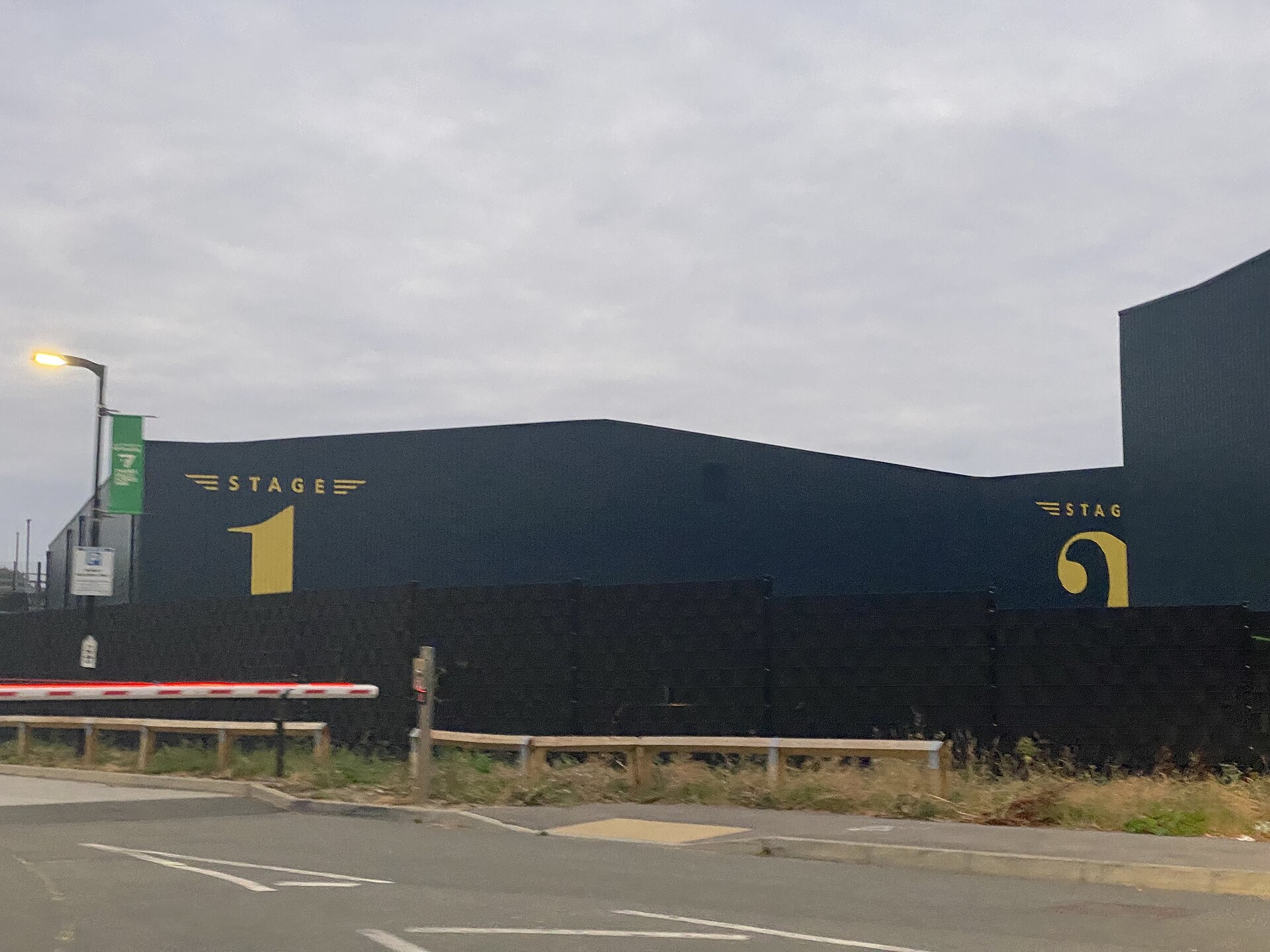
HOLLYWOOD — The September 17 hearing on Stage 7’s landmark application now has a shape. The Cultural Heritage Commission’s agenda, posted this week, allots the matter one hour: a staff report, twenty minutes for the application’s supporters, twenty for the property owner, and public comment in two-minute increments for as long as the speaker cards last.
The speaker cards are where this week’s news is.
Among the first submitted, according to two people who have seen the stack forming in Marguerite Han’s file, is that of the rigging gaffer who has worked the stage on and off since 2004 and who has appeared in this newspaper’s coverage of the campaign four times, always on the same condition: no name. A speaker card is a public document. He filled one out anyway.
Reached this week, he confirmed it, and declined — one final time, he noted — to be named in print before the hearing. “For twenty years the smart move in this business has been to say your piece and keep your name out of it, and I am not sorry. That was the correct professional judgment every single time,” he said. “But you cannot ask a commission to put a building on the record and refuse to put yourself on it. On the seventeenth they can have the name. It got to be time.”
Ms. Han’s file has also acquired what may be its strangest exhibit, courtesy of Henri Baptiste, the scenic painter who first worked Stage 7 in 1987 and estimates he has painted its floor a couple hundred times. It turns out Baptiste has been keeping evidence. For decades, at each repaint, he has saved a chip of the floor — hundreds of them by now, layered like tree rings, dated in pencil on envelopes he kept in a toolbox because, he said, “you spend your life painting things that get painted over, you start to want a receipt.”
He delivered the toolbox to Ms. Han this week. She has had the chips photographed and is adding a selection to the file as physical documentation of continuous use — each layer a production, each envelope a working year.
“I make it a point not to file meanings, so I will describe it as what it is,” Ms. Han said. “It is a continuous material record of a working stage floor from 1987 to this summer. The commission can decide what that means. I found it persuasive to hold.”
The stage itself remains on schedule to go quiet. The commercial production house that has held it all summer wraps August 28, and the booking calendar behind that date remains, as it has been since this newspaper first reported it, blank. The studio, which has said it will oppose designation while insisting it has no intention of demolishing the building, declined to preview its twenty minutes, saying through a spokesman that it “will address the commission directly.” Asked whether anything had been booked into the stage, the spokesman said inquiries continue to be handled in the normal course.
Which leaves the arithmetic where the crews left it: load-out on the 28th, the hearing on the 17th, and in between, for the first autumn anyone can document — and Baptiste can now document further back than anyone — nothing on the schedule at all.