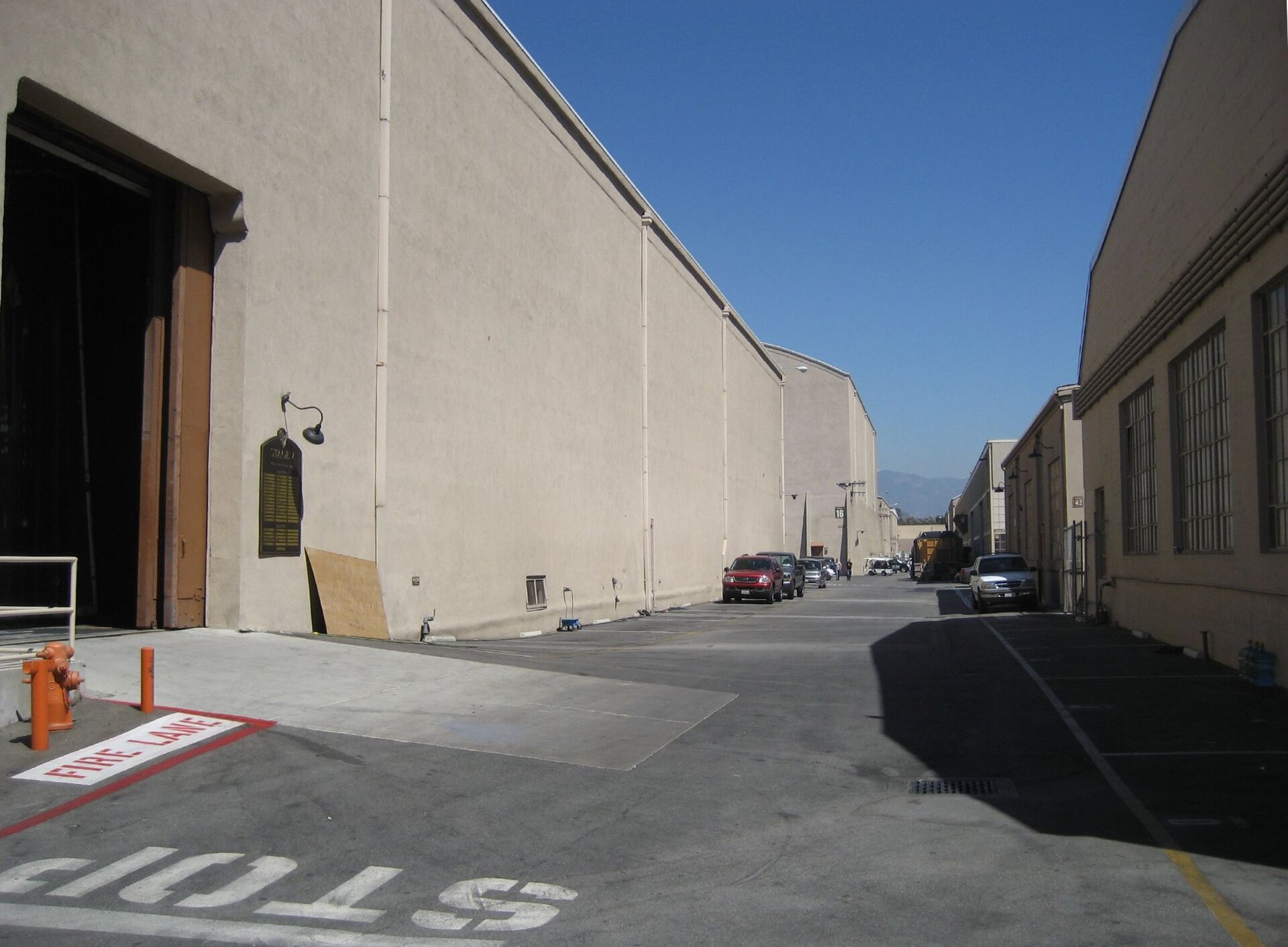
LOS ANGELES — The Cultural Heritage Commission voted 4 to 1 Thursday afternoon to recommend that Stage 7 be declared a Historic-Cultural Monument, sending the application that Marguerite Han filed in the spring to the City Council, which must act on it before a deadline in December.
The hour the agenda allotted became two and a half. The staff report took its fifteen minutes. The applicant’s side took its twenty. The property owner’s side took its twenty, and used the last of them to say something no one in the room had heard before. Then the speaker cards began, forty-seven of them, at two minutes each, and the commission’s president, Lourdes Grimaldi, let every one be read.
The rigging gaffer went eleventh.
He has worked the stage on and off since 2004 and has appeared in this newspaper’s coverage of the campaign four times on the condition that his name not. A speaker card is a public document. When the clerk called it, he walked to the lectern, gave his name — Lorne Szymanski, 61, rigging gaffer — and then gave the commission, in slightly under two minutes, the part that matters.
“I have hung lights in that building for twenty-two years,” he said. “I know every beam by which ones flex. I’m not here to tell you it’s beautiful. It isn’t. I’m here to tell you it works, it has worked every year since before I was born, and it is the last one on that lot where a crew can rig a full set in a day because the grid was built for it. You can’t build one of those now. Nobody would pay for it. That’s the whole case. Thank you.”
He sat down. He declined afterward to say anything he had not said at the lectern, on the grounds that he had said it there.
Henri Baptiste, the scenic painter who has painted the stage’s floor a couple hundred times since 1987 and saved a dated chip of it at each repaint, did not speak. His chips did. Ms. Han had a selection mounted in a shallow tray, envelope dates alongside, and the tray went down the dais from commissioner to commissioner during the staff report. President Grimaldi held it longest. She described it, before the vote, as “the only exhibit I have seen in eleven years on this commission that you can hold in your hand and read like a calendar.”
The studio’s twenty minutes were given by its attorney, Bettina Kroll, who said what the studio has said since July — it does not intend to demolish the building and it opposes designation, which she said would “impose a preservation regime on a working industrial facility whose value is precisely that it can be changed.” Then, with four minutes remaining, she said the stage had been booked: a two-week commercial shoot, in October, “the first of what we expect to be a normal fall calendar.”
It was the first booking anyone in the room, including this newspaper, had heard of since the commercial house loaded out on August 28. President Grimaldi noted it for the record and observed that the commission was “glad to hear the calendar has recovered its health in the three weeks since the hearing was noticed.” Ms. Kroll did not respond to the observation.
The dissenting commissioner argued that recommending designation for a building whose significance rests on interior continuous use, rather than architecture, was a precedent the commission had not set before and should not set on a soundstage. The majority found the argument answered by the chips.
Ms. Han, asked in the hallway what she made of the vote, made the answer she has made all year.
“I make it a point not to file meanings,” she said. “The commission voted. The council will vote. In between, the stage is booked for two weeks in October, which is two weeks more than it was booked for yesterday. I would encourage people to hold all three of those facts at once.”
The recommendation goes next to the council’s planning committee. The studio said through a spokesman that it “will review its options,” which, Ms. Kroll confirmed, include the council.
Mr. Szymanski left before the vote was taken. He had, he said, a call in the morning.