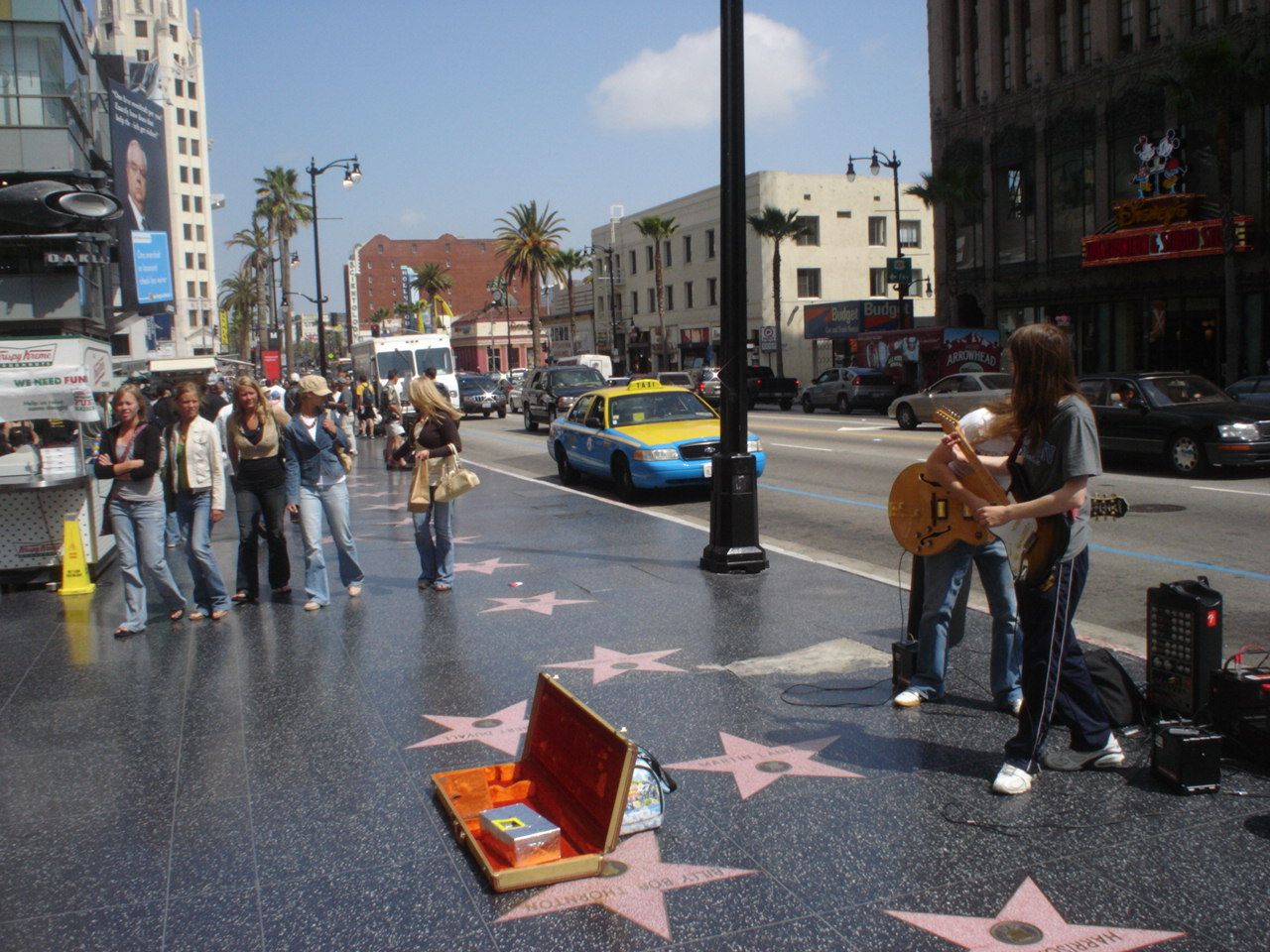
HOLLYWOOD — The third deadline for the Walk of Fame restoration passed on a Tuesday earlier this month, and the only official acknowledgment was a new sign zip-tied to the fencing: SIDEWALK CLOSED, USE OTHER SIDE.
This page does not object to the work. The terrazzo needed replacing; engineers said so in 2023, and nearly a third of the panels between La Brea and Vine were found to be beyond patching. We do not object to the method, either. Each panel is cast, cured and inlaid largely by hand, on a corridor that cannot be closed, around film shoots and star ceremonies and a tourist economy that depends on visitors being able to stand on a particular name. Fourteen months in, the crews are doing careful work in impossible conditions, and nobody who has watched them believes otherwise.
What we object to is the silence, and the shape of what the silence conceals.
A public project that misses one deadline has met a surprise. A project that misses three has a schedule problem it did not disclose, and the people paying for the difference are not the city and not the contractor. They are the merchants on the fenced blocks. A woman who has sold maps and postcards on this street for twenty-two years estimates her foot traffic falls by a quarter when the fencing reaches her frontage. She has had fencing on her frontage for most of the past year. The souvenir store near Highland that closed this month named the construction first among its reasons.
So here are the two things the neighborhood is owed, and they are not extravagant.
The first is a date, stated by a person whose name is attached to it. “By the holidays” is not a date. It is a phrase, and merchants along the corridor have begun repeating it with the tone people use for phrases. If the honest answer is March of next year, say March. A hard number the city has to defend is worth more than a soft one it can slide.
The second is the penalty clause — or an admission that there isn’t one.
This is the question that should trouble anyone who reads city contracts, and we put it plainly: we do not know whether this agreement contains a liquidated-damages provision, and after six weeks of asking, neither the bureau overseeing the project nor two council offices have produced one. Public construction contracts of this size routinely include a daily charge for finishing late, precisely because a schedule with no consequence attached is a suggestion. If such a provision exists here, the public should see it and the city should say whether it has been assessed. If it does not exist, the public should be told that, and told who decided.
There is a version of this story that is nobody’s fault. Hand-cast terrazzo is slow, the corridor is chaotic, and the estimate was optimistic. We would accept that version readily. But it is not available to a city that will not release the schedule, will not release the change orders, and will not say what the contract requires. An agency that has done nothing wrong publishes the paperwork.
The merchants’ association has asked for something else besides — a rent-relief program modeled on the one used during subway construction in the nineties. A city staffer has twice described that request as “moving through channels,” which is the sentence a request receives when it is not moving. That program deserves a decision, up or down, before the holidays this project is now promising.
Hollywood has been through this before, which is the least comforting thing in this editorial. Our own archive records a 1958 resurfacing that ran two years past schedule and prompted a columnist to suggest paving the street with something cheaper than fame. We were funnier about it then. We were also, it turns out, no better informed.
Finish the sidewalk. Then show us what late was supposed to cost.