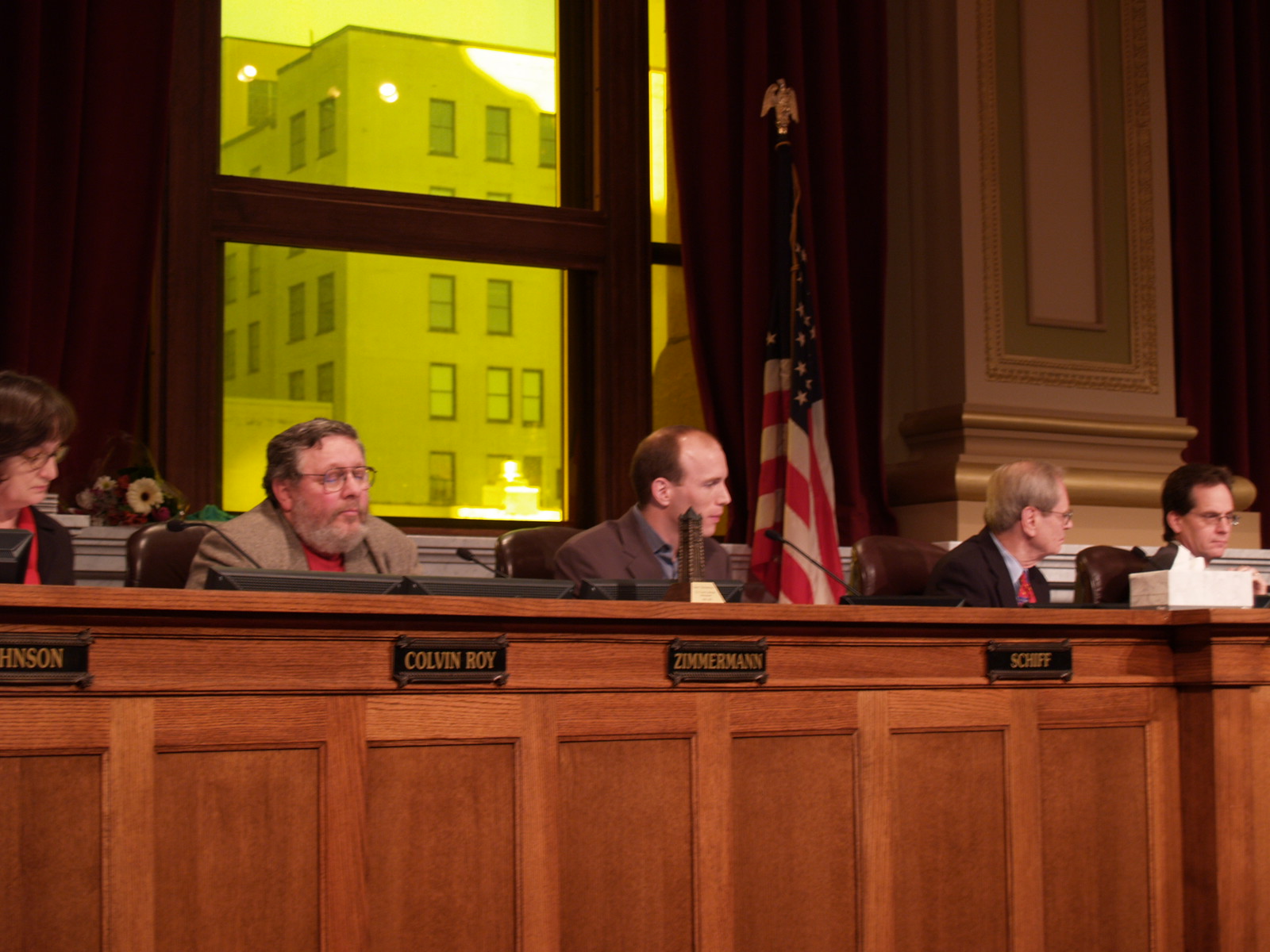
HOLLYWOOD — In the last two weeks of July, three questions that matter to this neighborhood were held in committee. Each is now waiting on a room that does not reconvene until the last week of August.
The Vine Street bike lanes deadlocked 2 to 2 and were sent away for “further study” that has no author, no scope and no due date. A shade ordinance — the one that would put a canopy or a tree at bus stops where 61 percent of Hollywood’s have neither — was held two weeks with instructions to staff that were requested in nearly identical language in 2019 and again in 2023. And a motion filed Thursday demanding an accounting of the Walk of Fame restoration’s third missed deadline goes to a committee that cannot hear it until the month is nearly over, which means a report requested in the first week of August arrives, at best, in the first week of October.
We want to be careful here, because there is a cheap version of this editorial and it is not the one worth writing. Council members work in August. Their staff work in August. A body that meets year-round without a break makes worse decisions than one that does not, and the notion that a legislature is idle whenever it is not in session is the sort of thing said by people who have never read a committee file.
The objection is narrower and it is this: a summer gap is a fact of the calendar, and every one of these three items was placed into it deliberately.
Nobody is required to hold an item on the last day before a five-week break. A committee that genuinely wants a parking study can direct one with a scope and a return date, and did not. A committee that genuinely wants a funding option for shade can ask for it by a certain Tuesday, and did not. In each case the action taken was the one that produced the longest possible silence, and in each case at least one member of that committee understood exactly what they were buying.
There is a cost to it, and on one of these three we can put a number on the cost, because the transportation department confirmed it in a one-sentence email in response to a direct question.
The city had held a fall paving window on that mile of Vine. Striping bike lanes as part of a resurfacing that is already budgeted saves roughly $400,000. The window closes in the first week of October. Miss it and the street gets repaved as it is, and the lanes — approved or not, someday or never — become their own project with their own funding request and their own year. Nobody at the dais mentioned this on the day of the vote. We learned it four days later by asking.
That is the part we cannot let pass. A committee is entitled to vote no. It is entitled to be persuaded that ninety parking spaces matter more than thirty-four reported injury collisions, and reasonable people on this corridor believe exactly that; the salon owner who has made that argument in these pages has made it honestly and better than her opponents concede. What a committee is not entitled to do is convert a substantive disagreement into a scheduling outcome, and then decline to tell the public that the schedule has a price tag on it.
The remedy is not complicated and it does not require anybody to give up their August.
Every hold should carry three things: a scope, a name and a date. What is being studied, who is doing the study, and when it comes back. Any of the three missing should be understood by everyone in the room — and by everyone reading about the room — as a decision to stop something rather than to examine it. Committees that adopt this practice lose nothing except the ability to be vague.
And where a hold interacts with a hard external deadline — a paving window, a grant expiry, a construction season — the staff report should say so out loud, in the meeting, before the vote. Not in an email to a newspaper four days later.
The council returns in the last week of August. Three items will be waiting, one of them with about five weeks left on a clock nobody announced.
We will be there, and we will be asking about the clock.