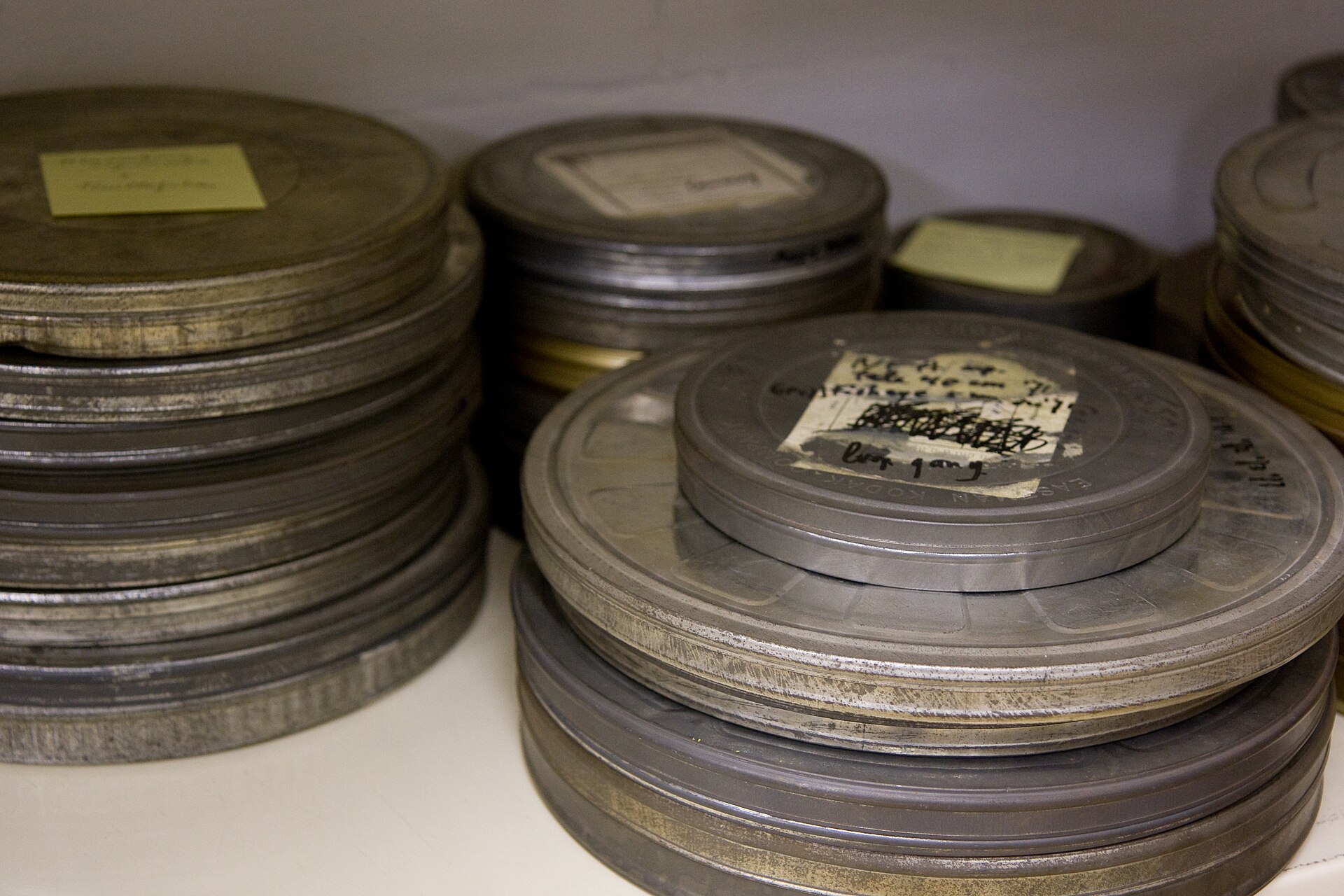
HOLLYWOOD — The vault is kept cold enough that the technicians wear jackets in July, and the reason is chemistry: the film on these shelves was manufactured to burn, and time is turning some of it into something that will.
At a regional film archive housed off Cahuenga Boulevard, a crew of four is working through the final stretch of a project years in the making — copying the institution’s last several hundred reels of nitrate film onto stable modern stock before the originals decay past the point of rescue. Nitrate, the cellulose-based film used for movies into the early 1950s, produces an image many archivists still consider unmatched. It also degrades unpredictably, can ignite at temperatures a hot afternoon can reach, and, once it begins to break down, does so in a way that no restoration can reverse.
“Every reel in here is on a clock we can’t read exactly,” said Imani Okoro, the archive’s preservation lead, standing between shelves of vented metal cans in a vault held near forty degrees. “Some of these will outlive me if we leave them cold. Some are already going, and you only find out when you open the can and smell it. Nitrate warns you it’s dying. It just doesn’t tell you when.”
The work is slow by design and slower by necessity. Each reel is inspected by hand, frame by frame in the worst cases, cleaned, and run through a scanner at a crawl to avoid stressing film that has grown brittle. Reels showing early decay — a sharp acrid odor, a sticky surface, an amber discoloration creeping in from the edges — jump the queue, because a reel that has begun to break down can spread the reaction to the ones beside it.
“You learn to smell it before you see it,” said Bao Tranh, 38, a film technician who has spent two years on the project and can identify a failing reel by the odor that rises when a can is cracked. “A good reel smells like nothing. A dying one smells like vinegar and then, later, like something you don’t forget. When I smell that one, that reel goes first, whatever the schedule says.”
Money and time both press on the project. The archive received a grant that funded the current push, but the scanning equipment is shared, the trained hands are few, and the grant, Okoro said, does not renew forever. She estimates the crew has copied the bulk of the salvageable material and is now into the hardest reels — the ones so far gone that saving even a partial image counts as a win.
What survives the copying will live on modern stock and as digital files; the nitrate originals, once scanned, stay in the cold vault under fire-rated storage until they can no longer be kept safely at all. Tranh said the part that stays with him is not the famous footage but the ordinary reels — a home movie, a forgotten newsreel, a screen test of a face history never bothered to name — flickering back to life on his monitor for the first time in seventy years, minutes before he seals the fragile original back into its can.