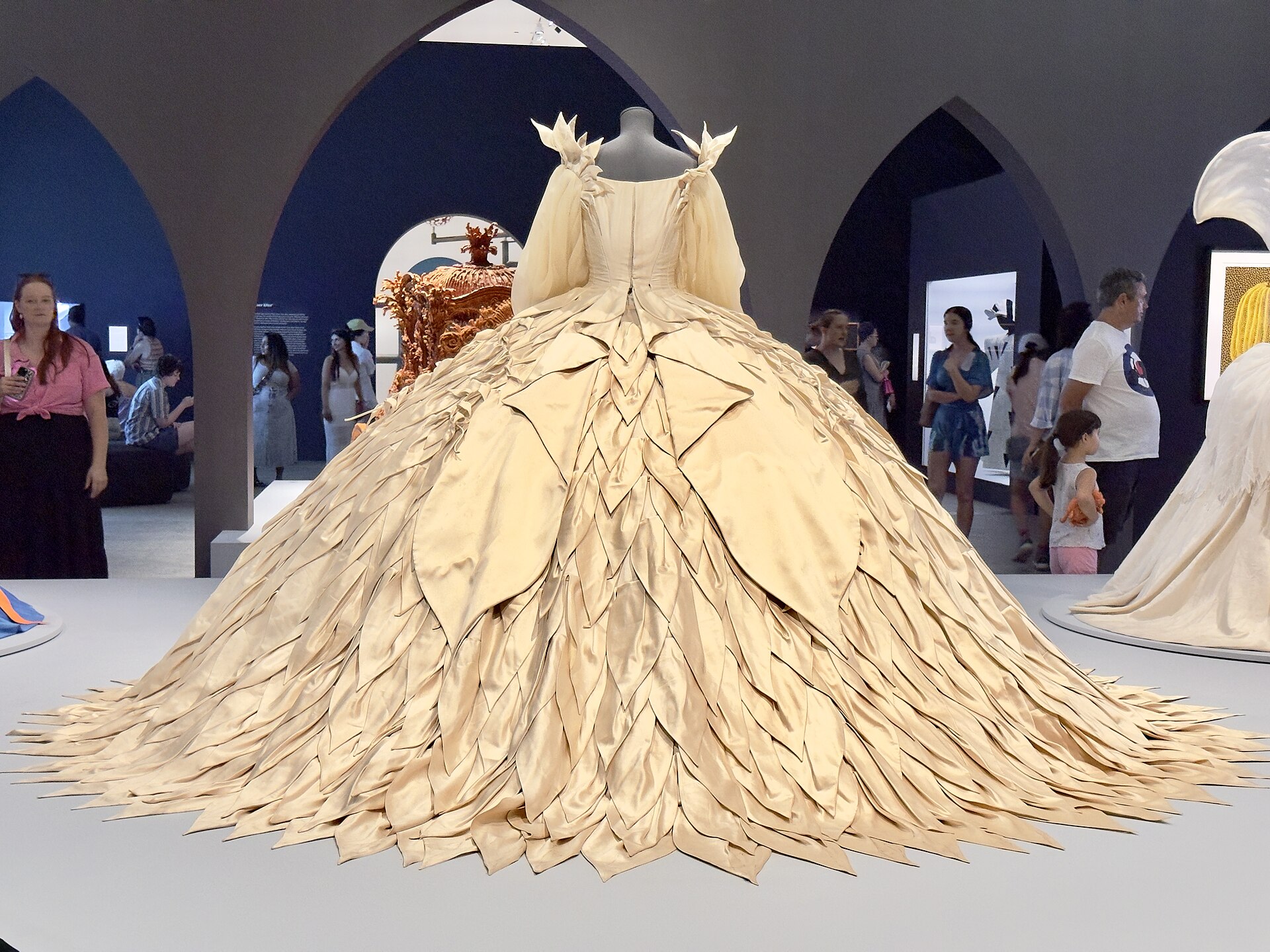
HOLLYWOOD — In a warehouse off Santa Monica Boulevard, between rolling racks that run the length of a bowling alley, hang forty thousand pieces of other people’s history: a cardinal’s robe, a spacesuit that never left the ground, a flapper’s dress worn by a star whose name the tag no longer remembers.
For 105 years the Meridian Costume Company rented these garments to productions across the city, dressing extras and leads alike, then taking the clothes back, cleaning them, and hanging them up to wait for the next century. This week the company announced it would give the entire collection away — not sell it, not auction the highlights, but donate all forty thousand pieces to a regional film archive that has agreed to keep the collection intact and, crucially, accessible.
“We could have broken it up and made real money. The gowns alone, the pieces with a name attached, collectors would have been at the door by lunch,” said Lorraine Petrakis, 71, whose grandfather founded the house in 1921 and who has run it since the 1980s. “But you break up a collection like this and it stops being an archive and becomes a garage sale. Every piece in here only means something because of the ones next to it.”
The house has struggled for years against the same forces reshaping the rest of the industry: productions leaving the state, wardrobe budgets fabricating cheaply overseas, and a rental model that never fully recovered from the pandemic. Petrakis said she had no children in the business and no wish to watch a buyer strip the racks for the profitable garments and dumpster the rest.
The archive that will receive the collection — a nonprofit that preserves the physical material of film history — described the donation as among the largest it has taken in. Its lead archivist, Devang Rao, said cataloguing alone would take years.
“Most of what survives from film history is the film,” Rao said, walking a rack of military uniforms sorted by decade. “The things that touched the actors, the things the camera actually photographed — those get used up, thrown out, lost. To get forty thousand of them, organized, with the rental cards still attached telling you which production borrowed what and when — that’s not a costume collection. That’s a document.”
Some of the garments carry famous provenance, tags in fading ink noting a title and a year. Most do not. The bulk of the archive is the ordinary stuff of make-believe: police uniforms, waiters’ jackets, nuns’ habits, the anonymous crowd-scene wardrobe that fills the edges of a thousand frames. Petrakis insists the ordinary pieces are the point.
She has agreed to stay on for a year to help identify what she can before her memory, too, becomes uncatalogued. On the last day the racks were hers, she stopped at a wool overcoat with no tag and no story she could recover, and brushed the shoulders flat out of habit. “I dressed this city for a hundred years,” she said. “Now somebody’s going to keep the closet.”