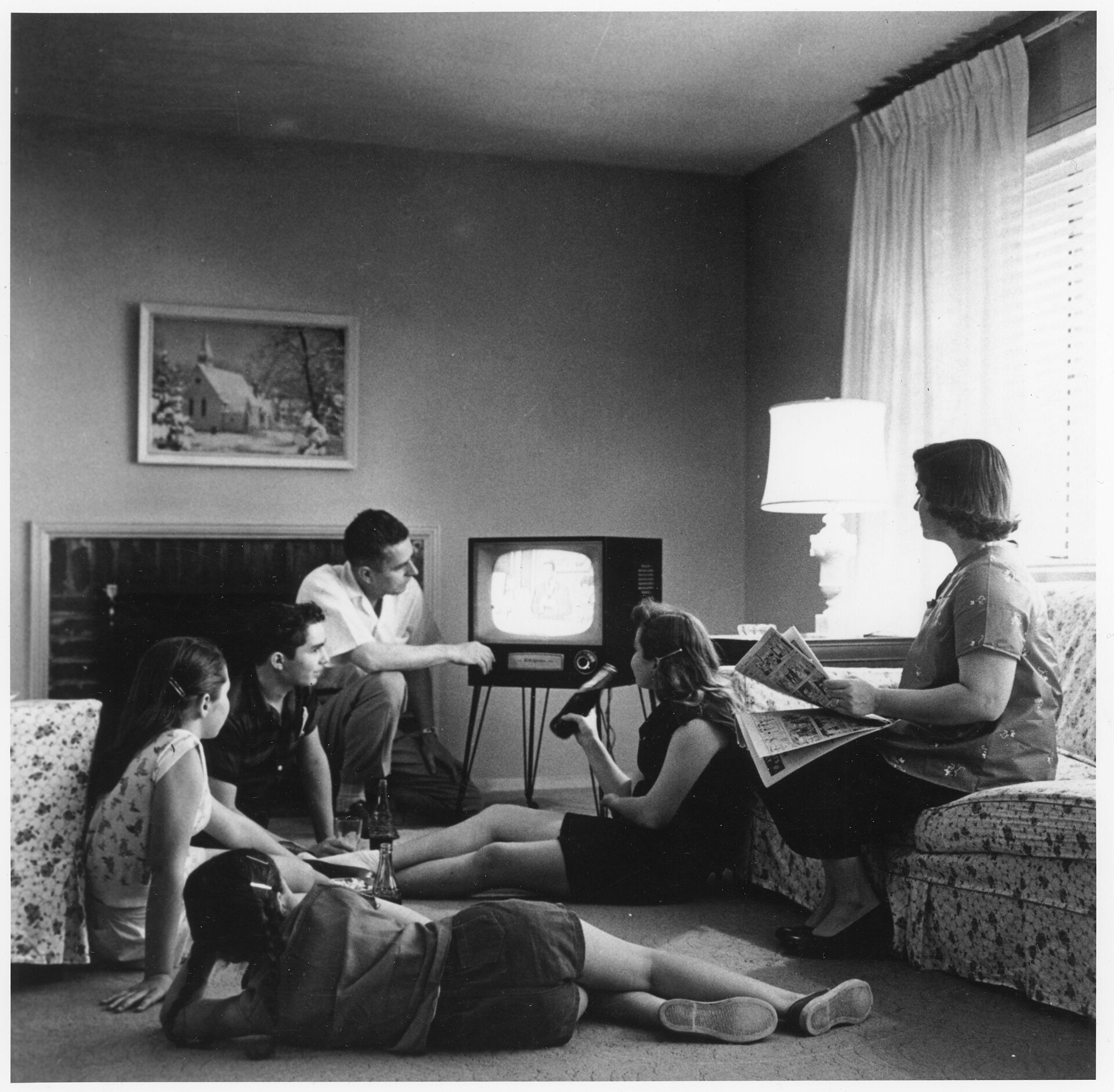
From the Times archive: first published June 22, 1954. Republished as part of the archive digitization project.
HOLLYWOOD — The picture business sat down to lunch yesterday to talk about television, and could not decide whether to laugh at it or fear it, and so, in the manner of the trade, did both.
Better than three hundred men of the industry — production heads, sales chiefs, a scattering of exhibitors up from downtown — filled a banquet room off the Boulevard for the season’s meeting of the trade, an afternoon given over entirely to the question that no one at the head table wished to name plainly: what the home screen is doing to the seven-day gross.
The public line held. Monroe Kessler, a production executive whose pictures still fill the first houses, rose to say what the room wished to hear. “Television is a novelty, and novelties tire,” he told the luncheon. “The public will not sit at home squinting at a set the size of a hatbox when it can have the wide screen, the color, the stars, the whole of it, for the price of a ticket. This too shall pass, gentlemen, and pass quickly.”
The applause was warm. It was also brief, because the next speaker had the receipts.
Leland Frawley, who handles distribution for one of the majors and is not paid to be cheerful, put the weekly attendance figures on the easel and let them speak. They have fallen, and gone on falling, three years running. “You may call it a fad,” Mr. Frawley said, “and you may be right. But the fad is sitting in the parlor of forty million homes, and every night it sits there is a night those people did not buy a ticket from us. I am not frightened of the future. I am frightened of last Tuesday.”
The room went quiet at that, which is as near to candor as a trade luncheon comes.
The remedies aired were the familiar ones. The wide screen, the studios agree, is the answer, or an answer — the picture the set cannot hold, spectacle the parlor cannot match. Some spoke of leasing the older pictures to the very medium they were damning, a course that drew a groan and, from the back, a single dry laugh. No one proposed making peace with the thing outright, though a few, in the corridor afterward, allowed that peace might be coming whether they proposed it or not.
This newspaper’s own editorial page, it should be noted, has already rendered its verdict. Only last week it dismissed the medium, in a phrase that has traveled the town, as “a fad with an antenna.” The gentlemen at the luncheon would have been glad to agree, and several quoted it approvingly. That the same gentlemen spent the balance of the afternoon studying the attendance charts with the faces of men reading a doctor’s letter is left, as always, to the reader to reconcile.
The luncheon adjourned near three, its members returning to the studios that pay them and the pictures they still believe in. The set in the corner of the banquet room, brought in for a demonstration, was carried out dark. No one had asked to have it turned on.