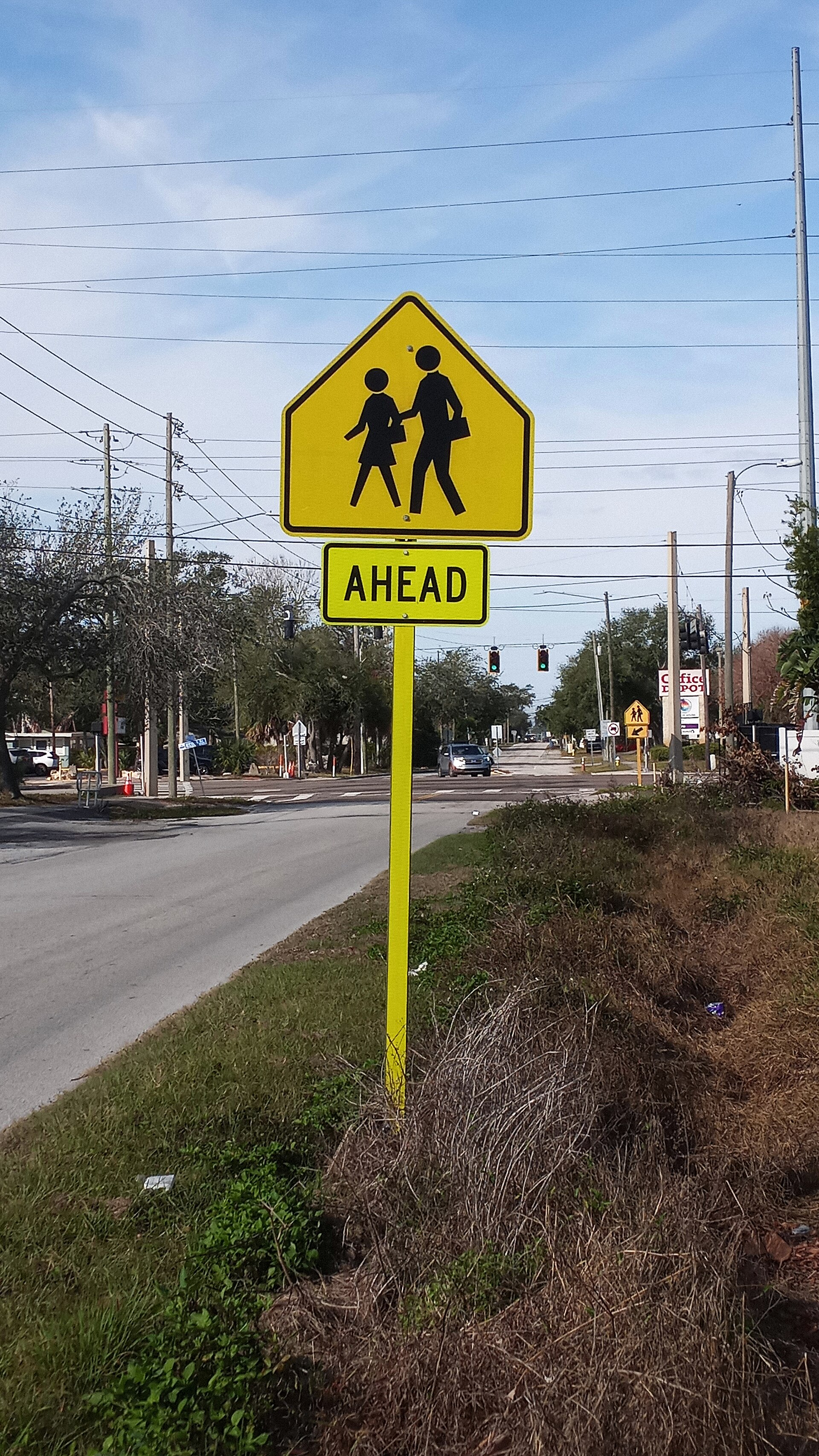
HOLLYWOOD — Parents at a Hollywood elementary school have been asking the city for a marked crosswalk at the same corner for years, and this week they learned, at a council committee hearing, roughly where their request stands: in a long line, behind hundreds of others, ranked by a formula most of them had never heard of.
The crossing in question is near Cheremoya Avenue and Franklin, on a route children walk to school, where there is no marked crosswalk for a long block in either direction. Parents have petitioned, written letters, and turned out at meetings since before the pandemic. The corner is still unmarked.
The committee hearing was meant to explain the city’s process for evaluating crosswalk requests, and in doing so it explained the delay. Requests are scored against a set of engineering criteria — traffic speed and volume, sightlines, the distance to the nearest existing crossing, the history of collisions at the spot. A crossing with a record of crashes rises; one where the danger is real but has not yet produced a documented injury waits. The formula, officials said, is meant to send limited money where the measured risk is highest.
To the parents, the logic reads backward. “You are telling me the crosswalk goes in after a child is hit, because that is what moves us up the list,” said Yolanda Cifuentes, who has a daughter at the school and has been asking for the crossing for four years. “We are trying to prevent the thing that would finally make you act. That is the whole point of asking early.”
Councilmember Alicia Rendón, whose district includes the school, said she had raised this particular corner with transportation staff more than once. “I understand the city cannot build every crosswalk that is requested in the year it is requested. I do understand that,” Rendón said. “What I struggle to explain to a parent is a system that in practice waits for the collision. If the standard is data, then let us collect the near-misses too, because the parents at this school have been describing them for years.”
Transportation officials said the corner had been evaluated and did not currently rank high enough to be funded, given the volume of requests and the money available. They noted that a marked crosswalk without other measures can sometimes give pedestrians a false sense of safety, and that a proper installation at a busy corner may require a signal or a beacon, raising the cost and the wait.
The committee asked staff to review whether the scoring formula could better account for school routes and for the reports residents file about close calls that never become crash statistics. No timeline was set for the Cheremoya corner.
School lets out for the summer this month, which buys the corner a quiet season. In the fall the children will be back, crossing where there is no crosswalk, on a route their parents have spent years asking the city to mark, still waiting for a place on a list to turn into a set of white stripes on the street.