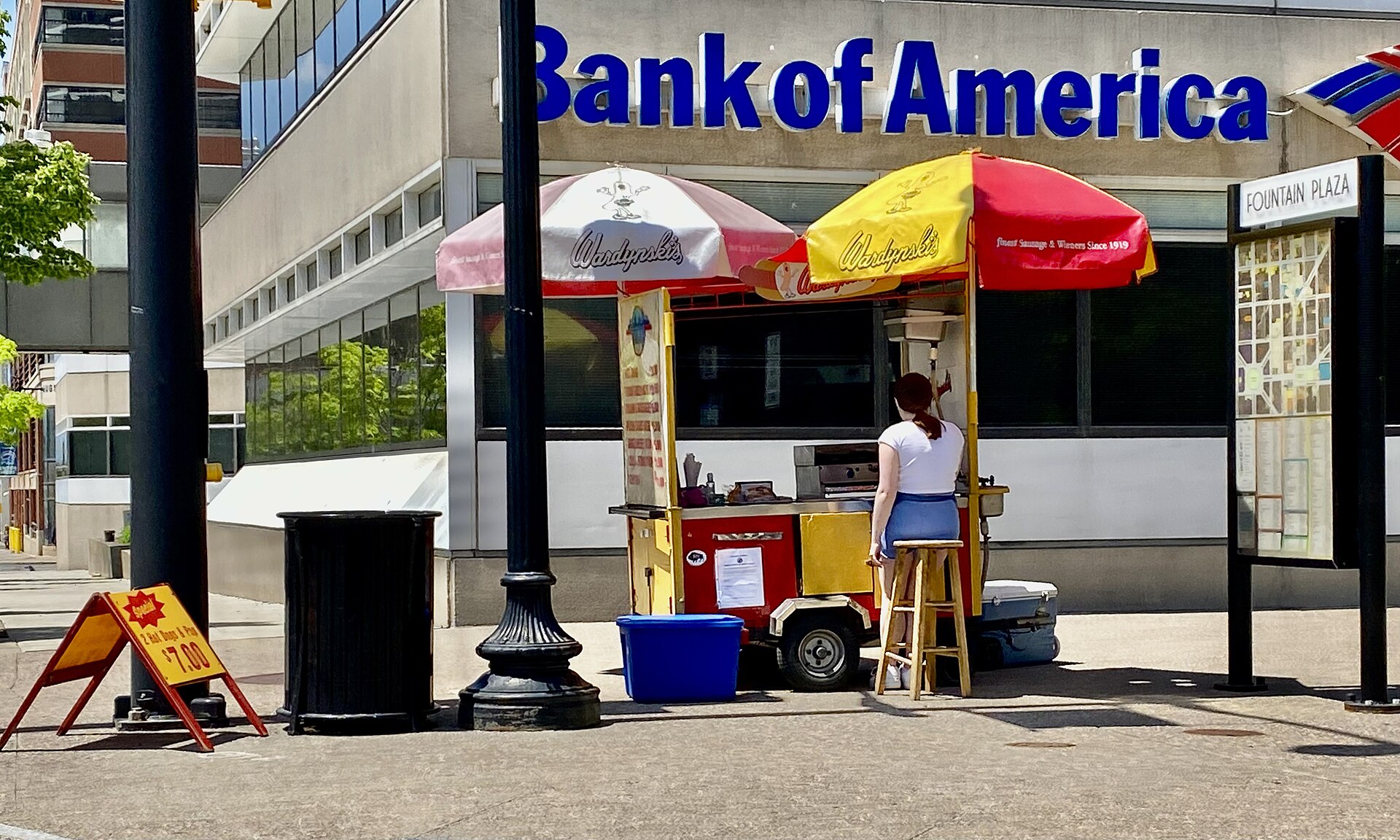
LOS ANGELES — The city writes street-vending citations along Hollywood’s sidewalks by the hundreds, and collects on almost none of them, according to enforcement records a council committee examined this week.
The data, covering the past two years in the Hollywood area, show a wide gap between citations issued and fines actually paid. Inspectors cited unpermitted vendors — the fruit carts, the bacon-wrapped hot-dog grills, the T-shirt tables that crowd the boulevard on busy nights — over and over, and yet the money recovered amounted to a small fraction of what was assessed. Many of the cited vendors, officials acknowledged, have no realistic ability to pay, and many simply do not.
The gap has renewed a long-running argument at City Hall about whether the enforcement system accomplishes anything. Street vending was legalized in California several years ago, meant to bring sidewalk sellers out of the shadows and into a permit system. In practice, vendors and their advocates say, the permits are expensive, slow to obtain, and burdened with requirements — commissary kitchens, cart specifications — that many sellers cannot meet, which leaves them technically illegal, subject to citations they cannot pay, selling anyway because they have to.
“You are fining people for being poor and then acting surprised the fines don’t get paid,” said Tomás Escareño, an organizer with a vendor advocacy group who addressed the committee. “The vendor on the boulevard is not dodging the rules for fun. The rules are built for a business with a lot more money than a woman selling fruit from a cart. Make the permit reachable and you will not need to write so many tickets.”
Business owners along the boulevard see it differently, and some came to say so. A brick-and-mortar merchant who pays rent, taxes and permit fees told the committee that unpermitted carts set up directly outside his door, undercutting him on the sidewalk he helps pay to maintain. “I follow every rule and pay for the privilege,” he said. “They follow none and pay nothing. The citations are the only tool I have, and you are telling me the citations don’t work.”
Councilmember Alicia Rendón said the numbers pointed to a system failing everyone at once. “We are spending staff time to write citations that do not get paid, which frustrates the businesses who want enforcement and punishes vendors who cannot comply with a permit process that is genuinely too hard,” Rendón said. “A fine no one can pay is not enforcement. It is paperwork.”
The committee asked for a review of the permit requirements themselves, and for figures on how many Hollywood vendors have managed to get a permit at all — a number officials could not provide on the spot, which several members took as an answer in itself.
No changes were adopted. The carts were back on the boulevard the same evening, as they are most evenings, selling to the crowds, permitted or not, while the citations they may or may not receive join a ledger the city has now conceded it mostly cannot collect.