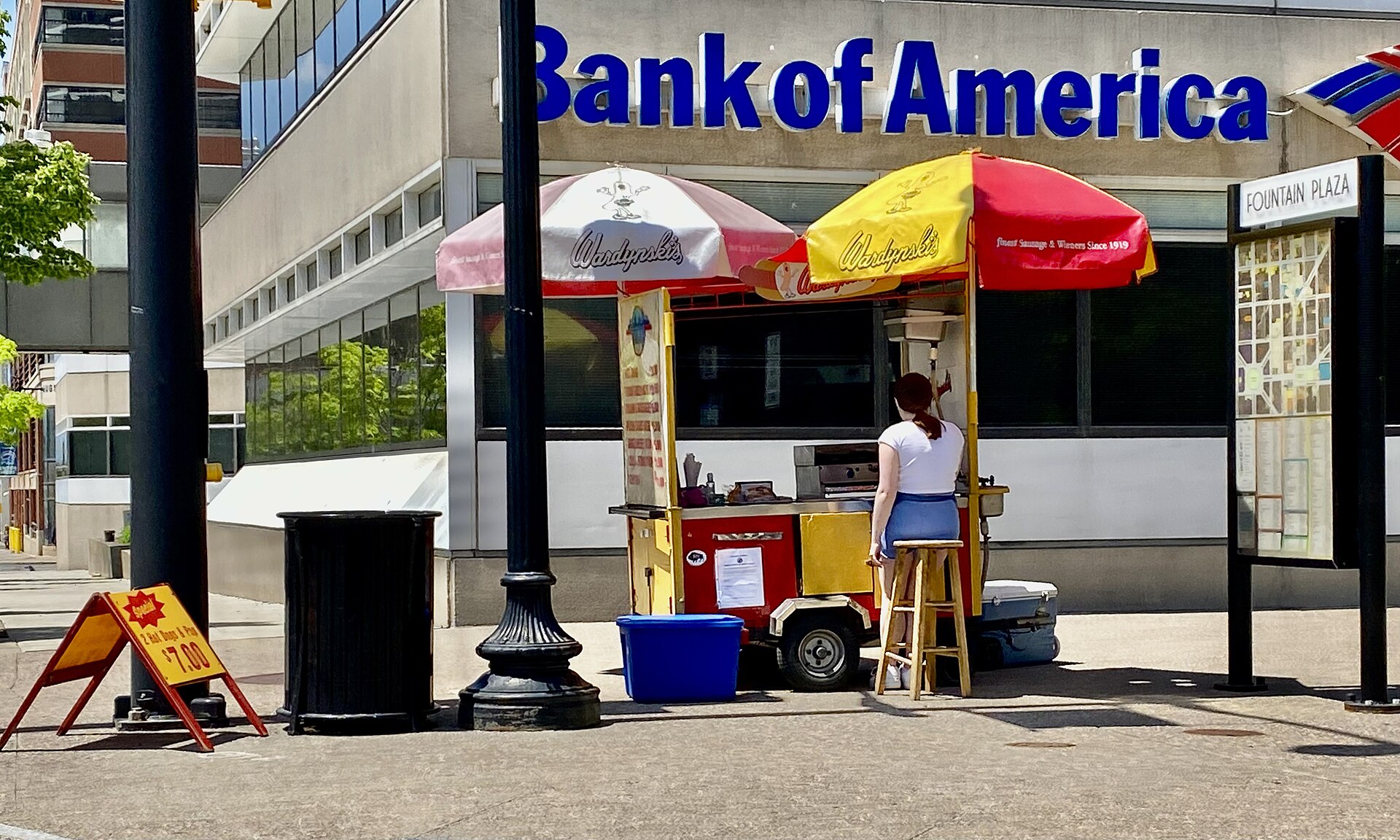
LOS ANGELES — The city is rewriting the rules for the vendors who sell bacon-wrapped hot dogs outside the Cahuenga clubs, and nearly everyone involved agrees the current rules have failed.
A City Council committee on Tuesday advanced an overhaul of the sidewalk-vending permit system, replacing a flat annual fee that few vendors could afford with a lower, tiered charge and a clearer map of where selling is allowed. The changes head to the full council in the fall.
Hollywood has an unusual stake. City figures presented at the hearing put the Hollywood Boulevard and Cahuenga corridor among the densest concentrations of sidewalk vendors in Los Angeles, with more carts per block on a weekend night than anywhere outside downtown. Most, the report noted, operate without the permit the law requires — not out of defiance, but because the permit cost more than a slow month earned.
“I tried to do it the legal way in 2019,” said Efraín Cordero, who sells sliced fruit and elotes near Hollywood and Wilcox. “The fee, the insurance, a cart that meets code — it was thousands of dollars before I sold a single mango. So I stopped trying, like everybody.”
The overhaul lowers the entry fee, lets vendors pay in installments, and pares back the paperwork for carts that meet health standards. It also draws firmer lines around where vending is barred — certain crowded corners, transit entrances, the sidewalks immediately outside the theaters on show nights — in exchange for legitimizing the many blocks in between.
Councilmember Alicia Rendón, whose district includes the corridor, backed the measure, framing it as a matter of enforcement that has never worked. “We wrote a rulebook nobody could follow and then acted surprised when nobody followed it,” she said. “This version, people can actually comply with. That’s the whole idea of a law.”
Not all the testimony was warm. Some brick-and-mortar merchants told the committee that legalizing more carts would formalize competition that pays no rent and less tax. A restaurateur near Selma Avenue said she had “no problem with the vendors” but did have a problem with three of them setting up outside her door at dinner.
Vendor advocates countered that clearer zones would settle exactly that, giving both sides a line on the pavement to point to.
The revised system would phase in over a year, with a grace period during which unpermitted vendors could register without penalty. City staff said the first new permits could be issued as early as next spring, assuming the full council signs off and the health department can process the applications it has, for years, barely received.