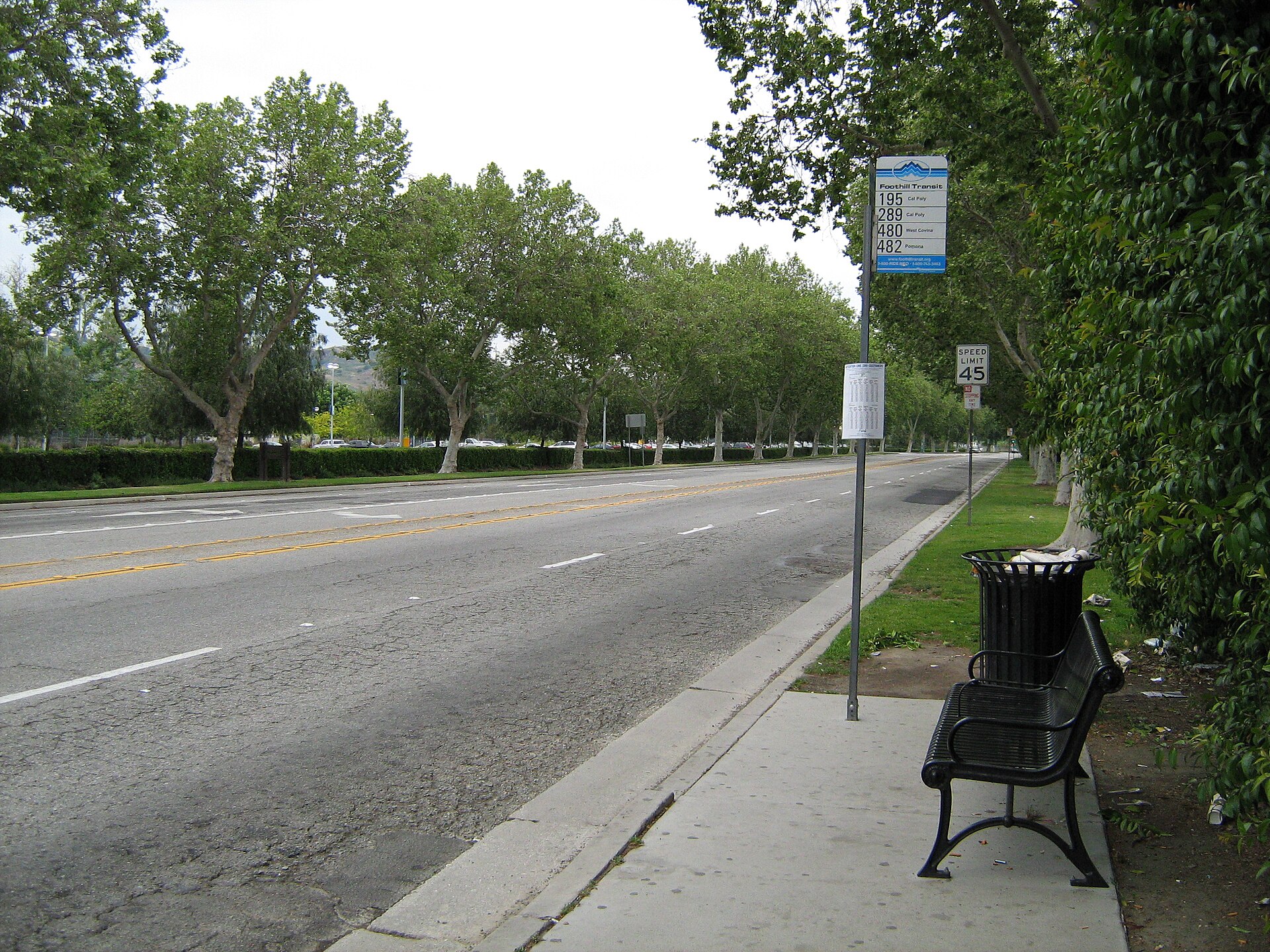
HOLLYWOOD — The truck came at 6:31. Marisol Quintero, who had said she would believe the bench when she saw the bench go, was already there, because she is always already there, with the coffee on and the morning papers cut from their bundles.
By 6:40 the three-man crew from the street-furniture contractor had the advertising panel off and the four anchor bolts out of the 2011 concrete. By 6:53 the bench that had left her newsstand four inches short of its federal wheelchair clearance since the year it was installed was sitting on a new pad fourteen feet east, re-bolted, panel back on, level. By 7:02 the truck was gone.
“Twenty-two minutes,” Ms. Quintero said. “Fifteen years and twenty-two minutes.”
The foreman, Gilberto Paredes, who has moved several hundred of the company’s benches and had never before been asked by a newspaper what it was like, said the job was ordinary. “The bolts were good. The pad was good. We could have done it any morning since 2011 if anyone had sent the order,” he said. “Nobody sent the order.”
The order, in the end, cost the city $4,850, approved 4–0 by the council’s transportation committee on August 25 from its discretionary account, with the contractor’s standard transfer wait waived. Councilmember Whit Bogardus, who voted yes and said at the time that the city was paying a premium to its own contractor to remove an obstruction its own contract installed, sent a field deputy to watch the bolts come out. Councilmember Alicia Rendón’s office sent one as well. The two deputies stood on the sidewalk with their phones and, by 7:05, had each sent a photograph of the same empty rectangle of concrete to their respective bosses.
Ms. Quintero measured once. She had measured most weeks all summer and had announced, after the August vote, that she and the tape were done. She made an exception. The clear path between the newsstand’s counter and the new edge of the bench’s footprint is forty-one inches, five over the federal minimum of thirty-six.
“Forty-one,” she said, and put the tape in the drawer under the register, and did not take it out again while a reporter was present.
Her inspection, the one that determines whether the stand keeps its legacy status under the city’s vending overhaul, is set for September 24, six days before the September 30 deadline the overhaul imposed on her in the spring. She said she is not worried about it and gave the impression of a person who has spent a summer being worried about it.
Cornell Biggs, 74, the retired stagehand who buys a paper from her most mornings and has sat on the bench since before the contractor installed it — he sat on the wooden one before — arrived at 7:20, found it fourteen feet east, and sat on it there.
“It’s the same bench,” he said. “Different view. I can see her register now instead of the side of her stand. I like it better. I was not consulted, and I like it better.”
The morning had one other piece of news for the vending overhaul, delivered by Efraín Cordero, who came by on his way to Selma Avenue to see the bench go. Mr. Cordero, city permit number 9, passed his county health inspection on August 28. His fruit cart is, for the first time in the years it has operated, legal under every rule that governs it, city and county.
“Three-thirds,” he said, which is what he had said in August he would say if Thursday went right. Thursday went right.
The pending-application rule the committee adopted in August, under which a vendor with a city permit and a complete application in the county queue cannot be cited when enforcement resumes October 1, will carry the vendors who are not yet where Mr. Cordero is. The county’s first monthly queue report is due to the committee at its regular September session, the one after next Wednesday’s special session on the bike lanes. Mr. Cordero intends to attend both.
Ms. Quintero, asked whether she would attend either, said she had a newsstand to run and a bench to get used to.
“I said I would believe it when I saw it go,” she said. “I saw it go. I believe it. Ask me about the inspector on the twenty-fifth.”