LOS ANGELES — Sixty-one percent of the bus stops in Hollywood have no shade of any kind.
That figure comes from a count the transportation department completed in 2024, at the request of a council committee, in support of an ordinance that has now been drafted twice and adopted never. It is not a contested number. Nobody at Tuesday’s committee hearing disputed it, including the two members who declined to move the ordinance forward.
The proposal, revived this week after last month’s and this month’s heat, would do three things. It would require a shade structure or a shade tree at every transit stop above a boardings threshold, phased over twelve years. It would require new commercial development to deliver a set percentage of shaded sidewalk along its frontage. And it would create a standing shade inventory, updated every three years, so that the 2024 count does not have to be commissioned again the next time a committee wants one.
The first requirement is the expensive one and the reason the ordinance keeps stopping. A bus shelter costs the city nothing to install — they are built and maintained under an advertising contract, paid for by the ad panels on their sides. That arrangement has an obvious consequence, which the 61 percent figure describes precisely: shelters go where advertising sells. A stop with 300 daily boardings on a street with no through traffic and nobody to read the panel does not get a shelter, no matter how hot it is or how many people are standing at it.
“We have outsourced our shade to a billboard company, and then we act surprised that our shade follows the billboard business,” said Councilmember Alicia Rendón, who is a co-author. “I want to be careful here, because the contract has given the city thousands of shelters it did not pay for. But it cannot be the whole strategy, and for thirty years it has been the whole strategy.”
The alternative — shelters, or simple shade canopies, funded directly and placed by heat exposure and ridership rather than ad value — was costed by staff at between $18,000 and $34,000 per stop, depending on whether the sidewalk needs widening to keep the required clear path for wheelchairs. Applying that to the unshaded stops in Hollywood alone comes to somewhere near $9 million. Applying it citywide is a number the report gives in a footnote and nobody read aloud.
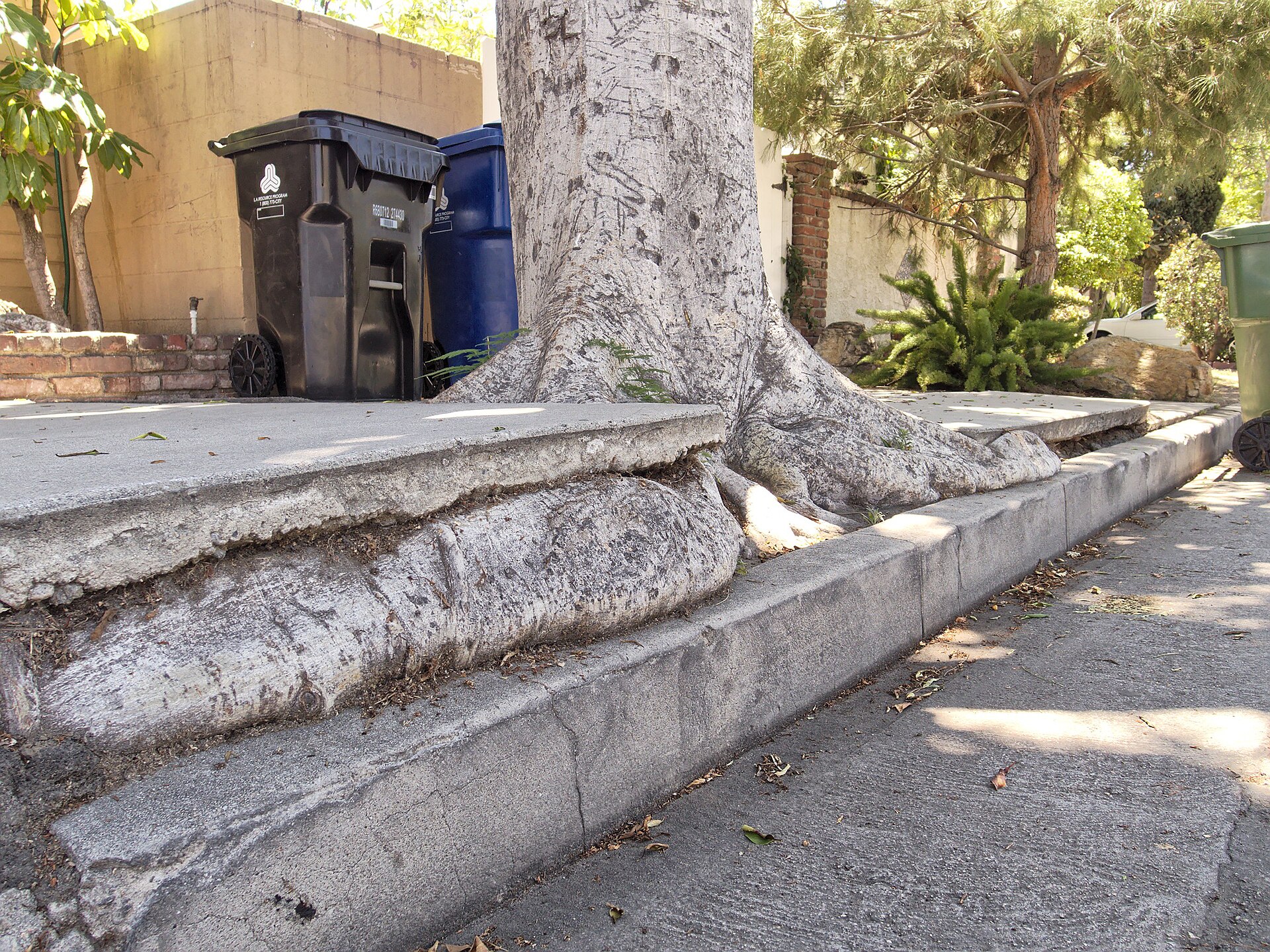
The tree option is cheaper per unit and slower by a decade. A shade tree planted at a bus stop next spring provides usable shade somewhere around 2040. It also requires a species that will not do to the sidewalk what the ficus has done to Hollywood’s — a problem this newspaper reported on in June, when the city’s own street-tree survey found the ficus to be both the neighborhood’s largest canopy asset and its largest sidewalk liability.
Councilmember Whit Bogardus, who moved to hold the item, said he supports the concept and objects to the mechanism. “You are writing a mandate with a twelve-year phase-in and no funding source for years three through twelve,” he said. “I have watched this council do that before. What you get is year one, a press release, and then a mandate on the books that the next council quietly waives.”
The frontage requirement drew less argument but has a longer history of being watered down. Both prior drafts included it; both times it emerged from committee with an alternative-compliance provision that let a developer pay a fee instead. Staff testified that of the fourteen projects to use the equivalent provision in an earlier design ordinance, thirteen paid the fee.
The public comment period ran ninety minutes and was unusually specific. A woman who works a closing shift at a Boulevard hotel described waiting 22 minutes at an unshaded stop on Highland at 3:40 in the afternoon. A retired mail carrier gave the committee a list of the eleven stops on his old route where, he said, “there is nothing at all, not a pole with a top on it.” A representative of a hillside neighborhood group asked, to visible discomfort, why any of this required an ordinance.
The item was held for two weeks with instructions to staff to return with a funding option that does not depend on the advertising contract. That request has been made, in nearly identical language, in 2019 and in 2023.