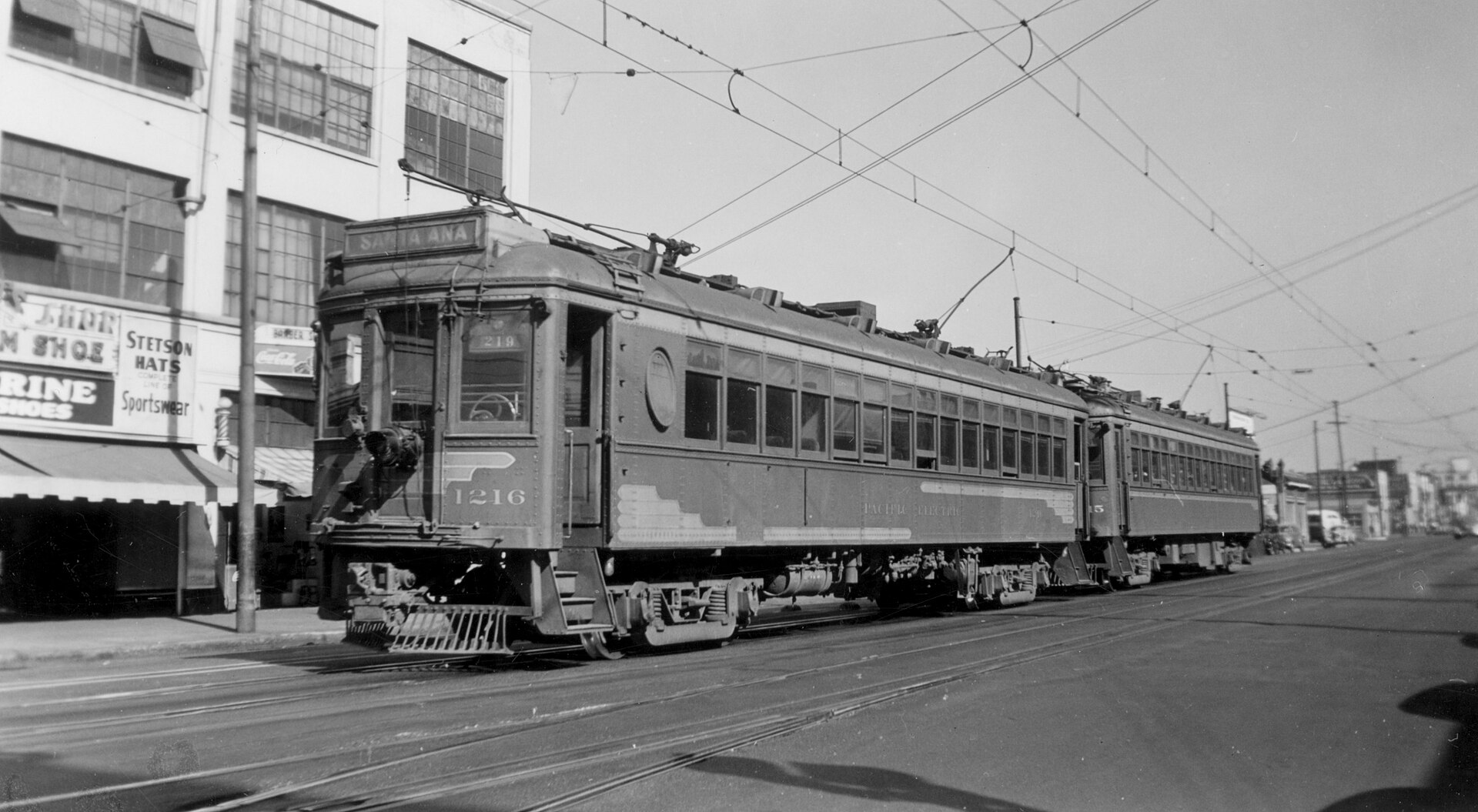
From the Times archive: first published October 16, 1947. Republished as part of the archive digitization project.
HOLLYWOOD — The traction company came to ask for a nickel more, and the people of the Boulevard came to tell it no.
Some two hundred riders and the representatives of a dozen neighborhood associations crowded a hearing yesterday afternoon before an examiner of the State Public Utilities Commission, called to weigh the Pacific Electric Company’s application to raise the basic fare on its Hollywood lines. Chairs ran out within the quarter hour, and men stood three deep at the back of the room until the corridor was full.
Counsel for the company laid the case in the language of ledgers. The cost of everything, he said, has risen since the war — the wages of the trainmen, the price of copper and of rail, the upkeep of cars that have carried the public without pause through five hard years. The present fare, he told the examiner, no longer meets the cost of the ride. Without relief, he warned, the company could not answer for the service.
The riders answered in the language of the platform.
“We are asked to pay more for less, and to be grateful for the privilege,” said Mrs. Edith Carraway, who spoke for the Hollywood Improvement Association and drew the loudest assent of the afternoon. “The cars come late or come full. We stand from Vermont to Vine with our marketing in our arms. Let the company earn the old fare before it asks for a new one.”
A machinist from a shop on Santa Monica Boulevard, who gave his name as Otis Prenn, told the examiner he rode the Red Cars because he had no other way to his work. “There is no raise waiting for me at the shop to match the raise the company wants at the fare box,” he said. “A nickel is a nickel. Six days a week, two rides a day, it is a good deal more than a nickel by Saturday.”
The examiner, Clarence Tibbetts, heard the testimony without comment, as is the custom, and reminded the room more than once that he would take no vote and render no decision from the chair. The record, he said, would go to the full commission, and the commission would rule in its own time.
The company’s men held that the Red Cars run at a loss on the local runs and are carried by the longer interurban lines, a claim the neighborhood spokesmen disputed and asked to see proved in the books. Whether the commission will open those books, and what it will find, no one in the room could say.
The hearing ran past six o’clock. When it closed, the riders filed out to the boulevard and, most of them, to the nearest car stop, there to wait in the dusk for the very cars whose price they had spent the afternoon fighting. The commission is expected to take the matter under submission for some weeks. The fare, for now, stands where it stood.