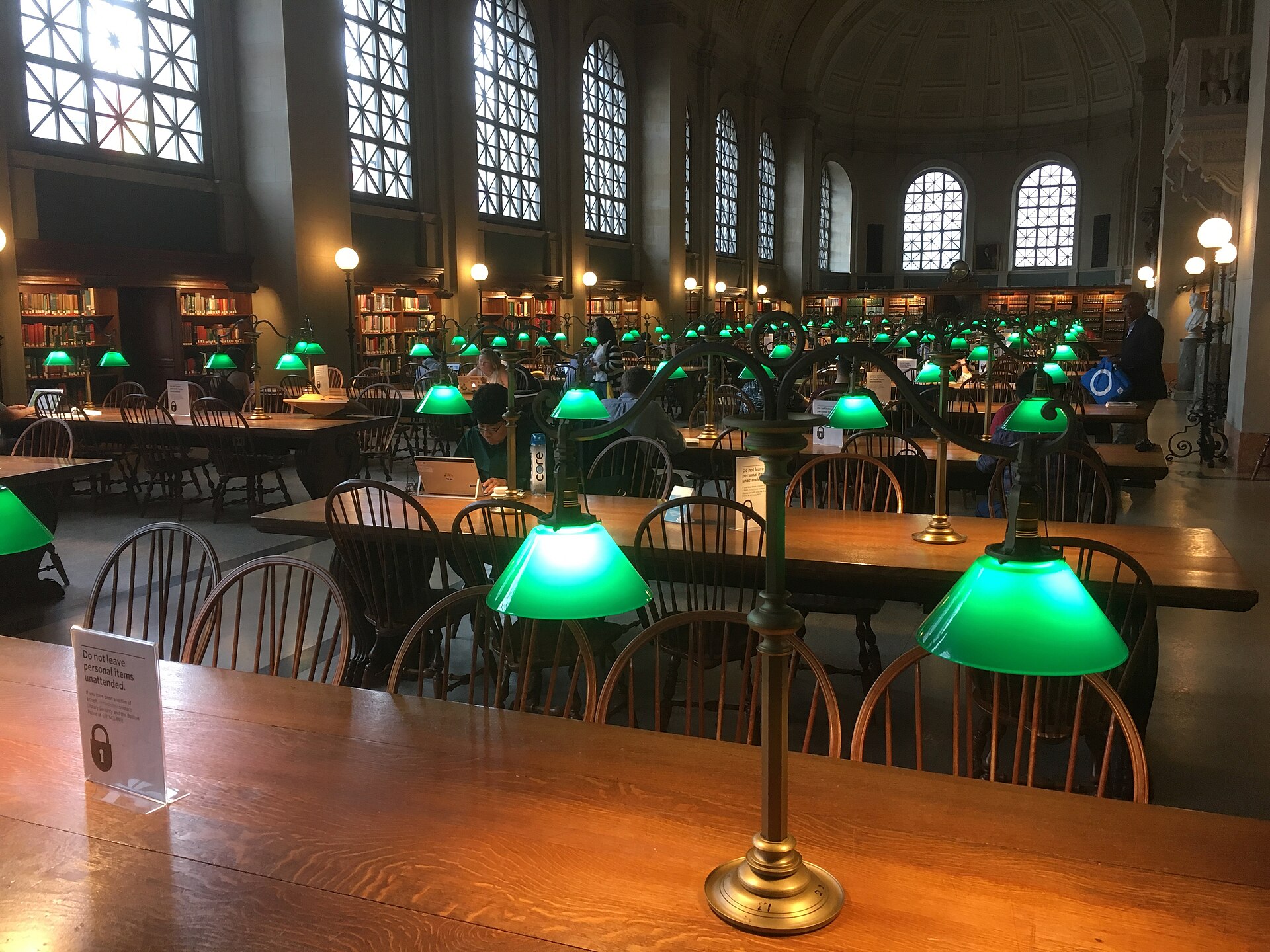
HOLLYWOOD — The first organized event of the library bond campaign was held Saturday morning in the best argument the campaign has: the Hollywood branch’s reading room, coffered ceiling overhead, the preserved 1926 card catalog drawers arranged on a table by the door like relics, which, officially, they now are.
About 120 people came. The librarians, who approved the event on conditions, enforced the conditions: nothing taped to the plaster, nothing louder than a raised voice, and the eleven people who had come to use the reading room as a reading room were left alone at the far tables, where they remained, reading, throughout democracy.
Curtis Bellweather, who has organized for the measure for four years, opened with the rule he has drilled into every volunteer since the operating-hours clause was cut from the ballot language: promise the building, never the hours. The bond, if two-thirds of November’s voters approve it, funds construction, seismic retrofit and accessibility work at 34 branches. It cannot fund a single hour of any of them being open.
The first question from the floor, three minutes in, was whether the bond would bring back Thursday evenings.
“And there it is,” Mr. Bellweather said, to general laughter, and then gave the answer he has been rehearsing all month: no — the hours are decided every June in the operating budget, the bond cannot touch them, and anyone who wants the Thursday hours back is warmly invited to the June hearing, where that fight actually lives. He said afterward that he considers the exchange a success. “The question is coming whether we practice or not. The whole campaign is whether we answer it honestly a thousand more times.”
The unplanned part of the morning came from Naomi Farrell, the retired branch librarian who has spent the summer as the measure’s most useful skeptic. She attended, sat in the second row, waited through the friendly questions, and then stood up holding a letter.
The letter, addressed to the library system and copied to the campaign, requests publication of the scoring behind the branch list — the structural assessments, equity criteria and readiness rankings the system says produced the 34 names, and has so far declined to release. “I will probably vote for this bond,” Ms. Farrell said. “I would like to know why I am voting for these branches. So would every voter in the 38 neighborhoods that are not on the list. A two-thirds measure cannot afford a secret.”
What happened next surprised her, by her own account. Mr. Bellweather asked for a show of hands on whether the campaign itself should co-sign the request. Most of the room went up, including most of the volunteers.
“The scoring is not ours to release, but the request is ours to make, and we should have made it in June,” Mr. Bellweather said afterward. “She is right. You cannot spend three months saying ‘trust the building’ and also ‘don’t ask about the list.’” The campaign’s co-signed letter went out Monday, a spokeswoman for the system confirmed, and is “under review.”
The measure needs two-thirds in November, off a ballot without a presidential race to carry it. Saturday’s crowd, self-selected and friendly, proves little about that arithmetic, and Mr. Bellweather did not pretend otherwise. But he allowed himself one observation as the folding chairs were stacked, and the eleven readers at the far tables read on in the restored room, under the retrofitted ceiling, beside the rescued drawers.
“Every person who walked in here today walked into the case for the bond,” he said. “The room makes the argument. We are just the people who unlock it.”