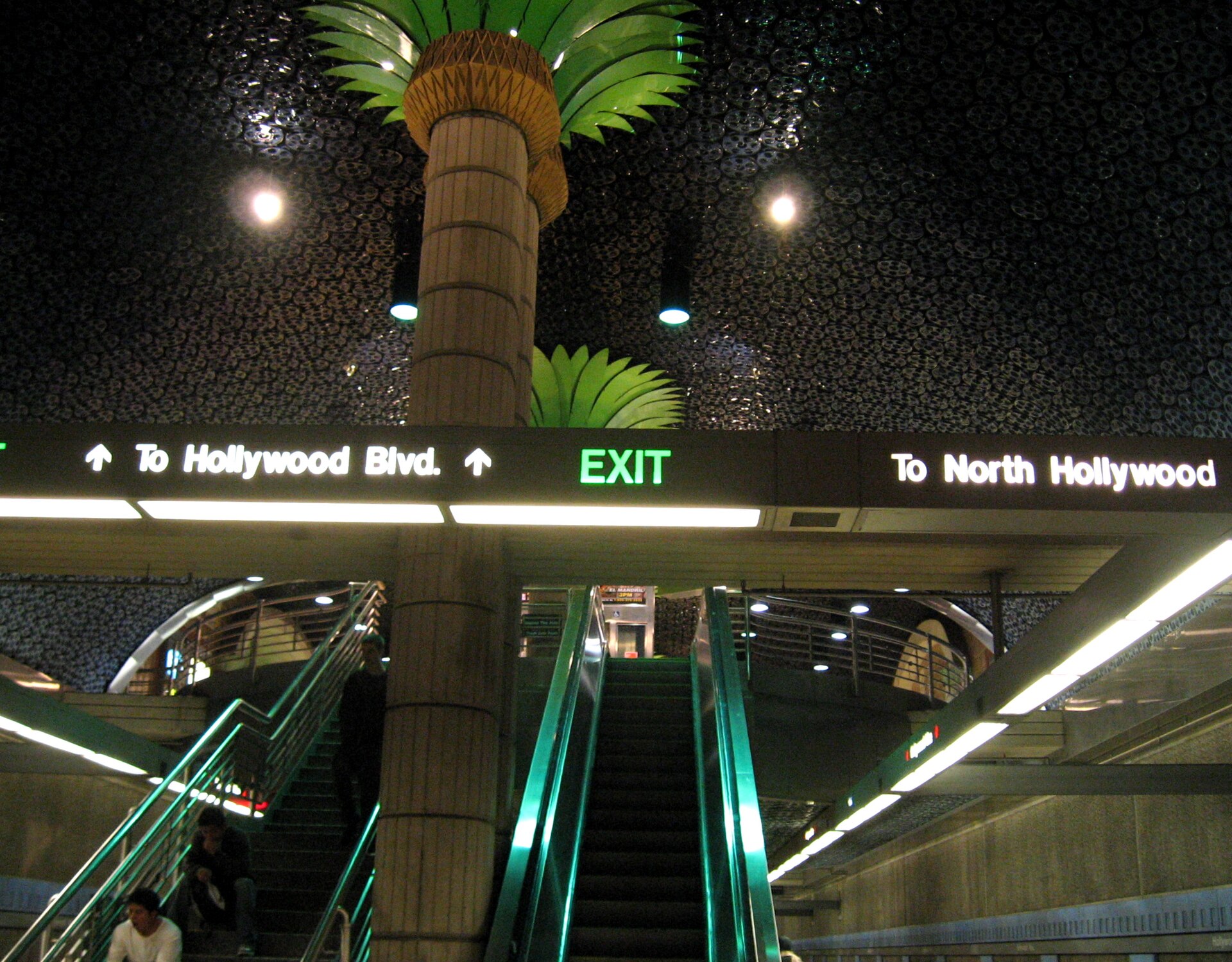
LOS ANGELES — A long-stalled plan to remake the plaza above the Hollywood/Vine subway station cleared a funding hurdle this week, as a regional transportation board advanced roughly $18 million toward a redesign that would widen sidewalks, add shade and, planners hope, give the intersection a reason to linger rather than merely transfer.
The plaza, laid out when the subway opened in the 1990s, has aged into a hard, bright expanse of pavers that empties out by early afternoon, when the sun clears the surrounding buildings and turns the open ground into a griddle. Under the plan, roughly a third of that pavement would give way to planters, canopy trees, movable seating and a small performance apron facing the Pantages marquee across the street.
“Right now the plaza works as a lid over the station and nothing else,” said Renata Cho, a project manager with the transit agency, at a briefing this week. “People come up the escalator and keep walking, because there’s no reason to stop. We’d like to give them one.”
The $18 million represents design money and a first construction tranche, not the full cost, which planners put north of $40 million once utility work beneath the plaza is accounted for. Additional funding would come from a mix of transit reserves, a county sales-tax measure and, officials hope, contributions from nearby property owners who stand to benefit from a livelier corner.
That last piece has stalled versions of this plan before. A 2016 proposal for the same plaza collapsed when the financing fell apart, and a 2020 refresh was shelved in the pandemic. Merchants along the block have learned to receive plaza news with a certain reserve.
“I’ve seen the drawings three times now, and the drawings are always beautiful,” said Yusuf Adeyemi, who runs a newsstand and lottery counter at the mouth of the station. “I’ll believe the trees when I’m standing in the shade of one.” He allowed that afternoon foot traffic past his counter had thinned as the block grew hotter and less inviting, and that anything drawing people to stay would help.
Nearby residents raised a familiar worry at the briefing: that a redesigned plaza would draw programming, crowds and noise to a corner already stretched thin on cleaning and policing. Cho said the plan includes a maintenance endowment and that the agency had “learned the hard way that you cannot build a plaza and walk away from it.”
If the schedule holds — a phrase that drew quiet laughter in the room — design work would run through next year, with construction beginning in 2028 and the plaza reopening the year after. Adeyemi did the arithmetic aloud. “Three more summers of this sun,” he said, “and then we’ll see.”