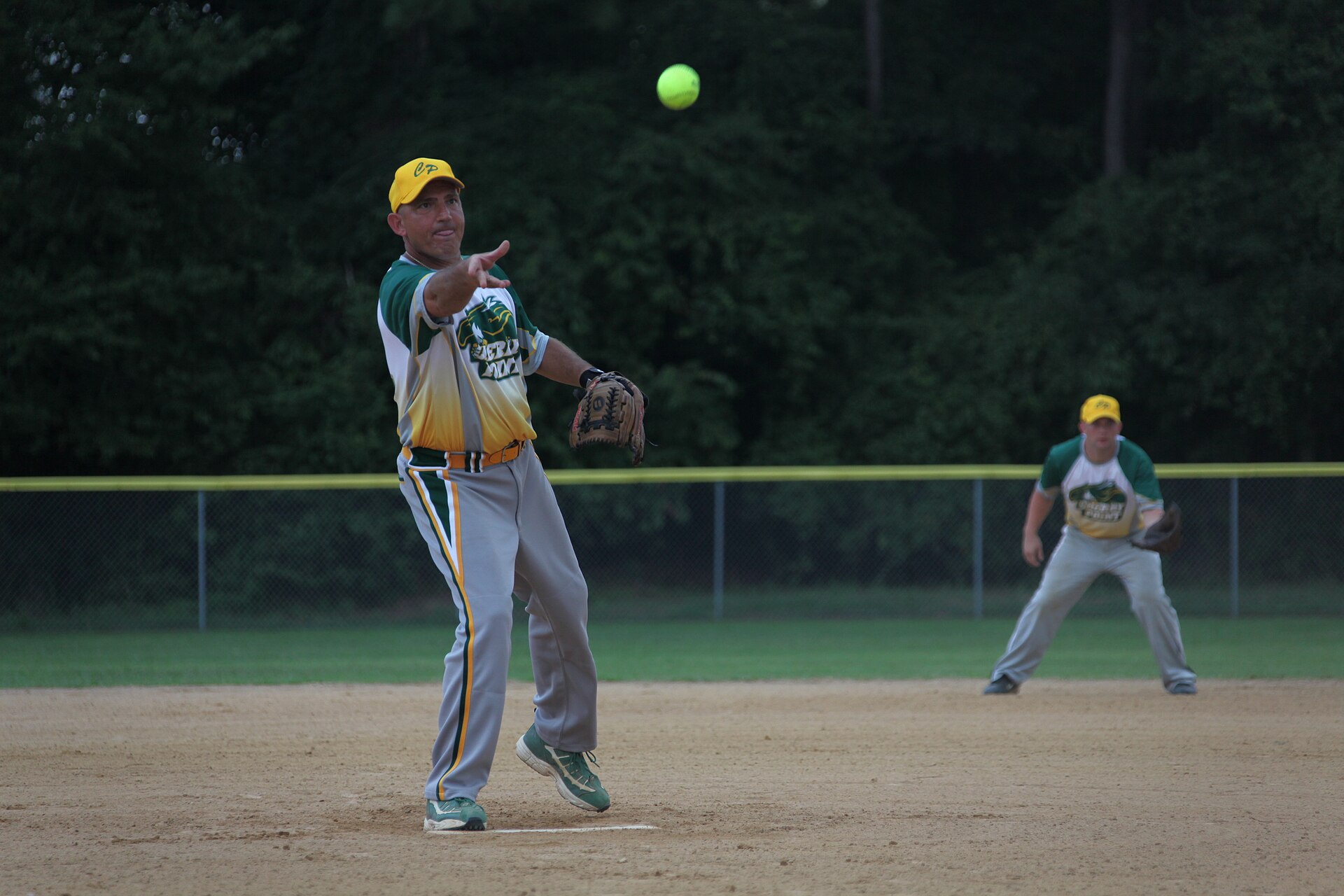
HOLLYWOOD — The championship of the sixty-and-over league was decided at 9:40 Thursday night on a pitch that bounced two feet in front of the plate, which is to say on a walk, with the bases loaded, in the ninth inning of a game scheduled for seven.
The batter was the man with the replaced hip — cleared by his doctor in May to bat but not to run, the arrangement that had his manager, Ignatius Broadfoot, working the phones all week. He took ball four, handed the bat to the tenth man on the bench, and stood aside while his designated runner jogged to first and the winning run walked home from third at the approximate speed of a man crossing his own kitchen.
Final score: Broadfoot’s team 6, the auto body shop team 5. It is Mr. Broadfoot’s first title in nine years of managing.
“I had nine men who could run,” he said afterward, under the field’s one shade tree, which by then had surrendered its usual function and become the trophy presentation area. “And one who didn’t have to. That turned out to be the correct number of each.”
The night ran long because the league plays its semifinals and final on the same Thursday, a format adopted in 2019 for medical reasons. Mr. Broadfoot’s team opened at 5:30 by beating the fourth seed — winners, on Tuesday, of the coin-flip game that neither 6–8 team had wanted to play — by a score of 8–3. The auto body shop team then put out the third seed 7–6, on a play at the plate that could only have happened in this league: the tying runner arrived standing, because sliding is banned in all circumstances, and was tagged on the chest while executing a legal, dignified, and unsuccessful stop. The penalty for sliding is an out and a conversation. The penalty for not sliding, Thursday, was also an out. Nobody argued. The rule has been litigated before.
The turnaround between games, which Mr. Broadfoot had estimated during the week at “forty minutes, and I am being optimistic,” took fifty-five, most of it devoted to persuading fourteen men in their sixties and seventies that the second game was going to happen regardless of how the first one felt.
First pitch of the final came with the field thermometer reading 88, comfortably inside the league’s heat rule, which postpones anything above 95 and which is the reason the championship was played in August at all. Two of Mr. Broadfoot’s rostered players, in Oregon visiting grandchildren, listened by speakerphone propped against the dugout fence. They were consulted once, in the seventh, on a pinch-hitting decision, and their advice was taken.
And then there is Vernon, who is 68, who caught every inning of both games — eighteen in all — went four for seven, and threw out a runner at second in the final’s eighth inning on a throw that brought the thirty or so spectators to their feet, or at least to a posture expressing the intention of feet. Vernon has spent the season on the league injury report with an entry that reads “not saying,” a policy his manager has endorsed as a matter of roster management.
Asked directly after the game, holding a paper cup of someone’s wife’s lemonade, what was wrong with him, Vernon considered the question.
“In the offseason,” he said.
The trophy, by league custom, spends the year in the window of the winning team’s sponsor, which means it leaves the auto body shop on Santa Monica, where it has sat for two seasons among the fan belts, and moves to a pharmacy counter on Highland. The auto body team’s manager delivered it to the shade tree personally and said, in remarks the league’s secretary recorded for the minutes, that his team would be back, that Broadfoot’s team was old, and that he meant that in the specific sense that four of them were older than his own men, which was checked against the rosters on somebody’s phone and found to be true.
The league resumes in April. The injury report, closed for the season, finished at eleven names, none of them added Thursday — a fact the league’s secretary read aloud at the end of the night to genuine applause.
The final entry remains “not saying.”