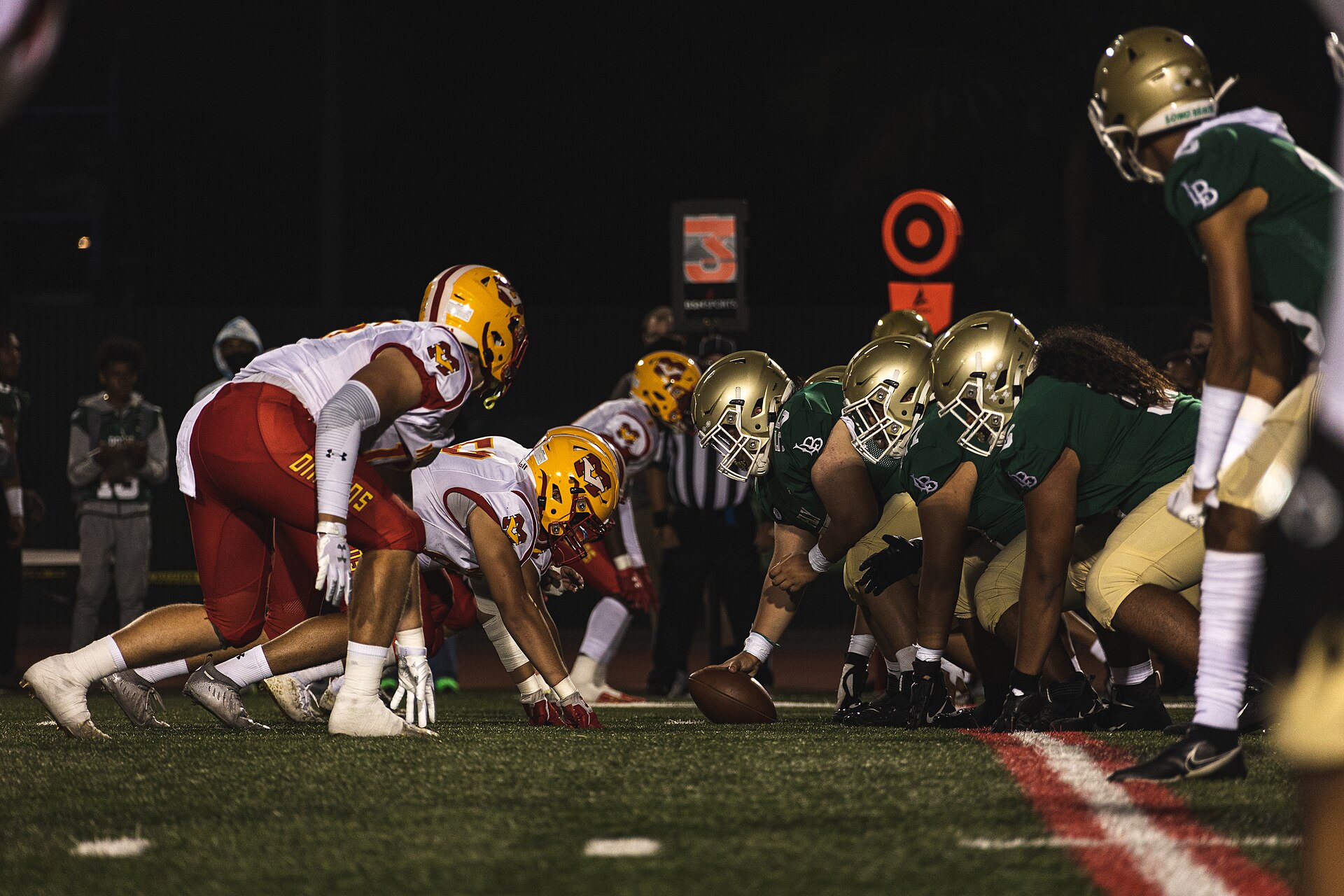
HOLLYWOOD — Bill Haney did not kick it. That is the whole game, and everyone who was in the stands Friday night will be telling it that way for years, so it might as well be told that way here.
John Marshall scored with 41 seconds left to pull within one, 21–20, on a nine-yard pass from Andre Kittredge that beat a blitz Hollywood had no business calling. Haney sent the kicking unit out, watched it line up, and called it back. The Marshall side of the bleachers stood. The Hollywood side sat down, which is what people do when they have decided to remember something.
Kittredge rolled right. The play was a pick for the tight end drifting to the flat, and it was open for exactly as long as it takes a sophomore in the nickel package to read a roll-out he had spent all of August being burned by in practice. Daniel Okotie, who spent the summer ruining Xavier Poole’s mornings at six a.m., arrived under the tight end’s arms a half-step before the ball did. The ball hit the turf. Okotie stood up, looked at the sideline for a flag that was not coming, and was then briefly unavailable for comment under about nineteen teammates.
“He was where he was supposed to be,” Delroy Fenwick said afterward, which for this coach in this week was a speech.
Hollywood recovered the onside kick, Poole took two knees, and the trophy — a foot of dented brass on a walnut base, engraving gapped, taped question mark still in place — stays at Hollywood for a year, the first time in three seasons.
The rest of the game, for the record: Marshall led 14–7 at the half, its returning defensive front doing to Hollywood’s run game roughly what Fenwick had praised it for doing during his one permitted sentence on Monday. Poole tied it early in the fourth quarter on a 22-yard throw and put Hollywood ahead with 4:12 left on a quarterback keeper that the coaching staff will pretend was designed. He finished 14 of 22 for 178 yards and two touchdowns. He weighed in Monday at 201; nobody asked Friday.
The coin toss was the other thing. Everett Teale walked to midfield carrying the 1988 roster, the one-and-nine year, on a single sheet in a plastic sleeve, and stood between the captains while the referee explained the procedure to people who knew it. Marshall won the toss and deferred. Mr. Teale shook every hand, including the referee’s, and walked off without looking at the crowd. The crowd was looking at him. The public-address announcer, who had been asked to say nothing about it, said nothing about it, and the silence in the stadium for those forty seconds was, several people said afterward, the loudest thing all night.
Every Hollywood helmet wore the small orange decal. So, on the visitors’ side, did the Marshall cap of Marv Sinclair, 77, who has attended this game since the Eisenhower administration and who had promised Marvin Teale’s memory one sticker and no more.
At the final whistle Sinclair was asked, by this newspaper and by several people who were not this newspaper, whether the sticker stays on.
“Through Monday,” he said. “He earned Monday. Then I want the brass back, and I’ll want it a year from tonight, at their place, and I’ll want it more than I do right now, which I did not think was possible.”
Kittredge, the Marshall quarterback, was gracious about the two-point call in the manner of a senior who has been told he will be asked. “Coach trusted us to win the game,” he said. “We didn’t. That’s on the eleven of us, not on the call.” Haney, reached later, said only that he would make the same call again, and that his players had known since June what week it was.
Fenwick was asked the question he was always going to be asked, about the 1-and-9 card that has hung unexplained on the locker-room wall since Monday, and whether it comes down now.
“It stays up,” he said. “It was never about beating Marshall.”
The flattened decal box, with the cut tape still on it, is still on the shelf in his office. He was not asked about that. He would not have explained it.