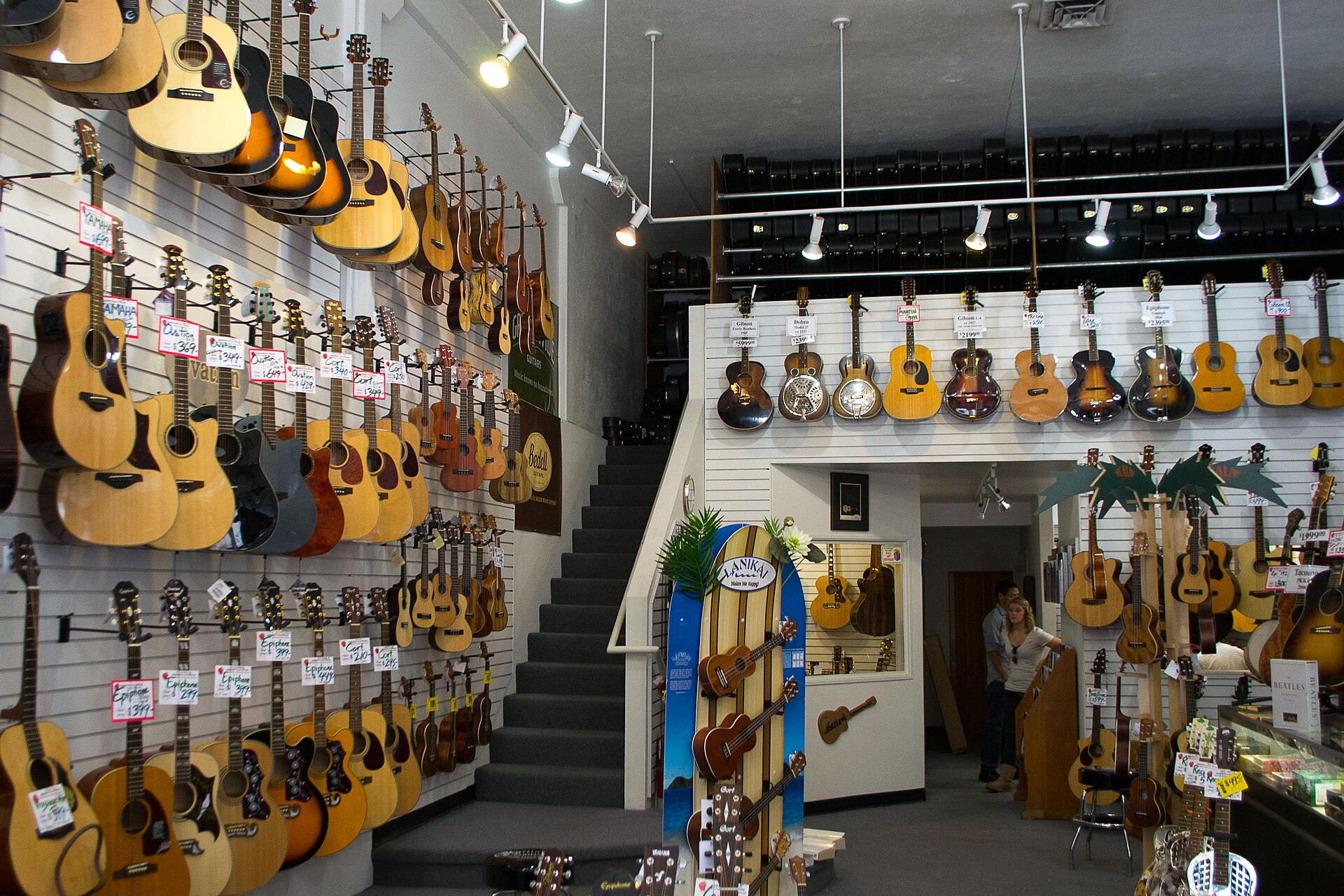
HOLLYWOOD — The repair bench at Grubb & Sons runs the length of the back wall, and by two o’clock on a Tuesday in July nine guitars were leaning against it in a row, each tagged, each waiting its turn like a patient who knows better than to complain.
The shop, a narrow storefront a half block off Sunset near Gardner, turned sixty this month. It has sold instruments since 1966. But the people who work there say the selling was never really the business.
“Anyone can take a guitar down off a wall and ring it up,” said Arturo Grubb, 71, whose father opened the store and put both their names on the sign, though there was only ever the one son. “What keeps the lights on is what happens after. You set it up, you fix it when the kid knocks it down the stairs, you’re the person he calls in twenty years when the neck finally goes. That’s a relationship. You can’t order it online.”
The bench is run most days by Priya Sundaram, 38, a luthier who came in nine years ago to have a warped acoustic looked at and never quite left. She does fret jobs, neck resets, the slow careful work of making an old instrument playable again. On the day I visited she was heating the glue under the bridge of a 1970s dreadnought whose top had begun to lift, working a thin blade in with the patience of someone defusing something.
“People bring me guitars that aren’t worth the repair, dollar for dollar,” she said. “A three-hundred-dollar fix on a two-hundred-dollar guitar, and they do it anyway, because it was their dad’s, or it’s the one they learned on. I’m not really charging for the parts.”
The store has survived the way small music shops survive, which is barely and on purpose. Grubb said the big online sellers took the easy sales years ago — the strings, the cables, the beginner packages a parent buys once and never thinks about again. What the internet cannot ship is a person who will spend twenty minutes with a nervous twelve-year-old deciding whether her hands are big enough for a full-size neck.
Rent is the standing worry. The block has changed around the shop the way blocks near Sunset do: a record store gone, a vape shop come and gone, a coffee place that lasted eighteen months. Grubb owns his lease through the end of the decade and declines to think past it out loud.
A steady trade of working musicians keeps the register moving — session players who need a setup before a date, touring acts passing through who need something fixed fast. Sundaram keeps a shelf of loaners for exactly those emergencies. “A guy came in once at closing, flight to Tokyo in the morning, cracked headstock,” she said. “I was here until one. He sent me a postcard.”
The sixtieth passed without much fuss. Grubb taped a photocopy of the 1966 grand-opening ad to the window and set a fresh pot of coffee on the amp by the door. By closing, the line at the bench was down to seven.