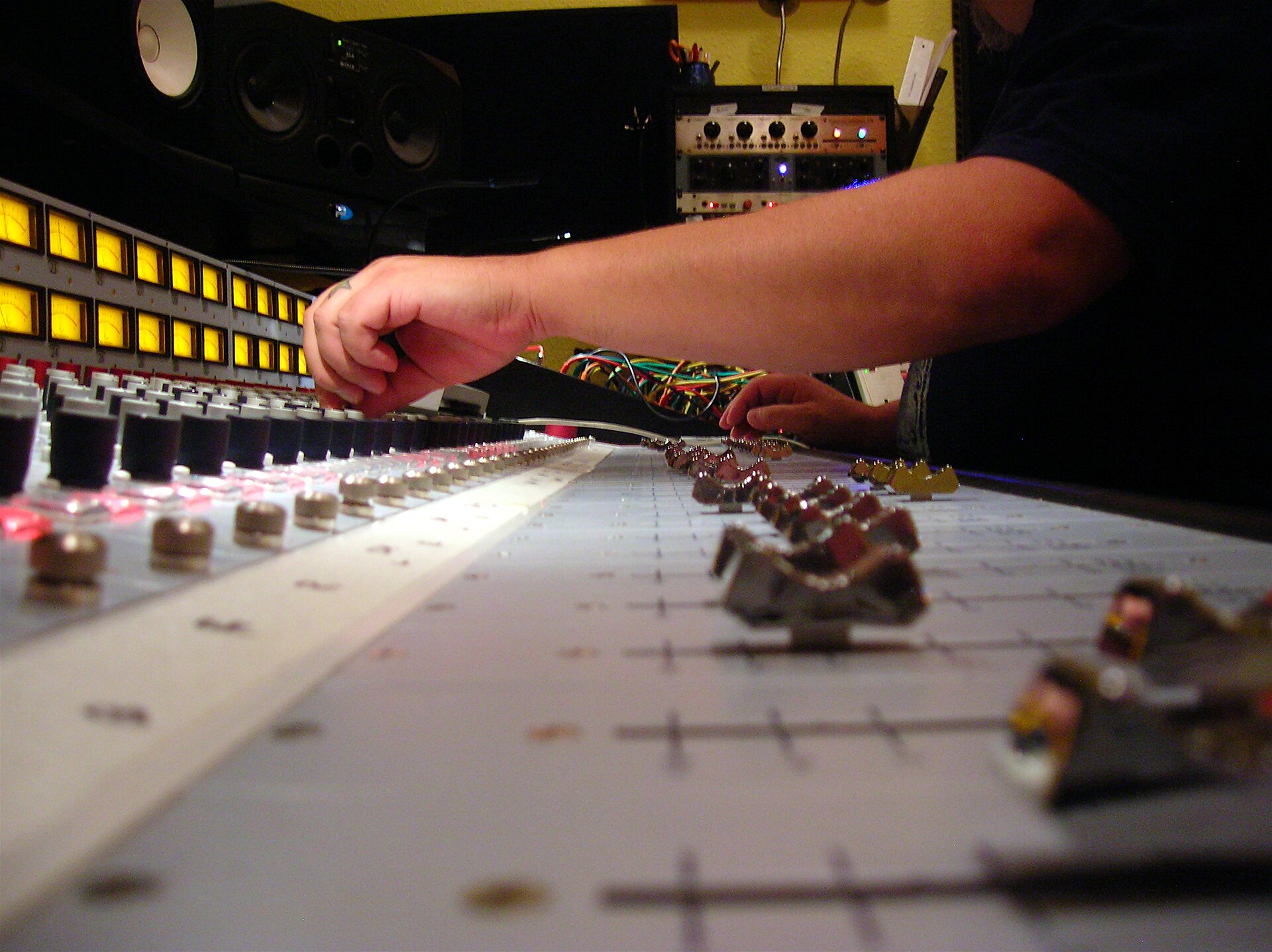
HOLLYWOOD — The console in the back room has sixty-four channels, most of a ton of steel and nostalgia, and on a good week it might record a punk band, a children’s audiobook, and a podcast about haunted houses, sometimes on the same day.
The studio has occupied the same Hollywood building for over twenty years, long enough to have watched the recording business it was built for largely leave town. The famous rooms where the hits were cut have mostly closed or gone corporate, priced out by rent or made redundant by software that lets a teenager record an album on a laptop. What is left for a studio this size is everything else, and its owner has learned to say yes to almost all of it.
“When I started, I turned down work that wasn’t music, because I was a music studio and I had standards,” said Roland Beaumont, 58, who engineers most of the sessions himself. “Standards are a luxury. Now I record whoever books the room. A band on Tuesday, a guy narrating his own memoir on Wednesday, a wine company’s podcast on Thursday. The console does not know the difference, and neither, anymore, do I.”
The economics are unforgiving. Studio time is sold by the hour or the day, and clients who once booked a week to make a record now book an afternoon to fix what they made at home. Beaumont fills the calendar by widening the definition of the business: voice-over auditions, podcast production, the occasional band that still wants the sound of a real room, and a trickle of hobbyists paying to feel professional for a day.
The lean stretch on the production side has not helped. A slow couple of years for the local screen business has thinned the voice-over and audio work that used to be reliable filler between music sessions, and Beaumont says he now competes for jobs he would once have waved off.
Della Adeyemi, who fronts a local band that has recorded three records with Beaumont, said the appeal is the thing a laptop cannot fake.
“You can make it sound clean at home, and clean is not the same as alive,” Adeyemi said, coiling a cable after a session. “He puts four of us in a room and makes us play it together until it breathes. That costs money and it is worth it, and I understand completely why almost nobody does it anymore.”
Beaumont is not sentimental about the machines, exactly, but he admits the big console is more expensive to keep than it is easy to justify, and that a laptop would do most of what his clients now ask. He keeps it because a certain kind of client walks in, sees it, and books on the spot, and because selling it would feel like conceding a point he is not ready to concede.
At the end of the day he backed up the session and shut the room down, the big console going quiet under its dust cover. Tomorrow it was a podcast, then maybe a band, then whatever the calendar coughed up — which was, he said, the only business plan left that still worked.