HOLLYWOOD — The sale closed on a Thursday afternoon, in the back office, on a folding table between the paint shaker and the water heater, and the first thing the new owner did was go out front and cut a key for a customer who had been waiting.
“That’s the job,” Marisela Ybarra said. “The signing was the interruption.”
Ms. Ybarra, 41, is now the owner of the hardware store on a side street off Santa Monica Boulevard that Walt Dorsey opened in 1980 and has run, six days a week, for forty-six years. She started there in 2004, at nineteen, as a Saturday cashier. She has been the manager for eleven years, the person who orders, the person who knows which of the four grip-and-electric buyers from the studios wants his gaffer tape in which color, and, for most of the past decade, the person customers ask for by name.
Mr. Dorsey, 74, is staying on Tuesdays. He was specific about this. “Tuesdays and the paint counter,” he said. “I mix paint. I do not run anything. I have been very clear with her that I do not run anything.”
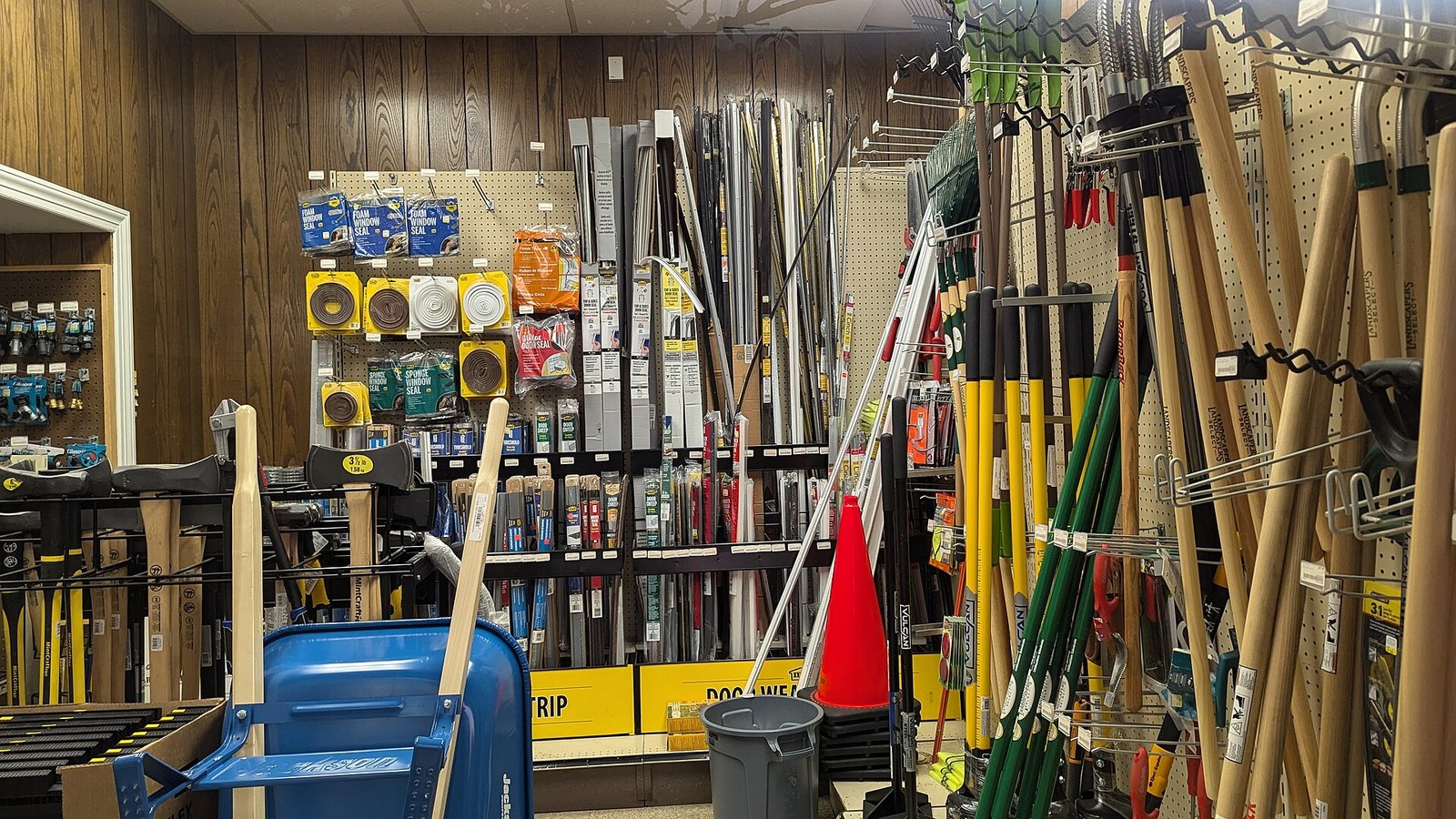
The store is the kind the neighborhood has fewer of every year: fourteen aisles in a building that was a garage before it was a store, a wall of small drawers holding fasteners by size, a bin by the register of orphaned screws and bolts that Mr. Dorsey started in 1983 and has never once charged for. A customer who needs one odd machine screw to finish a job is told to take it and come back when they need a box.
“He built the whole business on that bin,” Ms. Ybarra said. “People come in for the free screw and leave with the drill.”
The sale is seller-financed over ten years, a structure Mr. Dorsey said he chose because no bank would lend on a hardware store and because he had “no interest in selling to anyone who’d need a bank.” Ms. Ybarra made her first payment the day of the closing, from the store’s account, which is now hers. She is not the first person in the neighborhood this year to buy the business she already worked in — the bakery on the eastern end of the district went to its employees as a cooperative in the spring — and she said she had read that story closely.
“Different structure. Same problem,” she said. “The owner wants to stop, the people who know how the place works don’t have the money, and the money people don’t know how the place works. You solve it with a note and a lot of trust, or the place closes.”
What she will change, she said, is little. The studio trade — prop buyers, set dressers, the grip departments that keep an account and pay monthly — has grown to about a third of the business and she intends to grow it further, with a delivery run to the lots on the eastern edge of the district twice a week. The screw bin stays. The hand-lettered sale signs in the window stay, though the man who lettered them, whose obituary this newspaper published Tuesday, will not be painting new ones.
Mr. Dorsey said he intends to spend Wednesdays through Mondays finding out what retirement is. He gave the impression of a man who had not researched it.
“I opened this store because I was tired of driving to the Valley for a washer,” he said. “I’m selling it to the one person who’d never let it become a place you’d drive to the Valley to avoid. That’s the whole plan. That’s forty-six years.”
The customer with the key, asked whether he minded waiting through the closing, said he had not known there was one.
“She cut it, it worked, I paid,” he said. “That’s what it was like last week.”