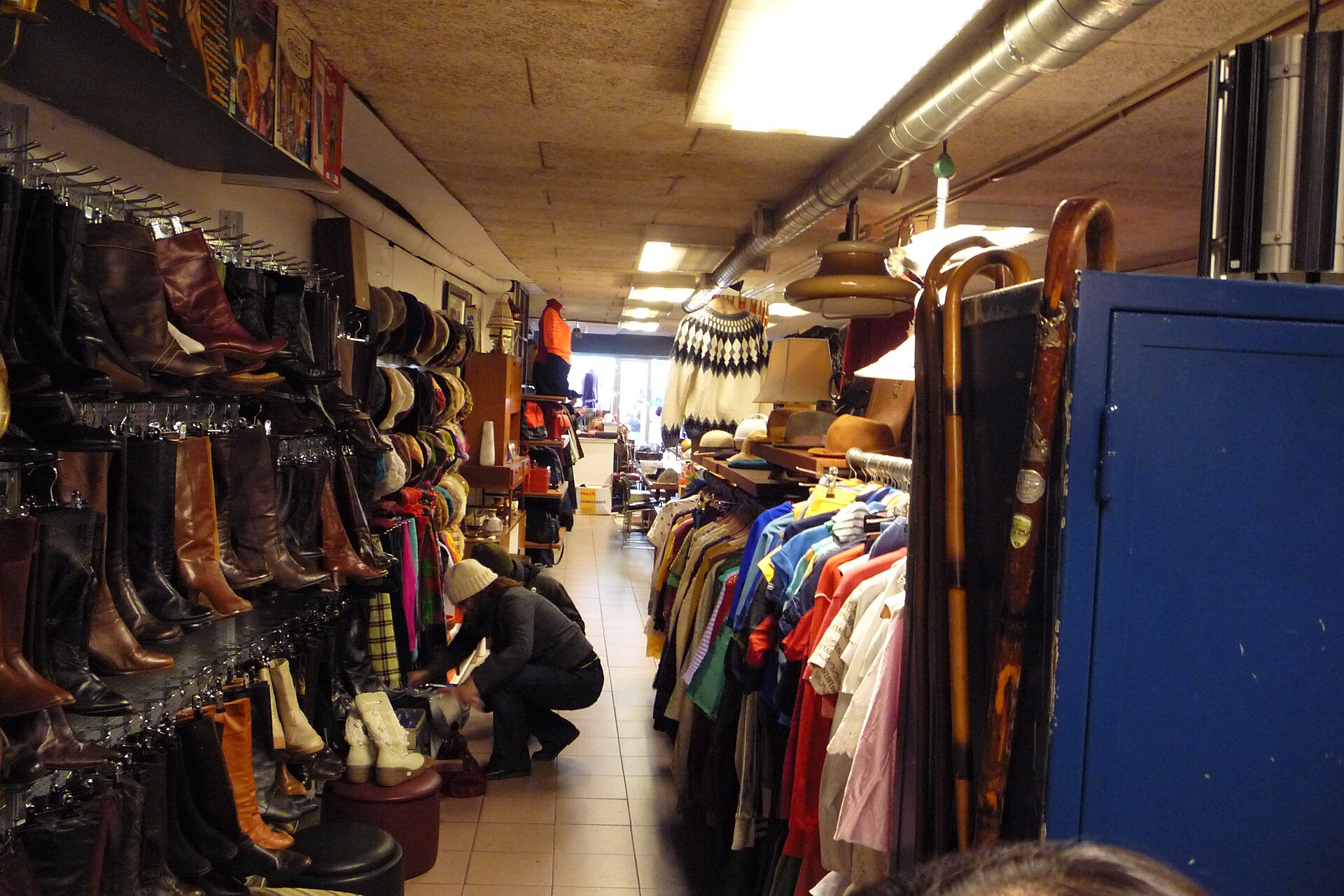
HOLLYWOOD — The shop in August is quiet enough to hear the sewing machine, which is the point of August.
“People think the season starts when the line forms at the fitting curtain,” said Ingrid Sczepanski, who has owned the costume shop for twenty-three years and is now preparing for her twenty-third October. “The season starts now, when nobody is here. October is just where the work becomes visible. If I am still getting ready in October, I have already lost.”
Getting ready looks like this: the summer’s estate-sale haul — nine boxes, acquired at sales from Glendale to Torrance — is being sorted, steamed, and triaged into rent, sell, and what her floor manager calls the third pile. The mending backlog from last season, capes with torn linings and a military coat that came back without its buttons, is moving across the sewing table at a rate of two or three garments a day. And the annual guess has been made.
The guess is the part she cannot control. Every autumn, some film or show or resurfaced photograph sends half the city hunting the same silhouette, and the shop does well if Sczepanski happened to stock it in July and poorly if she did not.
“Last year I guessed right and the year before I guessed wrong, so I am due for either,” she said. “This year I have gone heavy on courtroom — robes, wigs, gavels. Do not ask me to explain it. It is a feeling, and in twenty-three years the feeling has been right slightly more often than a coin.”
Marcus Delvaux, who manages the rentals and is entering his seventh season on the floor, has watched the August ritual long enough to have his own barometer. “In February I’m dusting,” he said, repeating a line he stands by. “In August I’m carrying. Nine boxes came in and I carried all nine. When my back hurts in August, it’s going to be a good October.”
There is one difference this year, and it is the same difference everyone on the Boulevard reports. The working customers — the small theaters, the music videos that need eight matching soldiers by Thursday, the wardrobe assistants hunting a specific hat — have been a thin trickle in a thin production year, which means the autumn peak will carry even more of the load than usual. Sczepanski has responded by doing something she has resisted for a decade: hiring her two seasonal floor hires in August instead of late September, so that they are trained before the crowds arrive rather than during.
“Last October I turned people away at closing with money in their hands,” she said. “You can forgive yourself a slow February. A fumbled October you think about all winter.”
The racks will begin their annual migration toward each other after Labor Day, opening the center of the floor for the crowds. The fitting curtain gets a new hem this week — its fourth. On the first of November, as always, Sczepanski will sleep.
Until then there is the sewing table, the steamer, and the third pile, which Delvaux was asked to define and did, after consideration.
“Things that are not good enough to rent and too good to throw away,” he said. “The shop is twenty-three years old. The third pile is the biggest pile.”