HOLLYWOOD — The shoe store on the Boulevard has had 214 people through the door this week and sold 61 pairs, and the owner can tell you both numbers without looking, because the gap between them is the only thing he has thought about since Monday.
“Same traffic as last August. Almost exactly,” said Anselm Kirkbride, who has sold shoes on the same block since 2003 and stocks heavily for the first two weeks of the month. “Conversion is down about a third and the average ticket is down more than that. People are coming in, they are trying things on, and they are buying one pair instead of two. Or they are buying the cheaper pair and I watch them decide.”
Classes resume across the district in the middle of the month, which makes the first two weeks of August the year’s compressed second Christmas for a particular set of Hollywood businesses: shoes, uniforms, stationery, backpacks, haircuts. Nine such operators interviewed this week described the same pattern with unusual consistency. Foot traffic normal to slightly up. Spending per family down. And a marked shift in when people are showing up — later, closer to the bell, and disproportionately on the weekend after payday.
“Nobody bought a backpack in July this year,” said the owner of a stationery and school-supply shop off Highland, who normally does a third of her August business in the last week of July. “They will buy it on the fourteenth. They will buy it on the fifteenth. Some of them will buy it on the eighteenth, which is after school starts, and they will apologize to me about it, which breaks my heart because why are they apologizing to me.”
Two operators put the shift down to the calendar — payday landing where it lands — and most put it down to arithmetic. The uniform requirement at several area schools has not changed; the price of the polo shirt has. A barber on Cahuenga said his August has moved almost entirely into the final week, and that he has started offering a cheaper cut for children under twelve because he was watching parents do the math out loud at his counter.
The exception, and it is a large one, is resale.
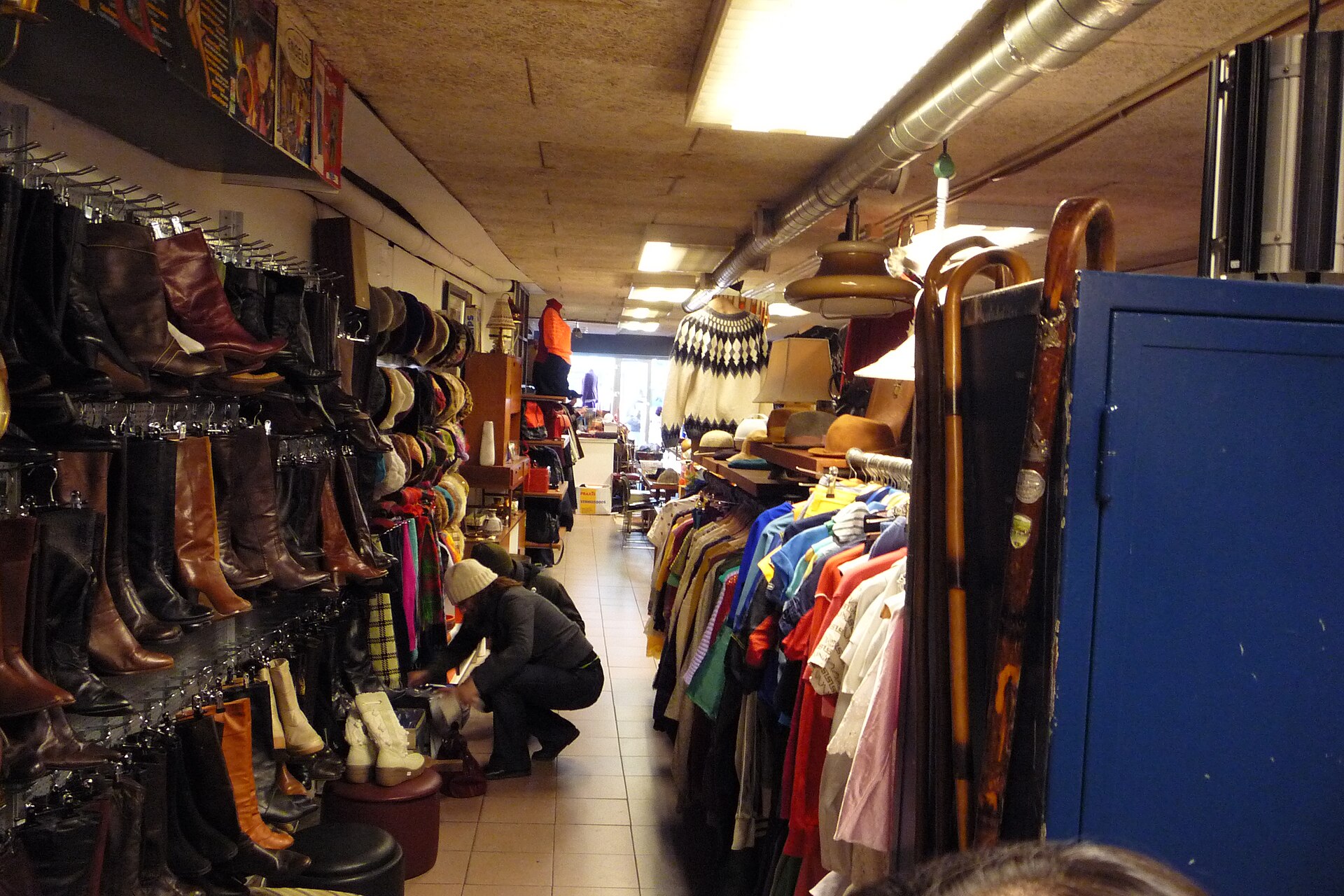
The vintage and secondhand corridor on the neighborhood’s west edge — the row this paper wrote about in June, where the costume designers shop first — is having what two owners independently called its best August in five or six years, and the growth is not coming from designers. It is coming from families.
“I have never had this many mothers with a list,” said Odalys Fontenot, who has run a secondhand clothing store for fourteen years. “A list from the school. Khaki, navy, no logos. I did not used to be a school-uniform store. I have set up a rack by the door and it is the best rack in the shop.”
She has also raised her buying prices for children’s clothes in good condition, which is the clearest possible signal of where the demand is, and has told her regulars so.
The pattern is familiar to anybody who has run a small shop through a soft year: total spending falls less than it appears to, and moves. A dollar that does not buy a new pair of shoes at $58 buys a used pair at $14 and a bag of groceries. The shoe store two blocks away experiences that as a 30 percent drop in conversion. The resale store experiences it as the best August since 2020. Neither owner is wrong about their year.
What both agree on is the timing risk. A season that arrives late arrives all at once, and a small shop’s inventory decisions were made in May. Mr. Kirkbride ordered for a normal August and is now looking at a wall of stock he needs to move in nine days.
“If the fourteenth and the fifteenth are enormous, I will have had a fine month and I will tell you I worried for nothing,” he said. “If they are ordinary, I have a problem in September, and I bought the problem in May.”
The supply drive at the church on Franklin, which fills 1,200 backpacks and distributes them on the fifteenth, reported Monday that it has more bags than contents and is short, as it is every single year, of blunt-tip scissors.