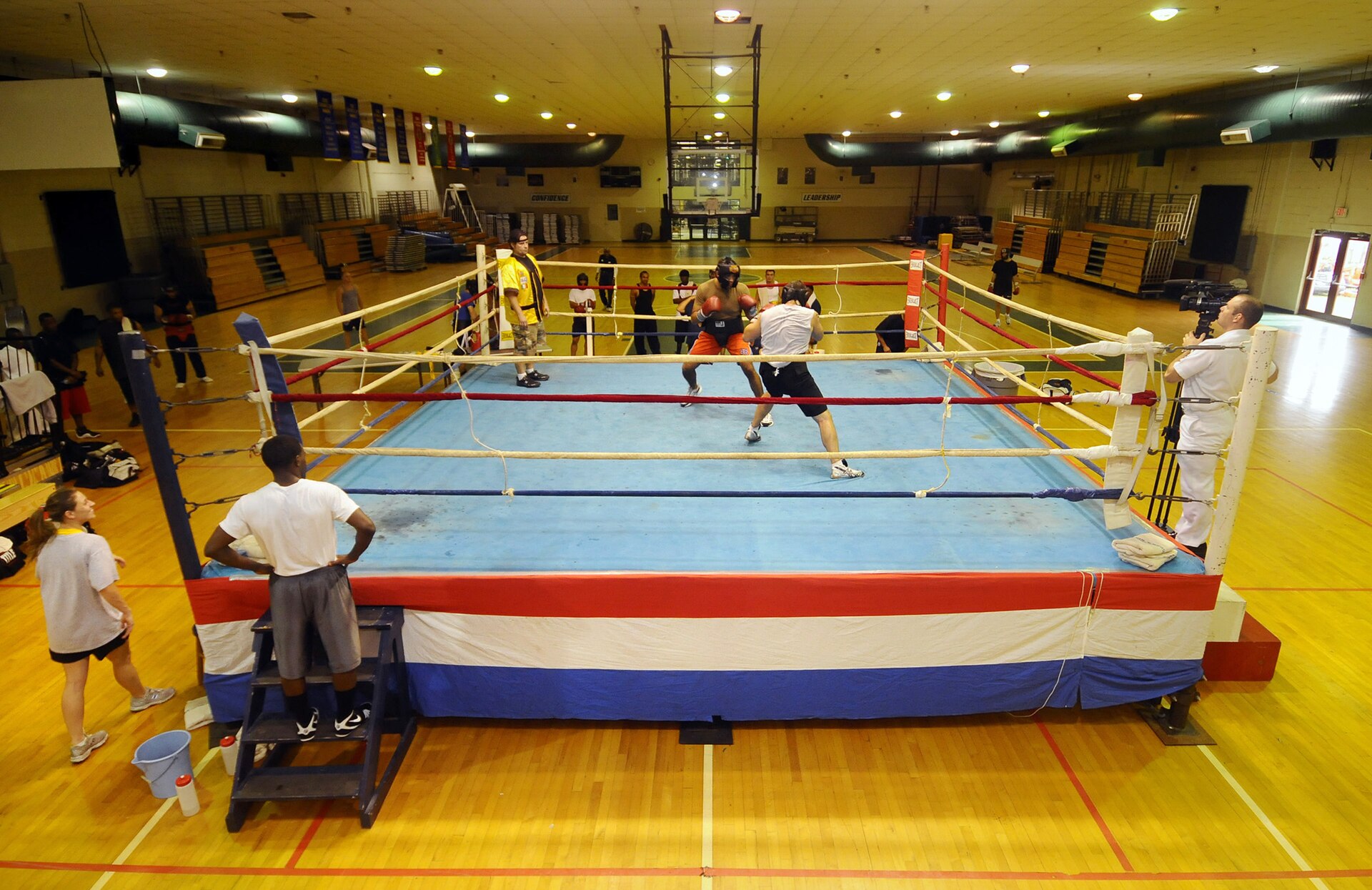
HOLLYWOOD — Before any teenager at the gym is allowed to put on gloves, a coach checks something less glamorous than a jab: a report card.
The rule is the whole idea, said Rudy Machado, 54, who runs a free after-school boxing program out of a low-ceilinged gym in central Hollywood. Kids come for the heavy bags and the ring. What Machado is actually running, he will tell anyone, is a homework club that happens to smell of sweat and leather.
“I have got maybe two fighters in here who will ever fight for anything,” Machado said, wrapping a boy’s hands at a bench. “The rest, boxing is the hook. You want to spar Thursday, I need to see you passed your classes. Grades slip, gloves come off. They test me on it exactly once.”
The program takes teenagers from around the neighborhood in the hours after school lets out and before anyone is home to watch them, the stretch Machado calls the dangerous part of the day. There is no fee. The equipment is donated, patched, and donated again. Two retired fighters volunteer as coaches, and a rotating cast of parents works the door and the water.
For the kids, the appeal is not complicated. Elias Reyes, 15, came in a year ago after a couple of fights at school and now spends his afternoons hitting a bag instead.
“Out there, somebody looks at you wrong, you feel like you have to answer it,” Reyes said, still breathing hard from three rounds on the mitts. “In here you learn the opposite. You learn you can walk away, because you already know what you can do. That is a weird kind of calm.”
The gym measures its results in things that never reach a sports page. A kid who was failing algebra pulls a C. A senior nobody expected to graduate walks in a cap and gown and comes back to help coach. Machado keeps their old headgear on a shelf like trophies, and can tell you where each of them landed.
Not everything is a rescue story, and Machado bristles at the word. Some kids just want to box, get good, and move on, and he is fine with that too. What he guards against is the notion that the place is a charity for troubled youth, a framing he says insults the kids who simply like the work.
Gloria Guerra, whose son has trained here two years, spends most afternoons at the folding table by the door, checking names against a sign-in sheet and, quietly, against the school year.
“He walks straighter than he did,” Guerra said. “Not because anybody toughened him up. Because somebody expected something of him every single day and kept the door open.”
Late in the afternoon the bell timer buzzed for the last round, and a dozen teenagers threw combinations at bags in ragged unison while Machado counted down. When it stopped, they lined up to sweep the floor without being asked, and drifted back out into the early winter dark, hands still taped, homework waiting.