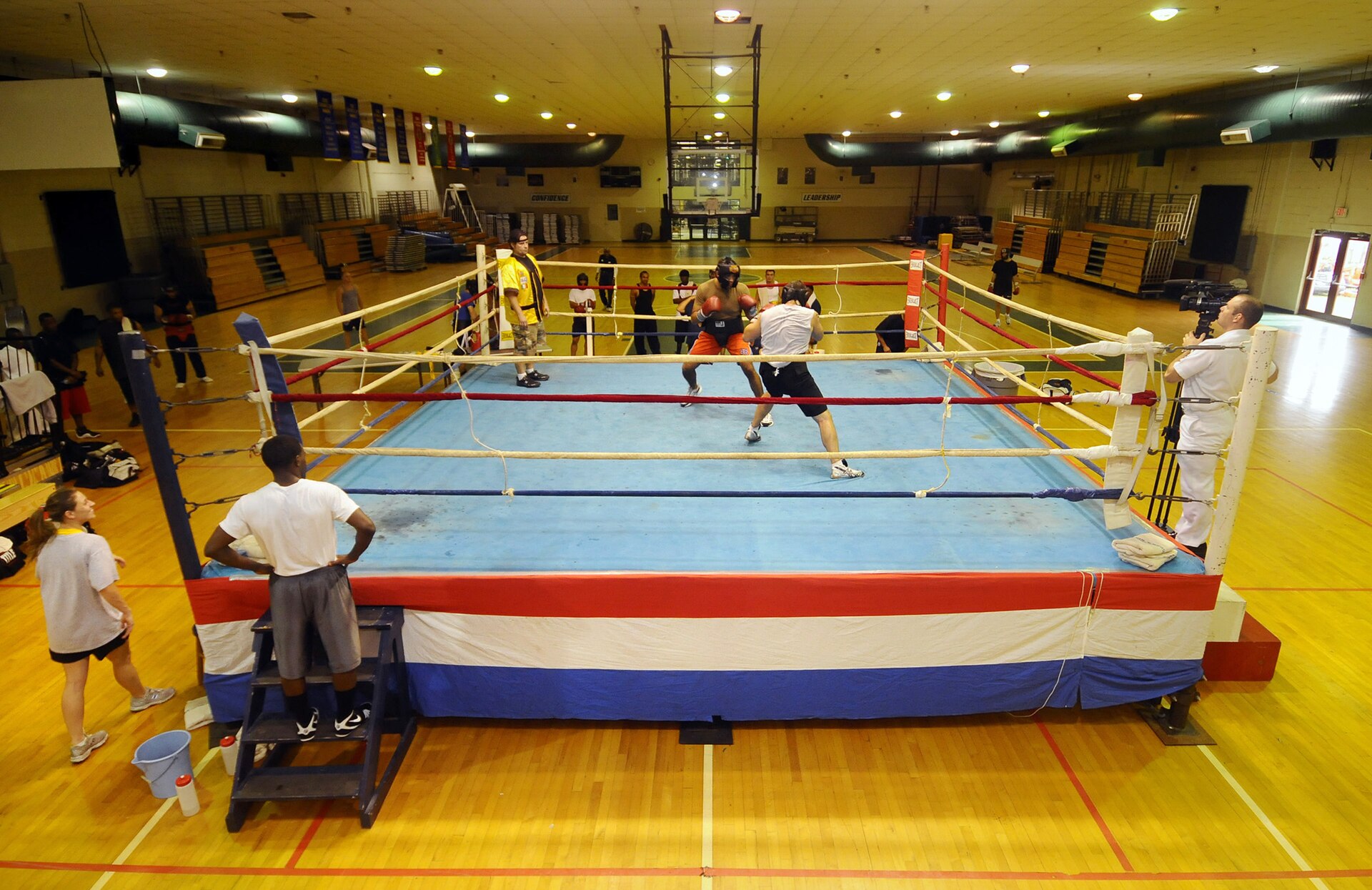
HOLLYWOOD — The heavy bags at the West Side Boxing Club hang from iron beams a welder sank into the ceiling in 1951, and three of them are by now more tape than leather.
The club, a low brick room off Santa Monica Boulevard, turned seventy-five this month and marked it the way it marks most things: during regular hours, with a dozen fighters on the bags and no sign on the door that anything was different. The anniversary was noted mainly by the man who owns the place now, Marco Alcaraz, the third of his family to hold the keys.
His grandfather, Vic Alcaraz, opened the gym the year after he stopped fighting, having decided a bad cut over his eye had made the decision for him. He trained welterweights through the 1950s and ’60s, kept the lights on with a day job at a lumberyard, and hung a hand-lettered rule over the door that his grandson has refused to take down: NO EXCUSES, NO EXCEPTIONS, DUES ON THE FIRST.
Vic’s son Rudy took over in the 1970s and ran the gym through its busiest years, when the room was full most nights and a handful of his fighters made the undercards of televised bouts downtown. Rudy was, by wide agreement, the harder of the two to please. “My father could watch you skip rope for an hour and find one thing wrong with your feet,” Marco said. “He wasn’t cruel. He just thought praise was something you spent, and he was cheap with it on purpose.”
Marco, now 44, grew up sweeping the gym for a dollar a day and took it over when Rudy’s knees gave out. He trains a mix now — a few genuine prospects, more kids sent by parents who want them tired by dinnertime, and a growing number of adults who pay the monthly dues to hit something after work. The adult memberships, he admits without embarrassment, are what keep the prospects in gloves.
The block around the gym has turned over more than once. The lumberyard is a self-storage tower now. A coffee place two doors down sells a cup for close to what Vic once charged for a week of training. Marco has been offered money for the building more than once, by people who describe the space as “characterful,” and has so far declined.
One of his fighters, a 19-year-old featherweight named Dominic Reyes, has begun to draw notice, with a record Marco will discuss only reluctantly, superstitious about jinxing it. Reyes came in at fourteen, thrown out of somewhere else for fighting, and Marco did with him what his own father had done: handed him a rope, said nothing kind, and waited.
Late in the evening, after the last of the adults had gone, Marco walked the room shutting off the lights bank by bank, leaving the ring for last. He stopped under his grandfather’s sign, checked that the tape on the nearest bag would hold another week, and set the dues envelope for the first of the month on the desk where all three of them have kept it.