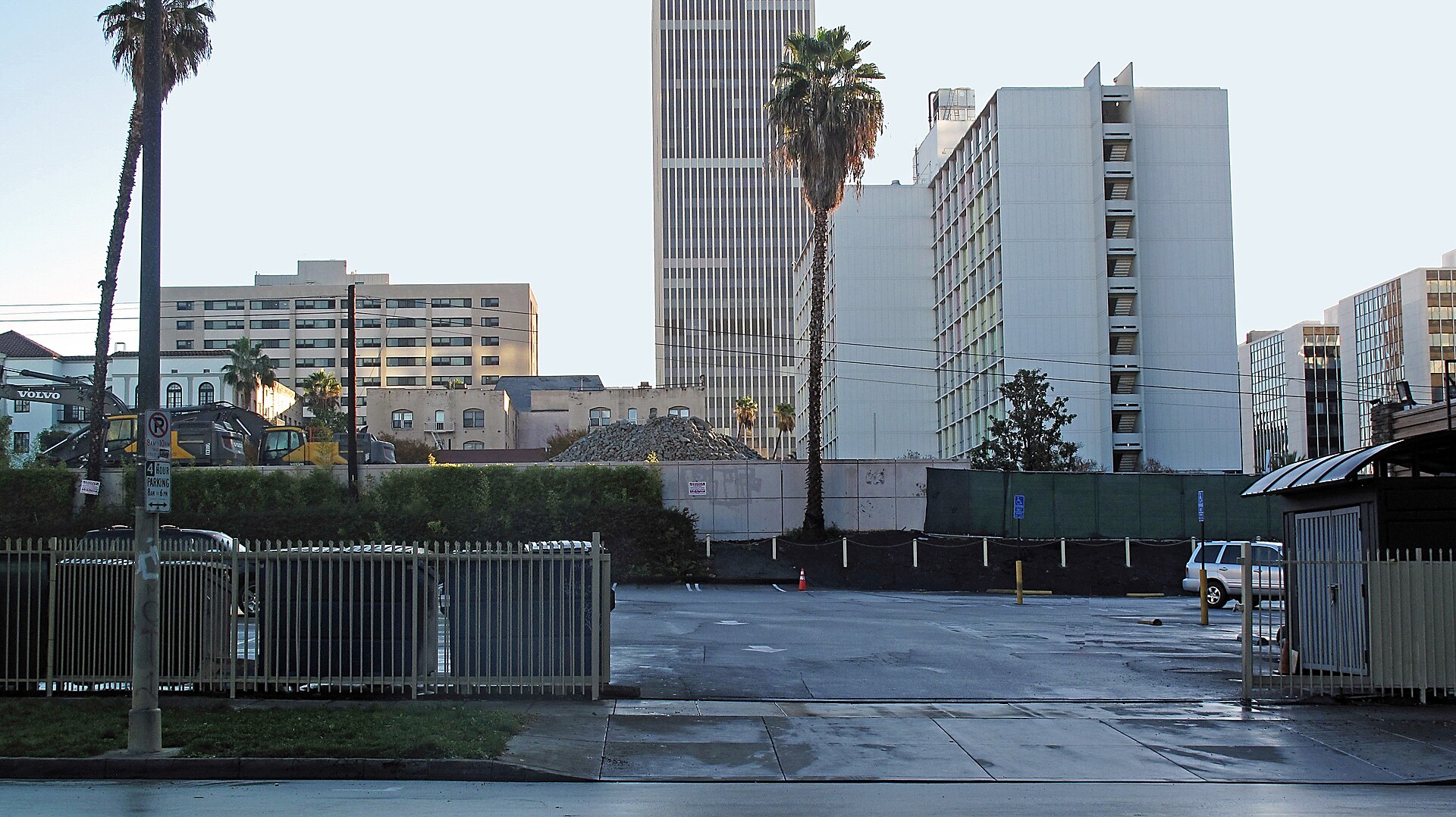
LOS ANGELES — The lot is a flat acre of asphalt a short walk from the Boulevard, striped for a few dozen cars and, on most days, less than full. To a council office looking for places to build housing without buying land, it looks like an answer. To the merchants whose customers park there, it looks like the loss of the thing that keeps them in business.
A motion introduced this month asks city staff to study building income-restricted apartments on the municipal lot, one of a handful of publicly owned parcels the city is examining as it hunts for sites it already controls. The logic is straightforward: the land is public, the transit is close, and a surface lot is about the least that a piece of ground near a busy commercial corridor can be asked to do. A report is due back later this year.
Housing advocates who packed the meeting called the idea overdue. They pointed to the rents in the surrounding blocks and to the years it takes to assemble a site from private owners, and argued that a city serious about building cannot keep paving its own land for cars.
“We own it. It’s next to a train. If we can’t build housing there, tell me where we can,” said Priscilla Vanterpool, an organizer with a tenants’ group, who told the committee the lot was “a parking problem pretending to be a land shortage.”
The merchants see it differently, and they were there too. Several who run shops and restaurants along the adjacent blocks said the lot is the only real parking their customers have, and that losing it — even to a building with some parking of its own — would finish businesses already thinned by online competition and a hard couple of years.
“Everyone loves housing until it eats the parking their own customers use,” said Dov Marchetti, who runs a hardware store nearby and has watched foot traffic decline for a decade. “I am not against apartments. I am against being told my customers can take the train to carry home a gallon of paint.”
City staff cautioned that the study is only a study. Building on the lot would require design, financing, environmental review and, likely, a replacement-parking analysis, any of which could stall or reshape the project. Nothing about the motion commits the city to build, and staff were careful not to promise a shovel.
A representative from Councilmember Alicia Rendón’s office said the goal was to look honestly at what the land could hold, weighing the housing the city needs against the small businesses the corridor cannot afford to lose. The committee advanced the motion to staff and set no date beyond the coming report.
For now the lot stays a lot. Cars pulled in and out through the afternoon, a valet stand worked one corner of it, and the debate over what should stand there instead moved, as these things do, into the slow machinery of a study that will not answer anyone for months.