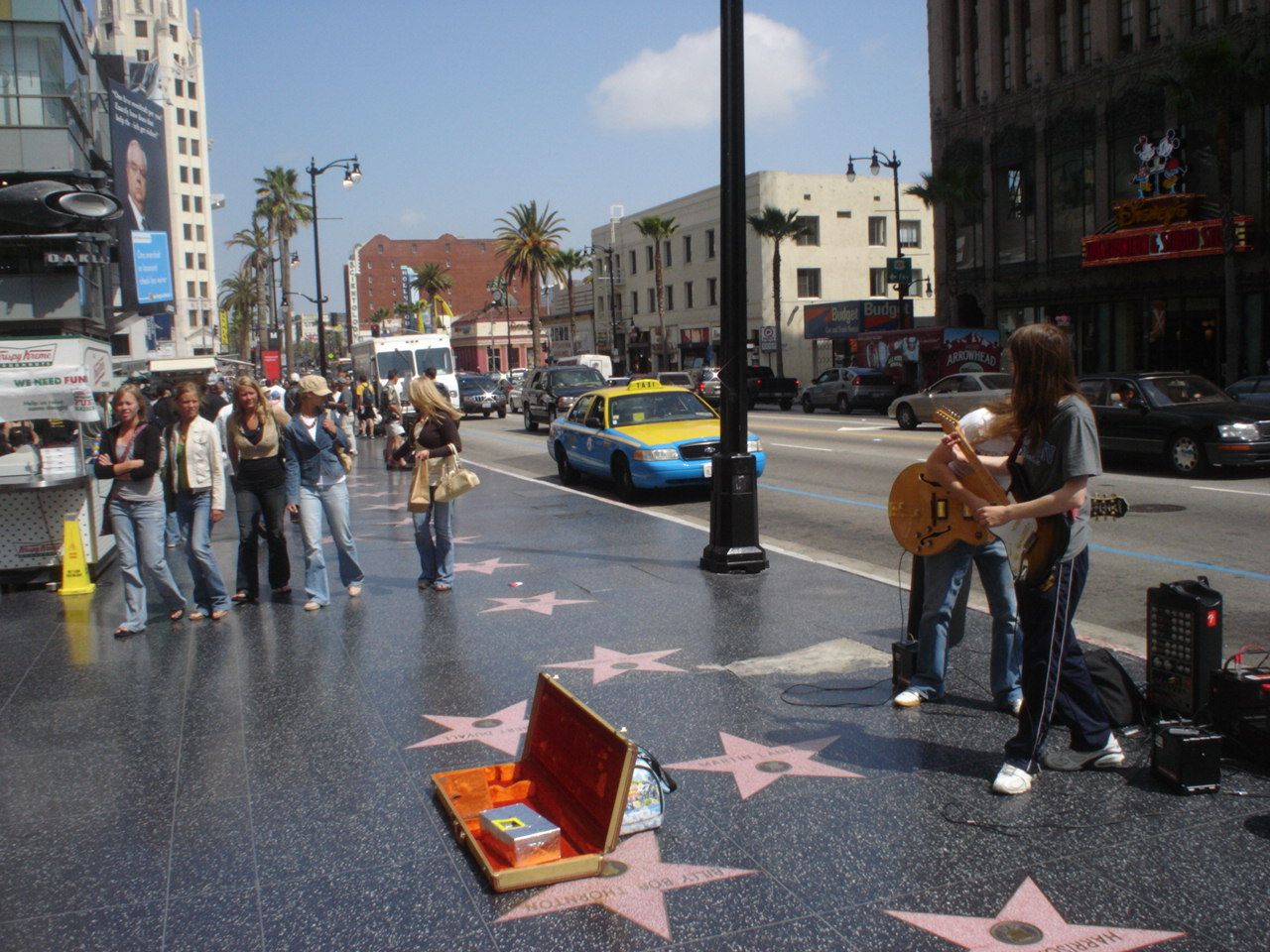
LOS ANGELES — Three weeks after the Walk of Fame restoration slipped its third deadline with no announcement, two council members filed a motion Thursday demanding a public accounting of the delay — and disclosed that in six weeks of asking, neither of them has been able to establish whether the contract contains a penalty for finishing late.
The motion, introduced by Councilmember Alicia Rendón and co-signed by Councilmember Whit Bogardus, an alignment rare enough on Hollywood matters to be worth noting on its own, instructs the bureau overseeing the project to report back in 30 days with the original schedule, every approved change order, the reason for each of the three revised completion dates, the amount disbursed to date, and — in the motion’s language — “the full text of any liquidated damages, incentive, or schedule-compliance provision applicable to this agreement, or a statement that none exists.”
That last clause is not boilerplate. It is there because the answer is not known.
“I asked in June, I asked in July, and what I have received is a sixteen-page contract summary and a very polite person telling me the underlying agreement is with a different bureau,” Ms. Rendón said. “I am not alleging anything. I am telling you that a councilmember cannot presently find out whether this city can charge a contractor for being fourteen months late, and that is not a small thing to not know.”
The project — a panel-by-panel replacement of cracked terrazzo along the Boulevard, begun fourteen months ago with a ribbon-cutting and a marching band — was scheduled to finish in March. Then June. As of last month the contractor’s revised schedule promises completion “by the holidays,” a phrase merchants along the fenced blocks have taken to repeating with an edge. Engineers who surveyed the corridor in 2023 found nearly a third of the panels between La Brea and Vine needed full replacement.
The bureau, asked Thursday, said it “will respond fully through the report-back process” and would not discuss contract terms in the interim. A spokesman for the contractor said the firm has met every requirement of its agreement, that the work is being performed by hand under conditions the schedule underestimated, and that no change order has been denied.
Mr. Bogardus, who has spent the summer opposing Ms. Rendón on the Vine Street bike lanes and does not appear to have enjoyed agreeing with her, framed his signature narrowly. “I do not care about the sidewalk today,” he said. “I care that we hand out multi-year contracts on a corridor where every month of scaffolding costs a small business real money, and that when the schedule fails, the only person who pays is the woman selling postcards.”
The woman selling postcards has been keeping her own accounting. Dora Feldman, who has run the same storefront on an affected block for twenty-two years, said her Saturday receipts are down by roughly a quarter whenever the fencing reaches her frontage, and that she has now had fencing on her frontage in eleven of the last fourteen months.
“They asked me in June to be patient,” she said. “I have been patient since 2025. I have been patient in three fiscal years. At what point does patience become something you can bill for?”
The merchants’ association’s request for a rent-relief program, modeled on one used during subway construction in the 1990s, remains — in the phrase a city staffer used last month and used again this week — “moving through channels.” Ms. Rendón’s motion does not include it. She said she left it out deliberately so the accounting request would not be bundled into a spending question and slowed down.
The motion goes to committee, which is where it meets the season. The relevant committee’s next scheduled meeting is in the last week of August, and the 30-day clock in the motion does not begin until the full council adopts it. In practical terms, a report that was requested in the first week of August will arrive, at the earliest, in the first week of October.
The work meanwhile continues at its own pace, which is genuinely slow for reasons that have nothing to do with the contract. Each panel is cast, cured and inlaid largely by hand. Crews may close only short segments at a time, to keep the sidewalk passable and to accommodate the ceremonies, film shoots and tourists that make the corridor what it is.
On Wednesday afternoon a crew was setting three fresh squares of pink terrazzo near Highland while a tour group photographed the wet concrete through the fence. A sign zip-tied to the fencing still read SIDEWALK CLOSED, USE OTHER SIDE. It has been there, by Ms. Feldman’s count, since the twelfth of June.