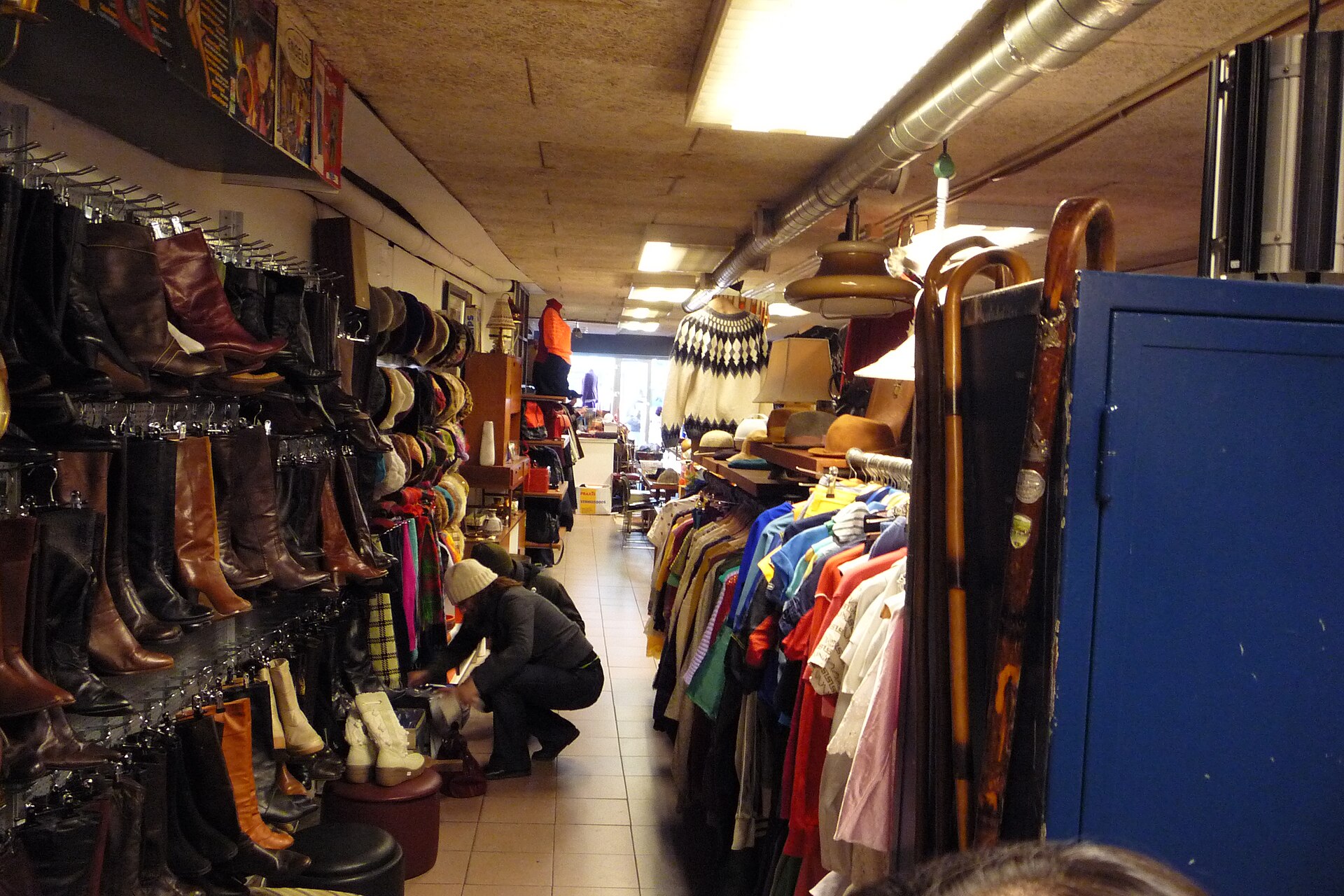
HOLLYWOOD — The costume buyers arrive before the tourists do, sometimes before the shops have technically opened, and the owners unlock the door for them anyway.
Along a five-block stretch near the neighborhood’s western boundary, a corridor of vintage and resale clothing stores has thickened over the past few years, from a couple of stubborn holdouts into something that behaves like a district. Nine shops now sit within an easy walk of one another, dealing in everything from 1940s tailoring to denim that was fast fashion fifteen years ago and is somehow collectible now.
What pulled them together was rent. The storefronts here run well under Boulevard rates, and vintage is a business of volume and floor space — you need room for racks, and more racks, and a back room besides.
“A costume designer will spend two hours and four thousand dollars in here and never try a single thing on, because she isn’t shopping for herself, she’s shopping for a character,” said Odette Brún, 52, who has run a shop on the strip for eleven years. She keeps a back room walk-in customers never see, reserved for the trade. “The good ones know the exact year they need. One held up a jacket last week and said, ‘this reads 1962, not 1958.’ She was right. I checked the label after she left.”
The film-and-television buyers are the corridor’s ballast. A single costumer outfitting a period show can clear a rack in a morning and come back for more, spending in an hour what a weekend of retail browsers might not match. Several owners said industry accounts make the difference between a good month and a rent-check scramble.
Marisela Ávila, 34, a costume assistant on a streaming drama set in the early 1970s, said she works the strip because the alternative is worse. “Studios keep their own stock, but it’s picked over and everybody’s used it. You see the same coat on three different shows. Out here I can find one of a thing, which is the whole point. On camera, one of a thing looks real. Ten of a thing looks like wardrobe.”
The work behind the racks is mostly invisible. Brún buys from estate sales, from downsizing families, from the occasional cardboard box left hopefully at her door, and she spends her mornings sorting, laundering, mending and pricing — deciding, garment by garment, what a stranger might one day need.
Not everyone on the strip is thriving. Two of the nine shops opened in the past year, and one owner conceded privately that she was not sure both newcomers would see a second summer. The vintage trade runs on a fragile arithmetic of cheap rent and patient buyers, and the rent, everyone agreed, does not stay cheap once a corridor gets a reputation.
At half past nine, before the OPEN sign was flipped, Brún was steaming a wool suit for a buyer she expected within the hour. She had already set it aside on a hanger with a name pinned to it.