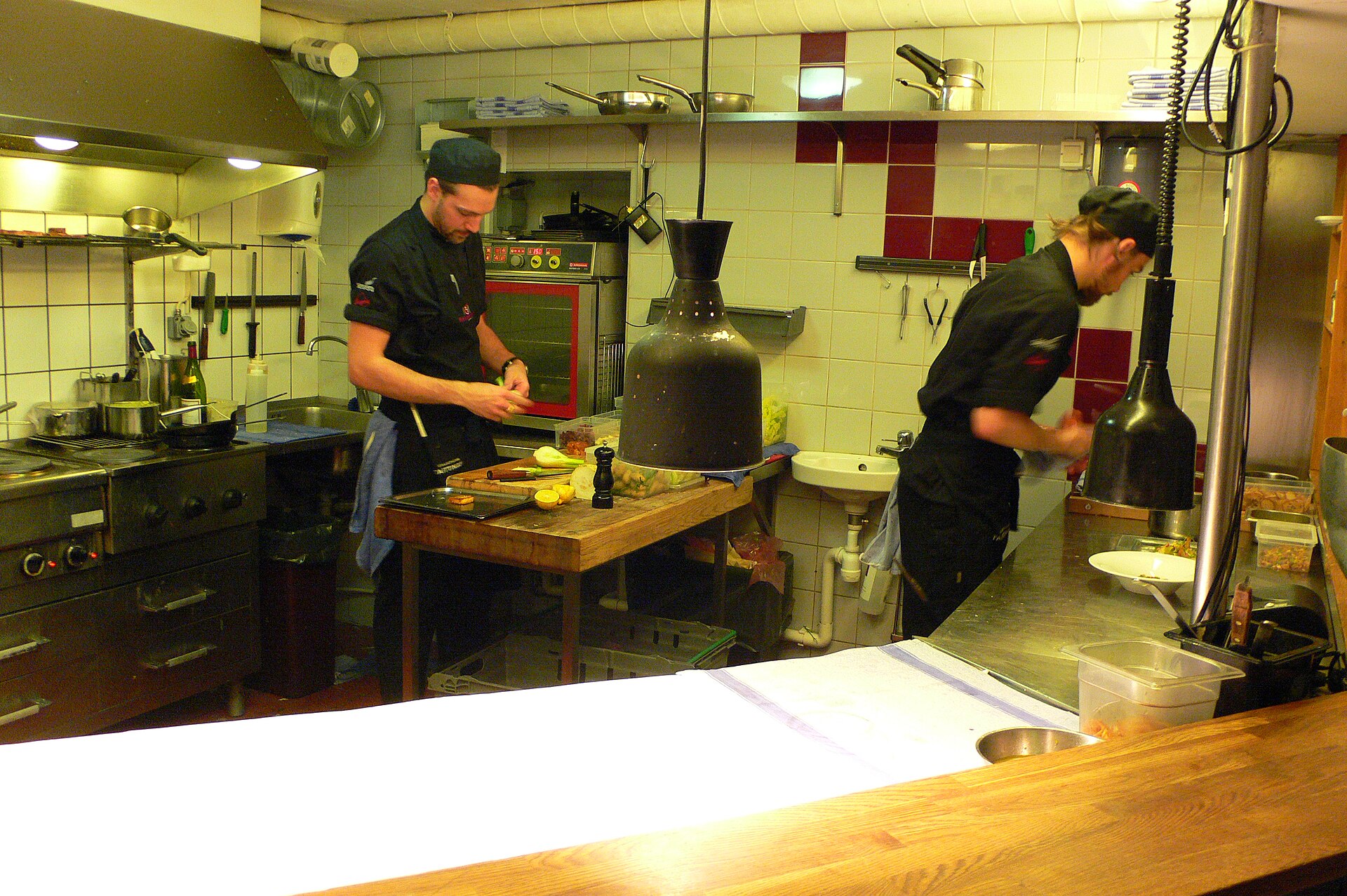
HOLLYWOOD — At four in the morning, when the rest of the block is dark, the windows of the shared kitchen off the Boulevard are lit and someone is already pulling trays from an oven that a dozen small businesses take turns owning.
The commissary rents licensed kitchen time by the hour to people who cook for a living but cannot afford a kitchen of their own — caterers, market bakers, a woman who makes tamales for a string of coffee carts, a hot-sauce maker who needs a legal address on the label. The health department requires food sold to the public to be made in an inspected kitchen. The commissary sells access to exactly that, in blocks of hours, around the clock.
“Everybody in here is one health permit away from a real business and one rent check away from no business at all,” said the owner, Delia Ferreira, 51, who took over the space from a caterer and now schedules it like an air-traffic controller. “I am not selling food. I am selling the four hours between midnight and four when the ovens are free and the rent is cheaper. For a lot of them, that window is the whole company.”
The tenants keep odd hours by necessity, staggered so the stations are never double-booked. A baker takes the pre-dawn slot, a caterer moves in by midmorning to build trays for an afternoon event, a food-truck cook preps in the early evening. They share a walk-in and a dish pit, and a bulletin board thick with the paperwork of very small enterprises.
Among the regulars is Marisela Ocampo, who built a wedding-cake business out of a 2 a.m. slot she chose because it was the cheapest on the board.
“I priced a storefront once and laughed out loud,” Ocampo said, boxing a cake between questions. “Here I pay for the hours I use and nothing else. My whole overhead is time. When the work is slow I book less, and I don’t go under. You cannot do that with a lease.”
The slow patches have come more often lately. Several tenants cater to the film business and the events around it, and a thin couple of years on the local production calendar has rippled all the way down to the trays. Ferreira has watched a few regulars scale back their hours and a couple disappear, and she keeps her rates flat partly out of principle and partly out of fear of an empty schedule.
The arrangement asks a particular tolerance for other people’s messes and a great deal of trust about labels, portions and cleanup. Ferreira mediates the occasional dispute over a misplaced sheet pan and enforces a single unbendable rule: you leave the station cleaner than you found it, or you lose your hours.
By the time the breakfast crowd is ordering somewhere else, the pre-dawn baker has come and gone, her trays already in a van, the oven cooling for whoever booked the next block. Ferreira wiped down the schedule board, penciled in a new name for January, and turned the lights over to the morning’s first tenant.