HOLLYWOOD — Marisol Quintero can name every newsstand that used to stand along this stretch of Hollywood Boulevard, and she can point to the corners where they were, because she is the only one left standing on hers.
Quintero, 59, has run the sidewalk newsstand near Hollywood and Cherokee for twenty-two years, inheriting it from an uncle who ran it for twenty before that. It is, by her account and by the recollection of the merchants around her, the last physical newsstand on the Boulevard, the survivor of a trade that once put a stand on nearly every busy corner and now supports almost none. The papers and magazines that gave the stand its name no longer pay its rent, and she is unsentimental about why.
“Nobody buys a newspaper to read the news anymore. They read it on the phone before they’re out of bed,” she said, restocking a cooler of bottled water that outsells every magazine on the racks. “What keeps me open is water, lottery, phone chargers, postcards, and the tourists who want a picture of a newsstand because they’ve never seen a real one.”
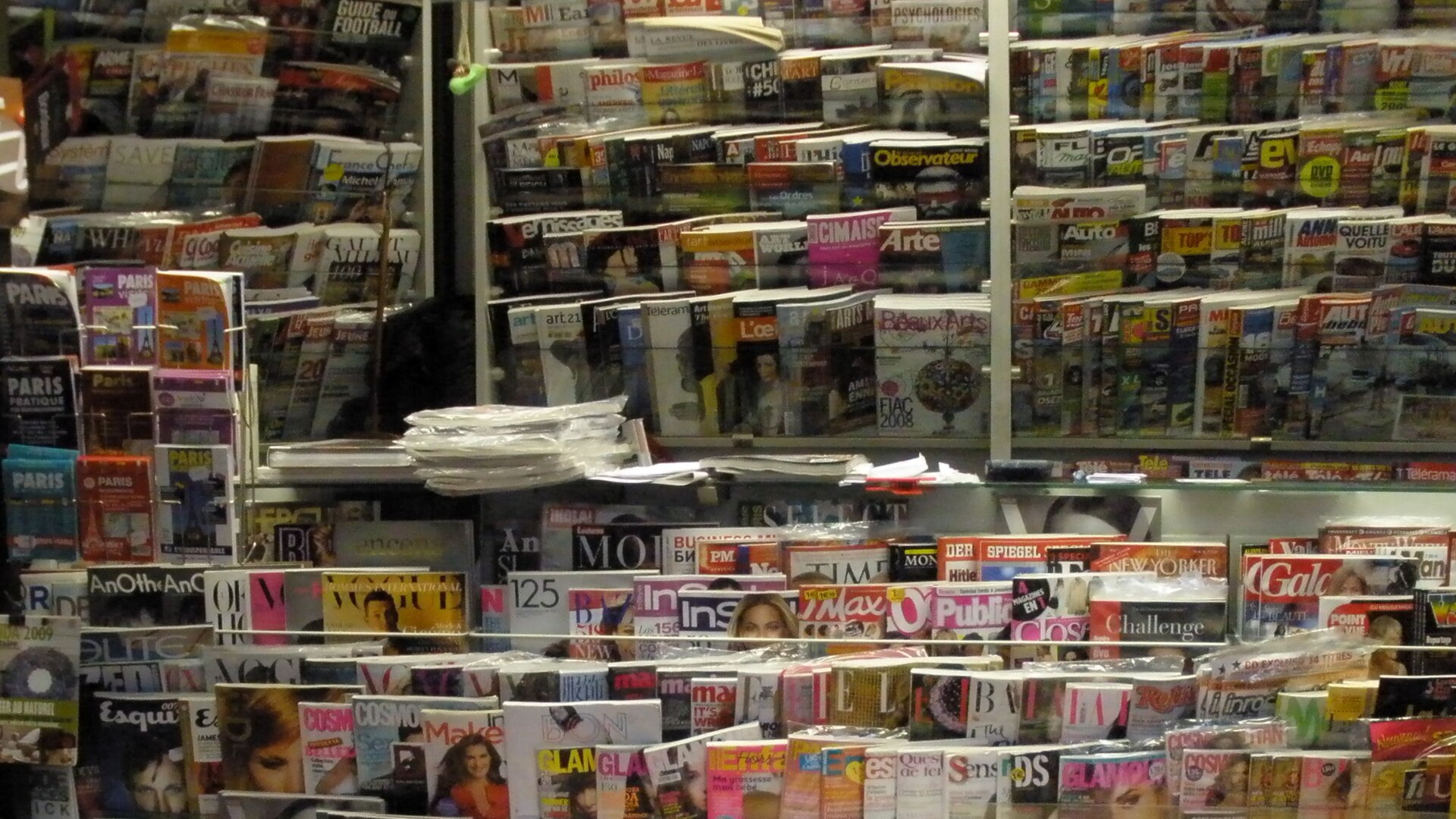
The rack still carries print, and some of it still moves. Quintero sells this newspaper — a bundle of The HY Times lands at her stand before dawn most days — along with a shrinking spread of national dailies, a wall of magazines heavy on film and fashion, and the foreign-language titles her regulars ask for by name. The margins on all of it are thin enough that she treats the printed matter as the reason people stop rather than the reason she profits.
Her regulars come for something the racks don’t list. A retired stagehand named Cornell Biggs, 74, stops most mornings for a paper he admits he could read for free, and stays to argue about the ballgame. “I can get the news anywhere,” Biggs said. “I can’t get Marisol anywhere. She’s the last person on this block who knew me when I still worked.”
The economics that closed the others press on her too. Print distributors have thinned their routes, some titles she once carried have folded outright, and the sidewalk permit and insurance climb a little each year. Quintero has watched the stands around her disappear one at a time — a closure here, a landlord there, an operator who simply did not open one Monday — until hers was the only awning left.
She has no plan to be the second-to-last, only the last, and she says that with the flat certainty of someone who has done the arithmetic and chosen to keep going anyway. Asked what happens to the stand when she stops, Quintero folded a stack of papers square and set them on the counter for the morning rush that was already forming. “Somebody will want the corner,” she said. “They just won’t want the newsstand. That part ends with me.”