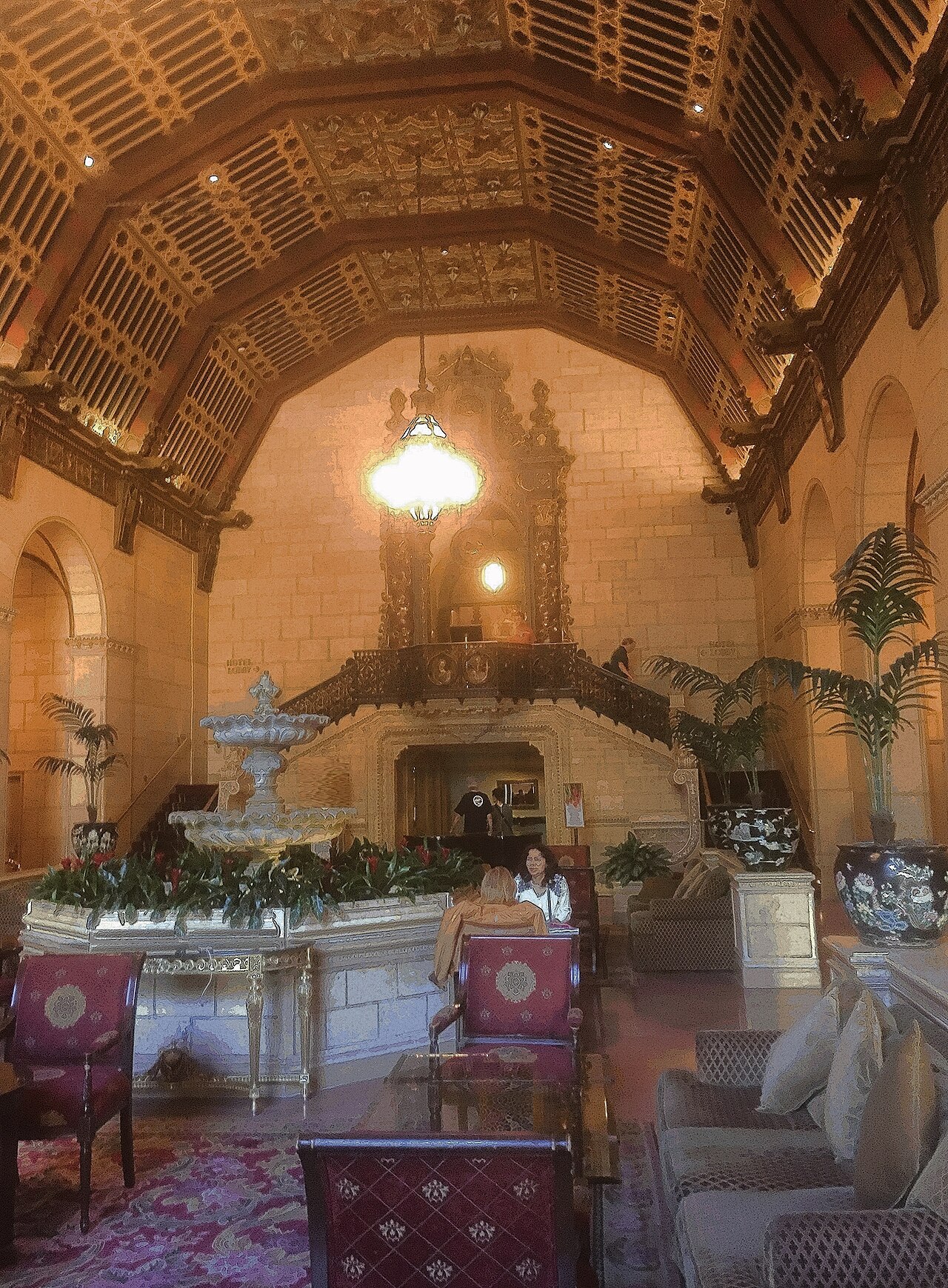
HOLLYWOOD — On the fourth floor of the Almira Hotel, a plasterer named Efraín Coto was rebuilding a ceiling cornice from a mold he had cast off a surviving stretch down the hall, and he was not hurrying.
“You can’t rush a run of plaster,” he said, drawing a profile into the wet material with a tool that belonged to his grandfather. “It sets when it decides to. The building waited a hundred years for somebody to fix it. It can wait for me to get one corner right.”
The Almira, a 1920s hotel a block off Hollywood Boulevard, is coming back one floor at a time. The staged approach lets the owners reopen the lower stories to paying guests while the upper floors are still stripped to the studs — a way to earn revenue mid-project on a restoration the developers have said will run past forty million dollars and several years.
That decision, made for cash-flow reasons, has a side effect the general contractor did not fully anticipate: it keeps a rotating crew of specialized trades on the job for months rather than weeks.
“On a normal build I’d have the plasterer in and out in ten days,” said Renée Delacroix, the project’s construction manager. “Here I need him again on every floor, because every floor has the same cornice and every cornice is a little different from what the last renovation did to it. Same with the tile guys. Same with the people who can rewire a 1926 riser without tearing out the walls I’m paying to save.”
The trades the job demands are not the ones a typical Los Angeles construction site calls for. Coto is one of a shrinking number of ornamental plasterers in the region; he said he knows “maybe a dozen” others who can do the running molds by hand, and most are near retirement. The hotel’s terrazzo and its lobby tile are being repaired by a two-man outfit that spends much of the rest of the year restoring church floors.
Delacroix estimated the project supports around ninety workers at peak across all trades, though the specialized crews are small — often two or three people who move floor to floor as the work reaches them. She has taken to letting apprentices shadow the older hands, partly on principle and partly because, she said, “if I don’t, in ten years there’s nobody left to hire for the next one of these.”
The math of preservation is unforgiving. It would be cheaper, everyone involved concedes, to gut the interior and start fresh. The developers are betting that a genuinely old hotel, restored rather than replaced, will command room rates that a new one dressed up to look old cannot.
There is a market logic to the sentiment. A boutique-hotel operator not connected to the project said period rooms with intact plaster and original tile “photograph in a way you can’t fake,” which matters more than ever when a guest books off a phone screen.
By late afternoon Coto had the corner he wanted. He stepped back, checked it against the original section down the hall, and marked the spot on his plan where he would begin again on the fifth floor next week.