HOLLYWOOD — The diner on Vine Street had a counter, twelve stools and a name people used as a landmark for forty years. It reopened in April with the same address, a new stove, and five restaurants that do not, in the ordinary sense, exist.
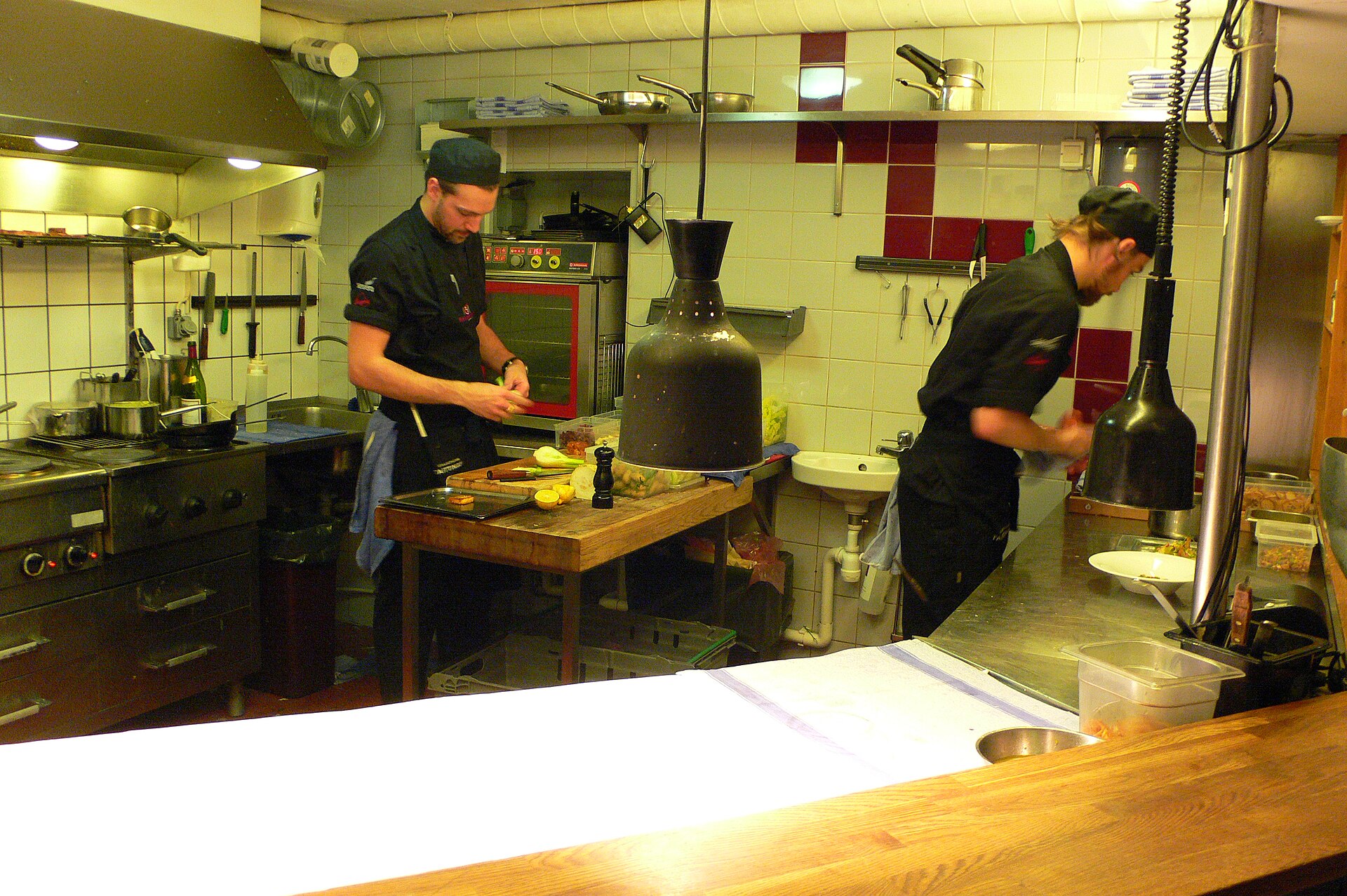
The space is now a ghost kitchen — a single commercial kitchen that cooks for several delivery-only brands at once, each with its own name and menu on the apps and none with a dining room, a sign, or a door a customer would ever walk through. From one line of burners, the operation turns out a burger brand, a wing brand, a Thai brand, a salad brand and a late-night breakfast brand, each appearing to the phone as a separate restaurant, all of them cooked by the same crew in the same room.
“On the apps it looks like five places. It’s one kitchen and eleven people,” said Devon Marsh, 37, who operates the location for a company that licenses the delivery brands. “We can run a menu that’s failing and swap it for a new one in a week without changing a single thing in this room. A regular restaurant can’t do that. That flexibility is the entire point.”
The economics that closed the diner are the same ones that opened the ghost kitchen. The previous operator, priced out by a rent the sit-down covers could no longer meet, closed after four decades. A delivery-only model carries none of the costs that sank it — no host, no servers, no dining room to heat and clean, no prime frontage, since customers never see the place. Marsh said the kitchen employs about the same number of people the diner did, weighted toward cooks and packers rather than waitstaff, and runs later into the night than the diner ever had reason to.
What the block lost is harder to price. The diner was a place people sat, and the ghost kitchen is a place food leaves. A hardware store owner two doors down, Priscilla Vance, 63, said the closure took with it a lunch counter her staff used for thirty years and a stream of foot traffic that occasionally wandered into her shop afterward. “Nobody walks out of a ghost kitchen and buys a wrench on the way home, because nobody walks out of it at all,” she said. “The block feels a little more like a loading dock now.”
Marsh does not dispute the trade. He said the model is honest about what it is — a food factory optimized for the apps — and that it exists because the sit-down math stopped working, not the other way around. The couriers arrive in a near-constant rotation, idling at the curb where customers once parked, collecting bags labeled with five names and one kitchen.
Vance has watched the couriers stack up outside her window and drawn her own conclusion about where the block is heading. “I’m not against them making a living,” she said. “I just miss being able to see who was eating.”