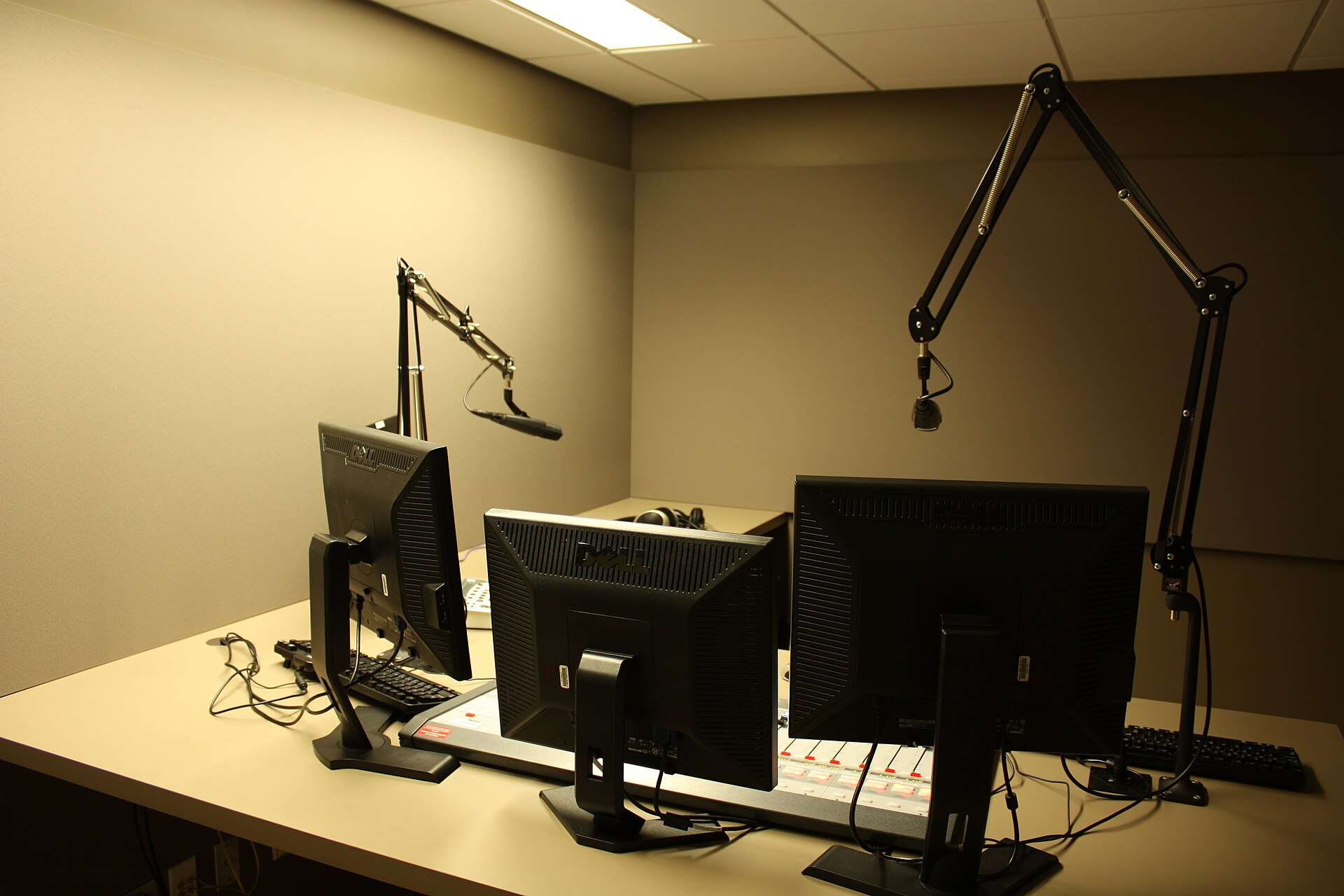
HOLLYWOOD — KHWD reaches maybe a few square miles on a good day, less when the weather turns, and the people who run it treat every one of those miles as hard-won.
The low-power FM station broadcasts from a second-floor room above a Hollywood storefront, its signal thrown from a transmitter that the late Warren Tibbetts, its longtime engineer, kept alive for decades with parts he machined himself. Tibbetts died last year. The transmitter did not, and keeping it that way now falls to a rotating crew of volunteers who speak of it the way a family speaks of an elderly relative — with affection, and a running list of what is about to go wrong.
“We are not a business the way a coffee shop is a business, but we have rent, a power bill, and a license to renew, same as anyone,” said Ramona Quiñones, 46, the station manager and one of two paid staff. “The difference is that our product is free and our customers are our owners. That is a beautiful idea and a terrible balance sheet.”
The money comes in small, uneven pieces: listener donations during the pledge weeks, a modest grant, and a short roster of neighborhood underwriters who buy the plain, unglamorous mentions that pass for advertising on a station that refuses to sound like one. The economics have gotten harder as the surrounding blocks turned over and the businesses that once chipped in closed or moved.
Art Mun, who runs a small appliance-repair shop, has underwritten a morning show for eleven years for a sum he describes as “less than a phone bill and worth more than any billboard.”
“Nobody walks in quoting my radio spot,” Mun said. “But people know the name, and in this neighborhood knowing the name is the whole game. When they read a story about the station struggling, I write a bigger check, because the day it goes dark my little ad goes dark with it.”
The programming is defiantly local: a swap-meet call-in, a Saturday show in Thai, a two-hour block of records a retiree has been spinning since the station signed on. Bea Fontaine, 68, has hosted a weeknight music hour for twenty years and does it now from a booth held together with gaffer tape.
“People ask why we don’t just do a podcast and quit fighting the transmitter,” Fontaine said. “Because a podcast is you choosing us. The radio is us being there when you turn the dial, whether you were looking for us or not. That is a different promise, and I am not ready to break it.”
Quiñones keeps a folder of thank-you notes from listeners, and a second, thicker folder of estimates for the tower work the station cannot yet afford. She has learned to raise money in the same breath she uses to thank people, and to end every pledge drive a little short of comfortable.
After the day’s last show, a volunteer flipped on the automation and killed the studio lights, leaving the meters glowing in the dark. Above the storefront, Tibbetts’s transmitter kept throwing its small signal out over the neighborhood, one more night than anyone had strictly earned.