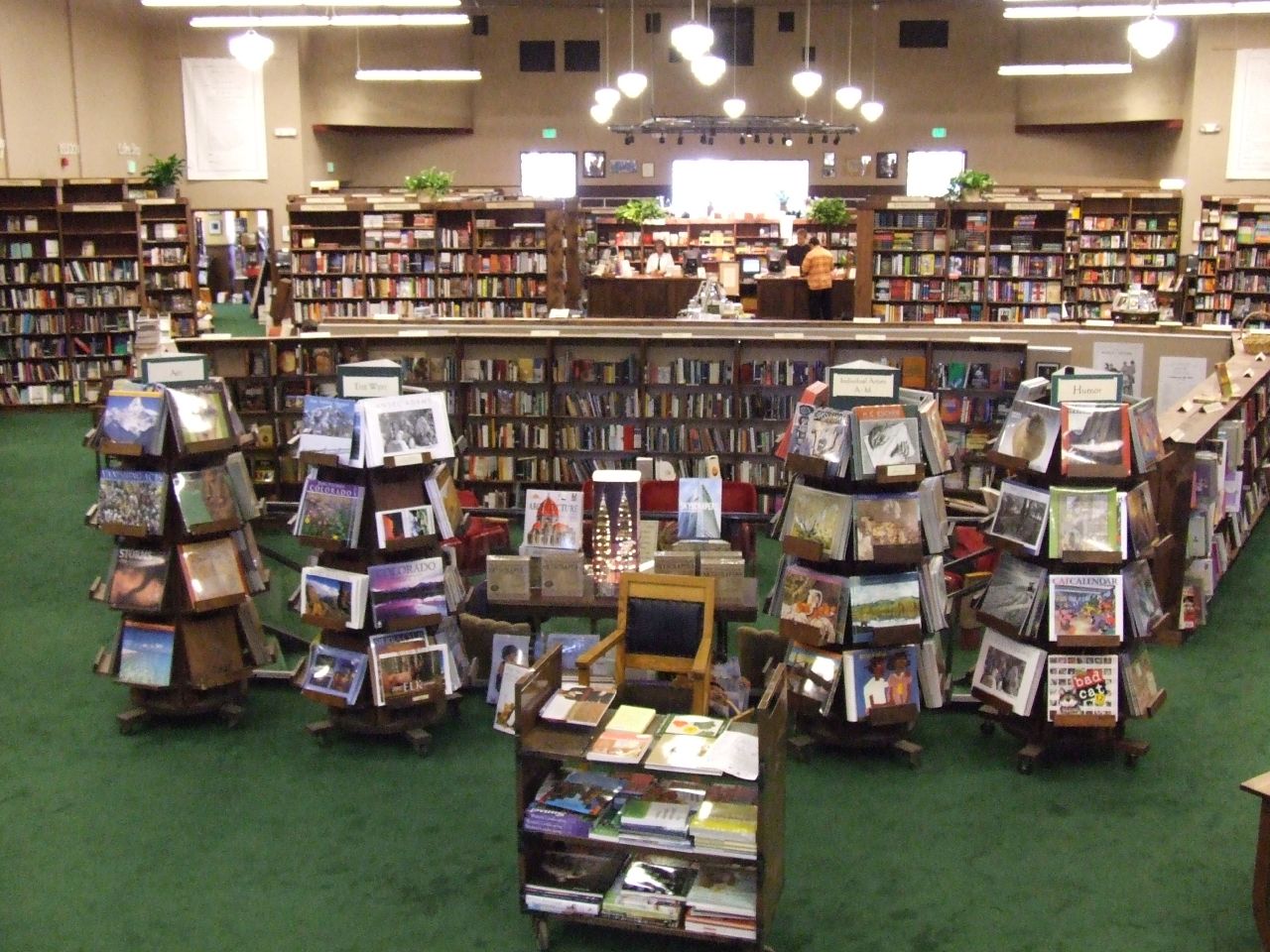
HOLLYWOOD — Larkin & Sons has sold books about movies from the same narrow storefront on Vine Street since 1971, outlasting two mall chains, one big-box superstore, and the widely reported death of the printed word.
This summer it is doing the thing none of those competitors managed on this block: it is expanding. The shop has signed a lease on the vacancy next door — a former print-and-copy place that sat dark for two years — and will knock through the shared wall in the fall, roughly doubling a floor that has been beyond crowded since the Ford administration.
“People keep congratulating me like I won something. I didn’t win. I just refused to close for fifty-five years, and eventually the rent next door came down to a number I could survive,” said Bea Larkin, 63, who inherited the shop from her father and is, despite the sign, the entirety of the “& Sons.” She has never corrected the name. “Dad thought a bookstore needed sons to sound permanent. Turns out it needed a daughter who wouldn’t leave.”
The shop specializes in the printed matter of the movies: screenplays, shooting scripts, biographies of cinematographers, out-of-print histories of studios that no longer exist, technical manuals for cameras no one has operated in decades. Its customers are a mix of film students, working crew members researching a period, collectors chasing a specific edition, and tourists who wander in expecting posters and leave three hours later with a book about lighting.
Larkin credits the shop’s survival to the narrowness that nearly sank it. When the chains arrived in the 1990s stacking everything from cookbooks to calendars, Larkin & Sons did the opposite and went deeper, becoming the place people were sent when no one else could find the title. “The superstore had everything a foot deep,” Larkin said. “We had one thing a mile deep. When the superstore closed, we were still here, still a mile deep.”
The expansion will finally give the shop room for a reading and screening corner, a rack for the out-of-print periodicals now stacked in the back on the floor, and — Larkin’s own indulgence — a proper section for the working manuals that crew members quietly depend on. She has resisted, so far, the suggestion that she add a coffee bar. “There are enough places on this street to buy coffee,” she said. “There is exactly one place to buy a 1948 book about matte painting.”
The knock-through will close the store for a week in September, the longest it has gone dark since her father’s funeral. Larkin plans to spend the week moving stock by hand, the way she has moved everything in the shop, and reopening on the far side of the wall with the same brass bell over a slightly larger door. “Fifty-five years to grow by one room,” she said, surveying the wall that will not be there much longer. “In this business, that’s a growth spurt.”