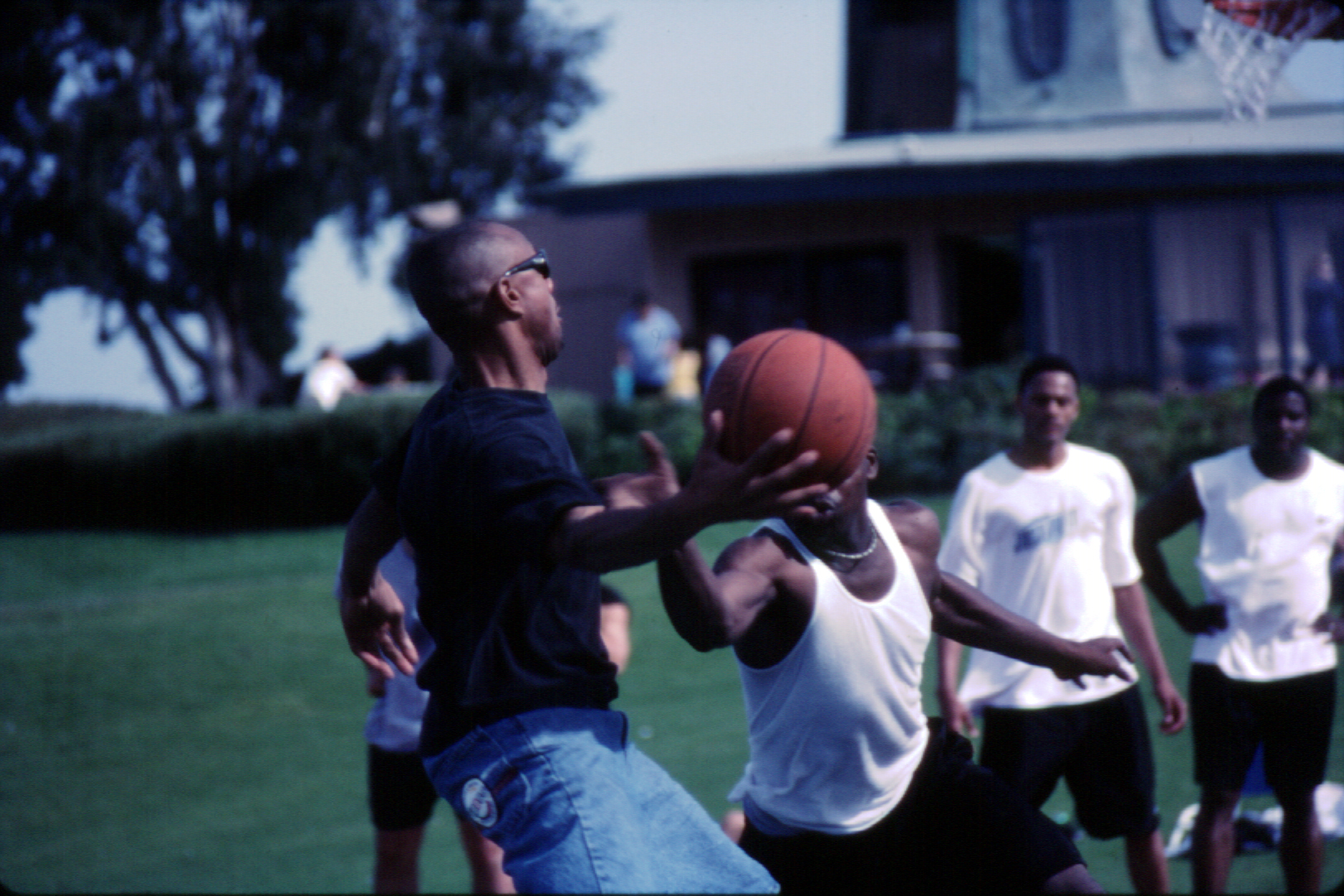
HOLLYWOOD — For fifty weekends a year the court behind the recreation center is just a court, half its net gone, a place for pickup games and free throws. For one Saturday in June, somebody hangs a bracket on the fence and it becomes a tournament.
The three-on-three tournament is a homemade affair: sixteen teams, a folding table, a hand-drawn bracket, and a trophy that a hardware clerk engraves at cost. Games go to twenty-one by ones and twos, winners’ ball, call your own fouls except in the final, when two volunteers agree to referee and immediately regret it.
“I started it because the good outdoor runs in this neighborhood are unorganized, and once a year I wanted there to be stakes,” said Cliff Tolliver, 43, who runs the event off a group chat and a modest pile of entry fees, most of which goes back out as a donation to the rec center’s youth programs. “Give men a bracket and a crowd on the fence and you find out who can really play, and who was just loud.”
The field mixes generations. There are teams of former high-school players in their thirties who guard as if a scholarship were still on the line, and teams of teenagers with more spring than sense who are one hot shooting streak from beating them. Half-court three-on-three punishes anyone who cannot make a quick decision, and rewards the kind of player who never scores much but always seems to have the ball at the right moment.
Sean Nardo, 34, has played every summer since the tournament began and has yet to win it, a streak he brought up before anyone asked.
“Six years, six brackets, and I have got exactly one runner-up plaque to show for it,” Nardo said, icing a shoulder between games. “Out here in the heat, on concrete, with no subs, it comes down to who wants it in the last three baskets. So far, not me. This year, maybe.”
The younger players treat the older ones as an obstacle to be studied and, eventually, dismantled. DeShawn Guerrero, 17, whose team lost a close one in the second round, said the appeal was simple: a real bracket, a real crowd, and older guys who do not hand you anything.
“They talk the whole game and they back most of it up, which is annoying,” Guerrero said. “But you learn more losing to them once than you learn winning at the park all summer. Next year we are seeded higher. Next year is different.”
The heat thinned the crowd by mid-afternoon and thinned the legs faster, until the final was played by two exhausted teams trading missed layups to the delight of everyone who no longer had to run. A team of thirtysomethings won it on a step-back that the shooter will describe for a year.
Tolliver handed over the little trophy, counted the donation jar, and asked the stragglers to help him fold the table. The bracket came down off the fence, and the court went back to being a court.