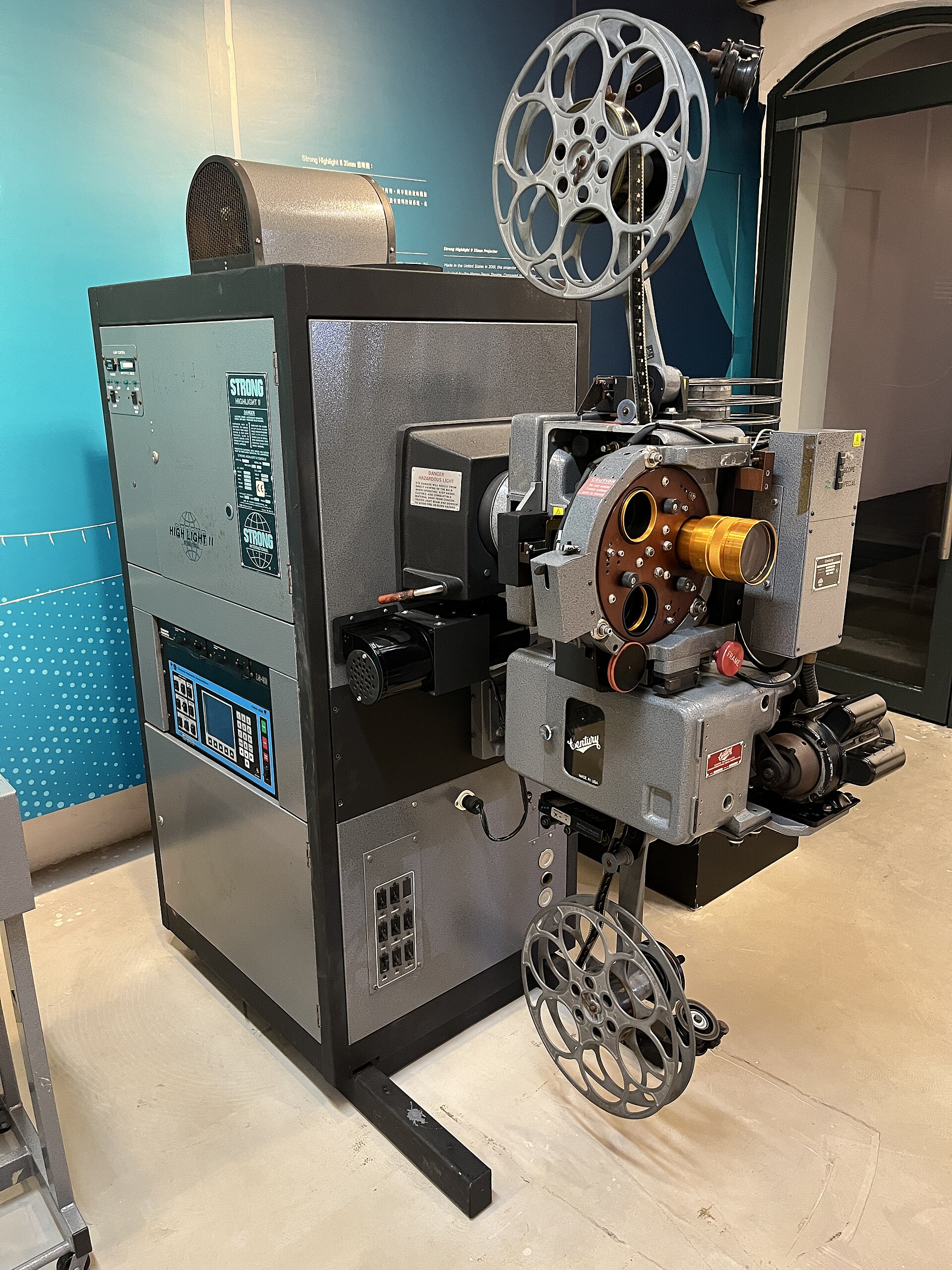
HOLLYWOOD — Leo Farkas spent his working life a few feet above the audience, in a hot little room they never saw, making sure the light held steady. If he did the job perfectly, no one knew he was there at all.
Mr. Farkas, a projectionist who threaded film in movie houses up and down Hollywood Boulevard for half a century, died July 6 at a care home in North Hollywood. He was 88. A niece said his health had been failing since a fall in the spring.
He came up in the era of carbon-arc projection, when the light on the screen was made by two rods of carbon burning against each other at a temperature he liked to describe, to anyone who would listen, as “a little piece of the sun in a box the size of a breadbin.” The rods burned down as the reel ran, and a projectionist had to feed them by hand and by feel, watching the arc through a dark port, so the picture never dimmed and never flared.
“You didn’t leave the booth. Not for the bathroom, not for anything,” said Gilbert Ozuna, 79, who worked booths alongside Farkas in the 1970s. “Two projectors, twenty-minute reels, and you had about four seconds to change over so clean the audience never blinked. Leo could have done it in his sleep, and never did, because he never slept up there. He watched every foot of every show.”
Over the years he worked most of the big houses on the Boulevard — the palaces built for premieres and the second-run theaters that ran the same pictures later for a dollar. He kept a mental map of every booth’s quirks: which projector ran hot, which one ate film if you rushed it, which had a floor that shook when the streetcar passed below. He stayed in the trade through the switch to xenon lamps, which he tolerated, and lived to see the switch to digital projection, which he considered the end of something even as he admitted it was easier on a man’s back.
Leonard Farkas was born in 1938 in Cleveland and came west after the Army, following an uncle into the projectionists’ union — then a tight guild a young man got into mostly by knowing someone. He worked nights his whole life and slept days, and never quite converted to ordinary hours even after he retired in the early 2000s. He never married. He is survived by a niece, Carol Farkas of Burbank, and two grandnephews, one of whom, the family noted with some pleasure, edits film for a living.
Colleagues said he was not sentimental about the work while he did it; it was a job, and a union job at that, and he cared about doing it right more than he cared about what it meant. The meaning came later, once the booths went dark.
In retirement he kept a single reel in his apartment, a print of a Western he wouldn’t name, and a hand-crank viewer to see it by. His niece said he would run a few frames through it now and then, holding them up to the window, checking the light.