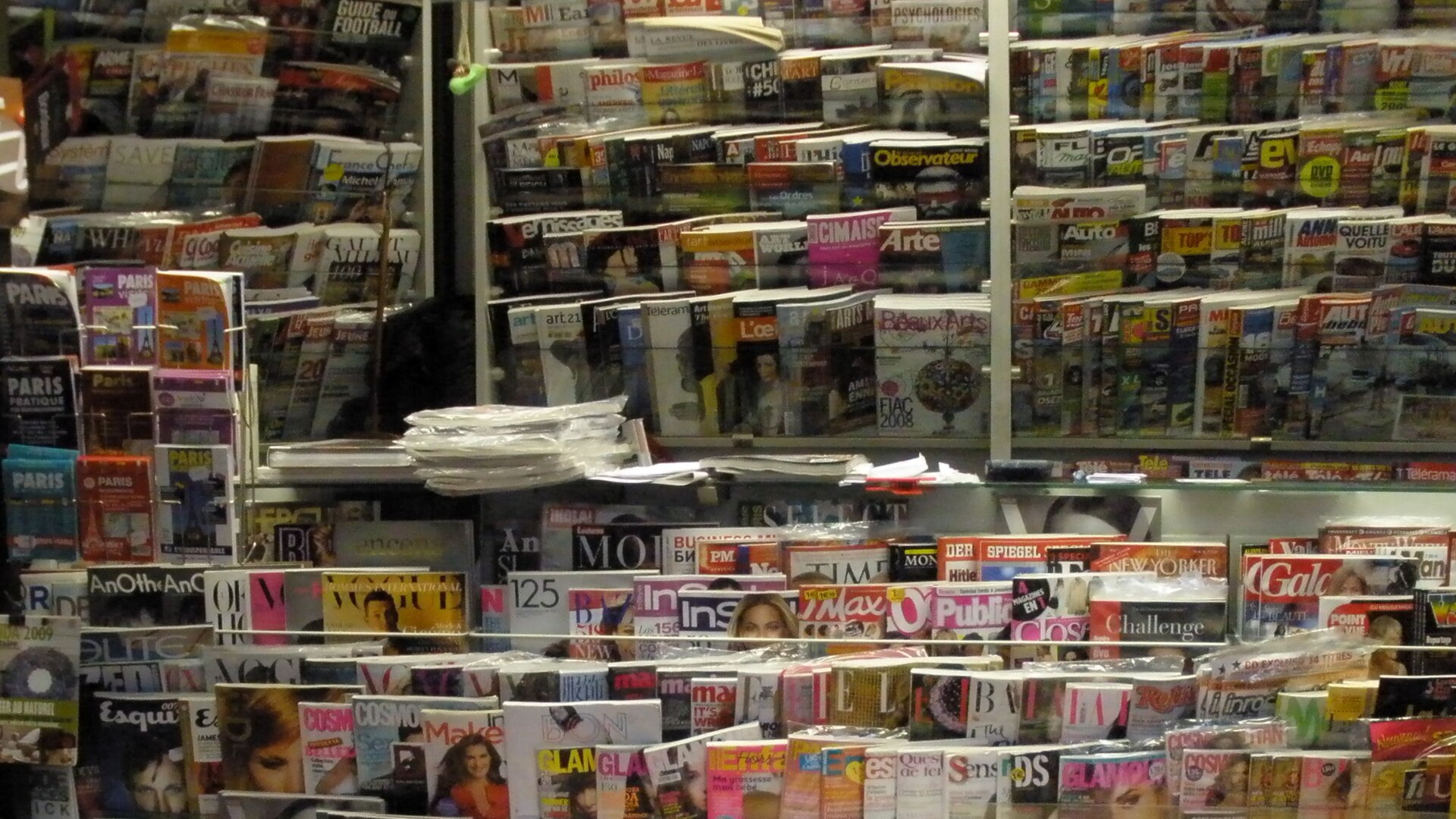
HOLLYWOOD — The kiosk was the size of a closet and stocked, at its peak, more than four hundred titles, and Kostas Andreou knew where every one of them sat without looking, reaching behind him for a paper while he made change with the other hand.
Mr. Andreou, who ran a newsstand on Hollywood Boulevard near Cahuenga for fifty-three years, died April 7 at his home in East Hollywood. He was 89. His son said the cause was heart failure.
The stand sold newspapers from a dozen countries, racing forms, film-trade dailies, and magazines on subjects Andreou could not always name but could always locate. In the mornings it was a gathering spot — commuters, a beat cop, studio workers buying the trades on the way in, retirees who came as much for the argument as the paper. Andreou presided over all of it from a stool, a short man behind a low counter, running a tab for the regulars in a ledger he kept in his head.
He sold this newspaper for his entire run, and took a proprietary interest in it, faulting the editors to their faces on the rare mornings he thought they had buried the real story. When the paper started its website in 2002, he regarded it with open suspicion, then grudging acceptance, then a salesman’s irritation that he could not take a cut of it.
“Kostas would hand you your paper and tell you what was wrong with it before you’d read a word,” said Perpetua Nardone, who bought her paper from him for thirty years. “He read all of them, every day, cover to cover, on that stool. He knew more about what was happening in the world than anyone I’ve met, and he learned it eight cents at a time.”
Kostas Andreou was born on the Greek island of Chios in 1936 and came to the United States as a young man, working in a cousin’s restaurant before buying the newsstand in 1970. He raised his family on it and kept it open through weather and slow years and the long decline of print, watching his four hundred titles dwindle to a fraction as the magazines folded one by one.
He is survived by his son, Nikos Andreou, of Pasadena; a daughter, Sophia Brandt, of Seattle; five grandchildren; and a sister in Athens. His wife, Eleni, died in 2014.
The stand closed for good the day he died; his family has not decided what becomes of it. For now it stands shuttered on the boulevard, its metal panels pulled down and padlocked, the racks behind them empty, a small paper sign taped to the front by a regular who could not think what else to do — the man’s name and the word CLOSED in marker, which the morning crowd read on the way past, some of them stopping, out of an old habit, for a paper that was no longer there.