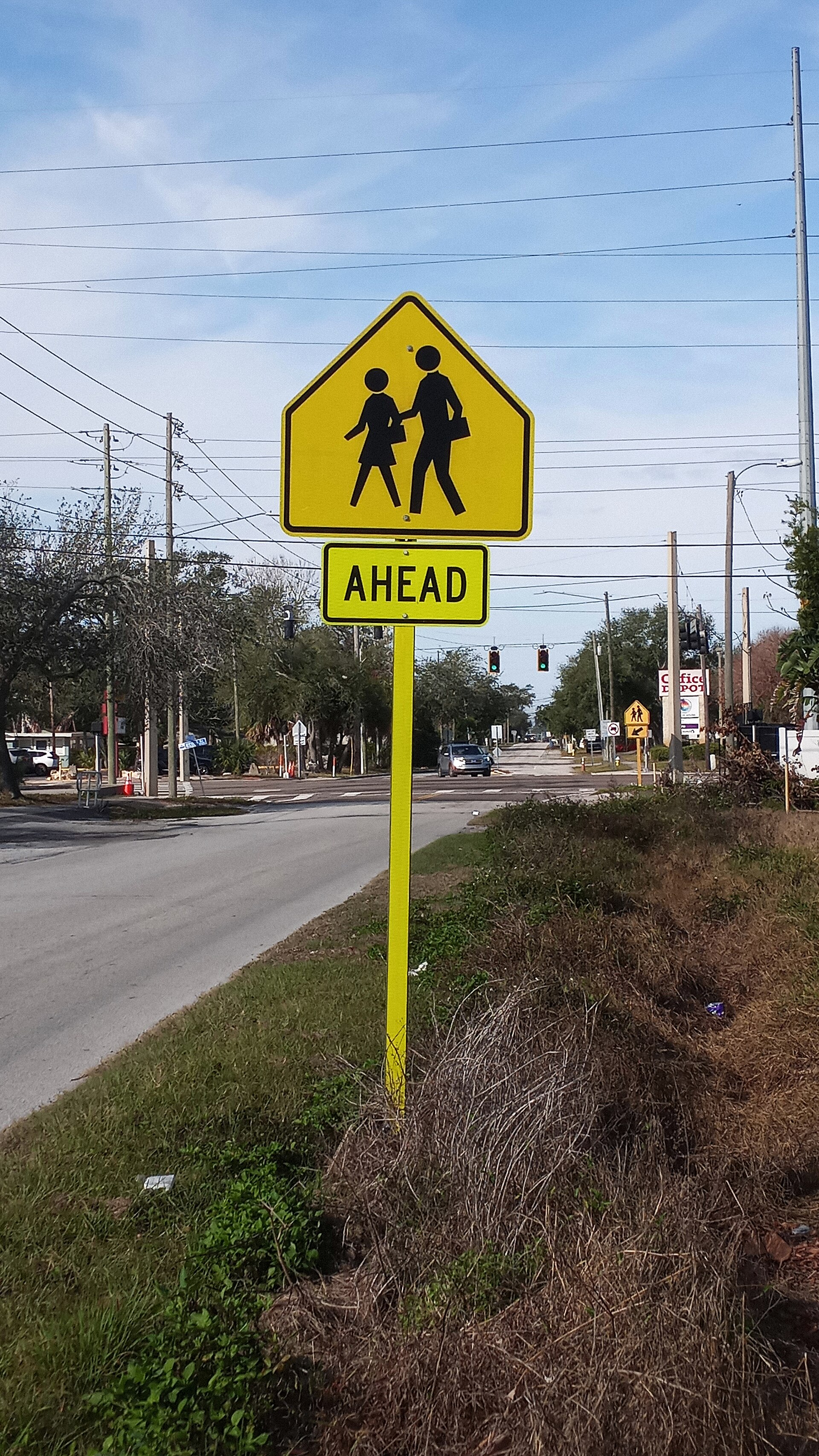
HOLLYWOOD — For forty-one years, the children of one block of Franklin Avenue learned the same rule from the same woman before most of them could read it on a sign: wait for Mrs. Bramble’s hand, and go when she tells you.
Dorothy Bramble, who worked a single school crossing outside an elementary school on Franklin Avenue for more than four decades, died June 19 at a hospital in Hollywood after a stroke. She was 89. She had left the corner only three years earlier, and then reluctantly.
She came to the job in her late forties, after raising her own children, and treated what some saw as a small post as something closer to a calling with a whistle. She learned the children’s names, all of them, and their walking routes and their pickup cars, and she was not shy about stepping off the curb to stop a driver who took the turn onto Franklin faster than she liked. Parents came to trust that the most dangerous ninety seconds of their child’s morning were in competent hands. Drivers came to know the sight of her raised white glove and the stop-sign paddle she held as though she meant it, which she did.
Time did the arithmetic that turns a crossing guard into an institution. She crossed children who grew up and moved away and came back with children of their own for her to cross, and then, if they stayed, a third round of the same small faces. She kept a rough count in her head and liked to tell a former student, now grown and holding a toddler’s hand at her corner, exactly what grade she had been in when she lost her front teeth.
“She crossed me in 1986, she crossed my daughter, and she was still out there for my granddaughter’s first week of kindergarten,” said Marisol Aguirre, who grew up on the block. “Three of us, one corner, one lady. My granddaughter thought she was part of the school. We all did.”
Dorothy Bramble was born in 1936 in Tulsa and came to Los Angeles as a young woman. Her husband, Leon, a city bus driver, died in 1998. She is survived by a son, Curtis, of Palmdale; a daughter, Renata Boyd, of Hollywood; four grandchildren; and, by the family’s preferred accounting, several thousand former pedestrians. In lieu of flowers, the family has asked that drivers on Franklin simply slow down near the school, a request they concede they cannot enforce.
The school is closed for the summer, and her corner is quiet. The crossing she worked has no marker yet, though a few parents have asked the council office about a sign. For now the only trace of her there is the habit she left in people: on the morning after she died, a father walking his daughter to a day camp reached the curb, stopped out of long training, and waited a beat for a hand that was not coming before he crossed.