HOLLYWOOD — The stucco came off in sheets, and behind it was a crate of oranges eight feet tall.
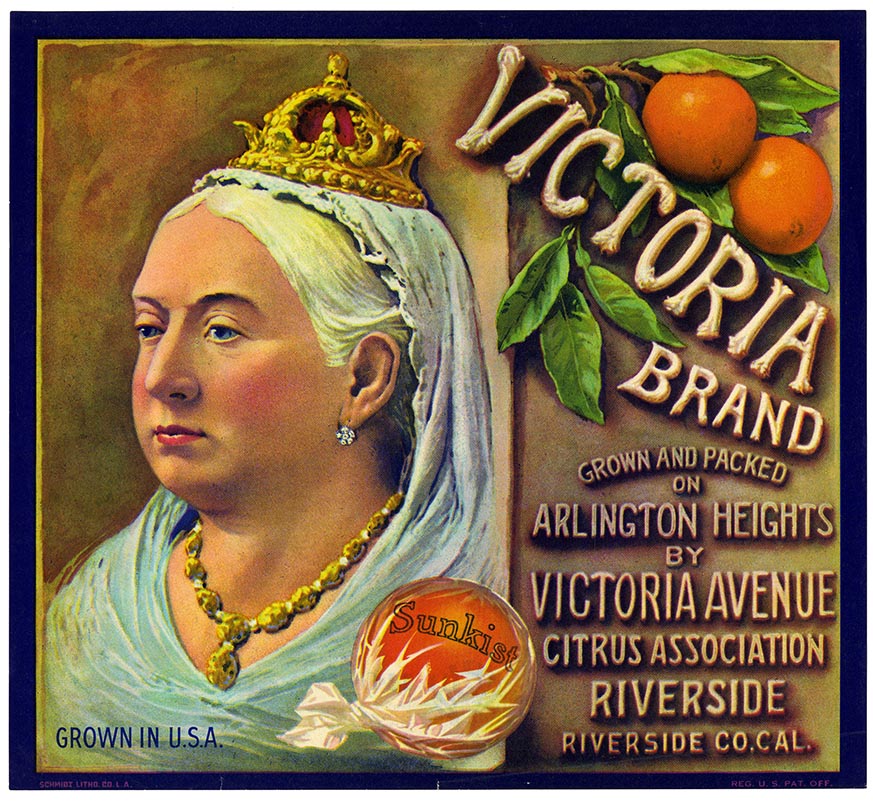
A crew renovating a former storefront on Whitley Avenue found the mural three weeks ago, under a skim of plaster and two coats of latex, on the building’s north interior wall. It is painted in the manner of an old citrus-crate label — the lithographed art that once advertised California fruit by the boxcar — blown up to the size of the room: a snow-capped peak, an orchard in rows, and a single orange rendered larger than a man’s head, its skin dimpled with visible care.
In the lower corner, in script, a brand: HOLLYWOODLAND GROVES. Beside it, a date. 1936.
“We thought it was water damage bleeding through,” said Marco Deleon, the contractor, who had his crew stop scraping when the first color appeared. “Then it was a leaf. Then it was the whole tree.”
The building spent the postwar decades as a dry cleaner and, before that, records suggest, as a juice-and-fruit stand — the kind of roadside operation that sold the Southland’s produce back to the tourists who came to see where it grew. Whoever painted the wall was likely a commercial sign painter, said Adele Fournier, a historian of the citrus-label trade whom the owner called after the discovery.
“These labels were the billboards of their day, and the men who scaled them up onto walls were very good and almost never signed their work,” Fournier said. “This one didn’t either. But the hand is confident. That orange was painted by someone who had already painted a thousand oranges.”
She dated the style to the mid-1930s without hesitation, which the corner confirmed.
The find has left the owner, Beatriz Salgado, with a decision and a spreadsheet. A conservator’s preliminary estimate to clean and stabilize the mural runs to five figures, work she had not budgeted when she bought the building to open a café. She could restore it and build the room around it. She could document it and cover it back over, sealing it for whoever owns the place next. She could, as a developer has already suggested, cut the section out of the wall and sell it.
Salgado has ruled out only the last.
“I keep going in there at night to look at it,” she said. “It survived ninety years behind a wall because somebody in 1955 was too cheap or too rushed to knock it down. Now it’s my turn to be the one who decides, and I don’t love that. I bought a building. I didn’t ask for a painting.”
She has until the fall, when the café’s construction schedule forces the wall one way or the other.