HOLLYWOOD — The city’s tree census is not a document many people will ever open, which is a shame, because it has a villain.
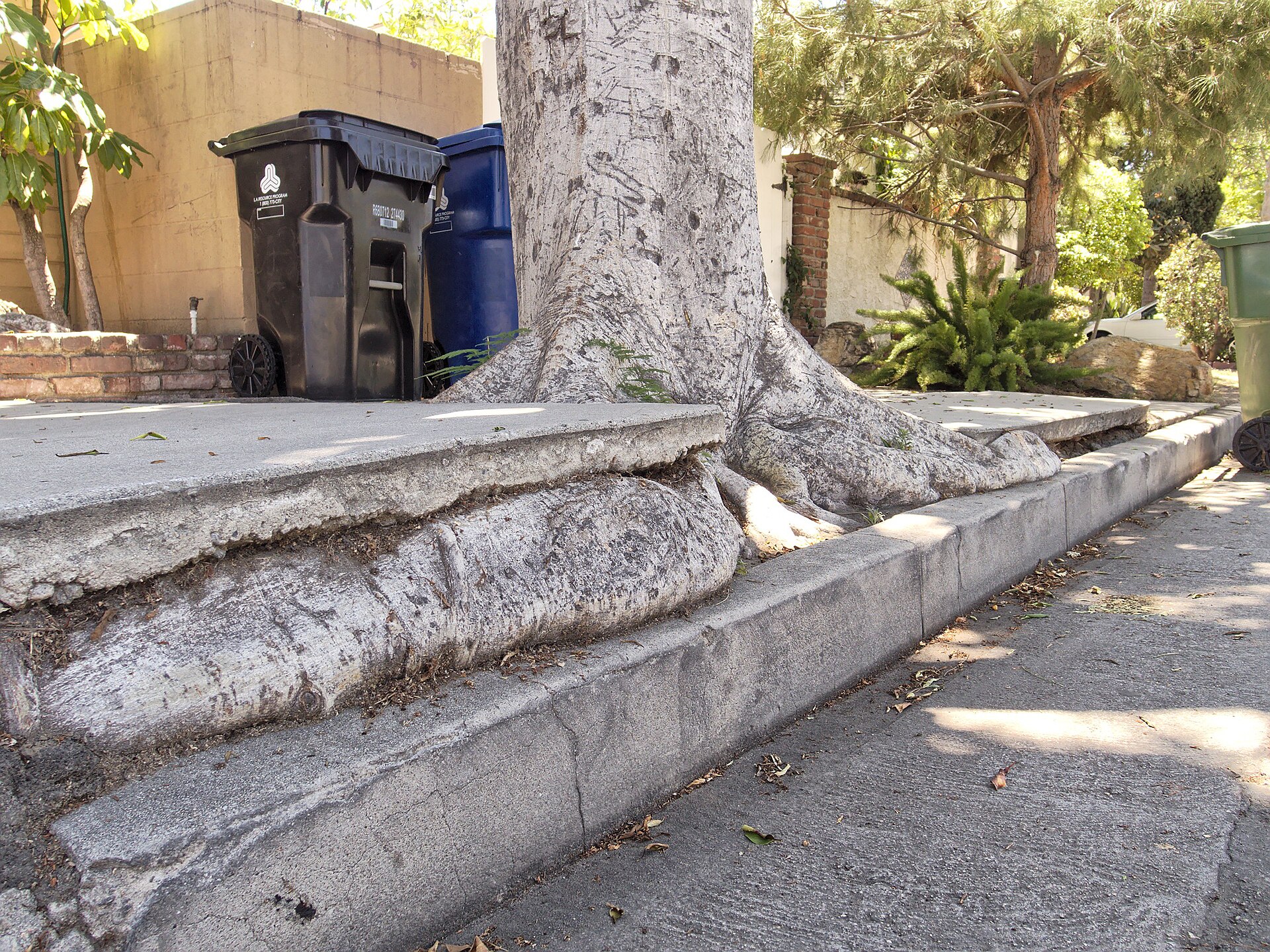
The villain is the ficus. Specifically Ficus microcarpa, the glossy-leaved shade tree that planners loved in the 1970s and that now, by the survey’s count, makes up nearly a fifth of the street trees in the Hollywood district and a much larger share of its buckled sidewalks.
The survey — the first full street-tree inventory the area has had in more than fifteen years — logged species, trunk size and health for tens of thousands of trees, block by block. Its blunt finding: the ficus grows fast, casts wonderful shade, and sends up roots that lift concrete like a crowbar. Many of the corridor’s worst sidewalk sections, including stretches queued for repair behind the long Walk of Fame work, sit directly over ficus roots.
“Nobody is angry at the tree,” said Hollis Ng, an urban forester with the city, who has the delicate job of explaining why a healthy shade tree sometimes has to go. “They’re angry at the sidewalk. But you can’t fix the sidewalk and keep the tree that’s breaking it. You get to pick one.”
The city’s approach is to stop replacing like with like. Where a ficus must come out, the recommended replacements lean smaller-rooted and drought-tolerant: desert willow, Chinese pistache, the western redbud, a few palo verdes for the sunnier blocks. None will throw the deep shade of a mature ficus for a decade or more, a gap residents notice immediately.
That gap is the whole fight. On one block off Franklin Avenue, neighbors have petitioned to save a row of ficus that shades the west-facing apartments through the afternoon, arguing the sidewalk can be ramped and root-pruned rather than dug up. Ng’s office says root-pruning a tree that size buys a few years and risks toppling it in a windstorm.
Genoveva Ruiz, who has lived under one of those ficus for thirty-one years, listened to the forester explain that a new tree would give real shade in perhaps fifteen.
“Fifteen years,” she said. “I’ll be dead. Plant it anyway, and put a bench under it for whoever isn’t.”
The survey will guide a removal-and-replanting schedule the city expects to publish in the fall, prioritizing the trees that are both failing and lifting concrete. Ng says the pace will be governed less by botany than by money, and that the honest answer to how many ficus come out next year is: as many as the budget covers, which is fewer than the sidewalks would like.