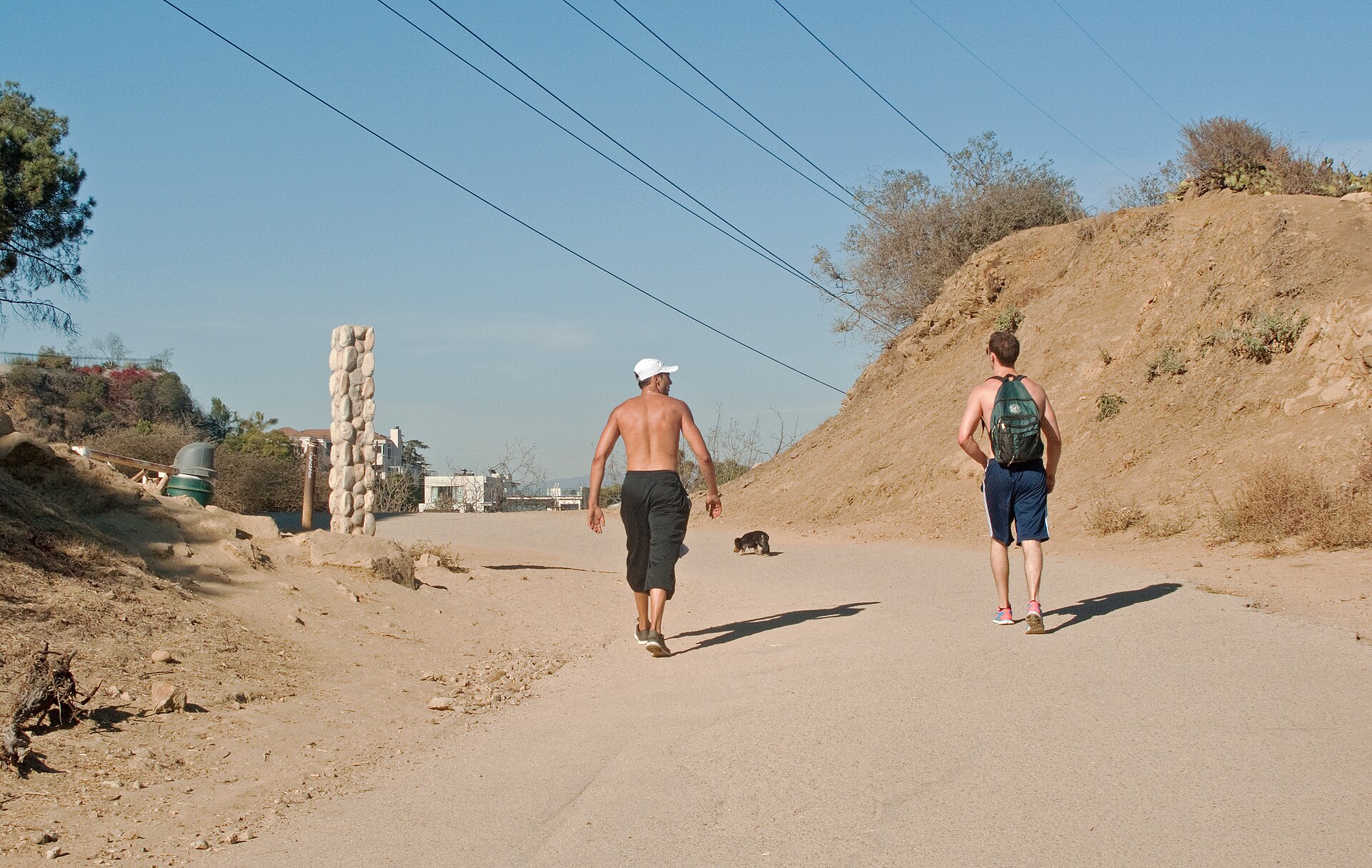
HOLLYWOOD — The hills came back green this year, greener than they have been in several dry seasons, and everyone with a phone seems to have noticed at once.
A wet winter left the slopes above Hollywood thick with wild grass, mustard and a scatter of wildflowers, and the run of good weather has sent crowds up the fire roads in numbers that the volunteers who maintain the trails describe as relentless. On weekend mornings the popular routes fill before the parking does — a steady stream of hikers, dog-walkers, trail-runners and first-timers who followed a photo up the hill.
“Green hills are gorgeous, and they’re also an invitation, and the trail can’t tell the difference between a careful hiker and a careless one,” said Bettina Marlowe, 52, who leads a volunteer crew that repairs erosion on the routes. “Every boot that steps off the path to get around a puddle widens it. Multiply that by a few thousand people in April, and by June we’ve got a trail that’s twice as wide and half as stable.”
The damage follows a predictable arc. Heavy rain softens the soil; heavy foot traffic cuts ruts and shortcuts that scar the slope and trample the new growth clinging to the edges of the path; then the summer sun bakes the churned ground into dust, and the next winter’s rain funnels down the ruts and carries the trail away. Marlowe’s crew spends its workdays building small water bars to divert runoff, roping off the shortcuts people carve between switchbacks, and hauling out the trash the crowds leave behind.
Regulars say the change from a dry year is unmistakable. “I’ve run these fire roads for a decade, and this spring I’ve had to start going up at six just to beat the crowd,” said Idris Fontaine, 34, who trains on the trails most mornings. “I’m not complaining that people are outside. I’m saying the hill’s getting loved half to death.”
For residents near the trailheads, the crush brings the familiar friction of living beside a beloved open space — cars filling their streets, dogs off leash, litter drifting into yards. Some have grown weary of it; others shrug and say they knew what they were buying into.
Park stewards ask for small, unglamorous discipline: stay on the marked path even when it is muddy, resist the urge to cut a switchback, leash the dog, and pack out what comes up the hill. None of it photographs well, and all of it, the volunteers say, is the difference between a trail that survives a popular spring and one that has to be closed and rebuilt after it.
Marlowe’s crew has added a second workday each month to keep pace, and she has been trying to recruit some of the newcomers into the repair work rather than resent them for the wear. On a recent Saturday, three first-time hikers she had waved down the week before showed up with gloves.
“That’s the only version of this that works,” she said, tamping a fresh water bar into the path with the flat of a shovel. “You can’t fence people off their own hills. You can only ask them to climb like they’d like the trail to still be here next year.”