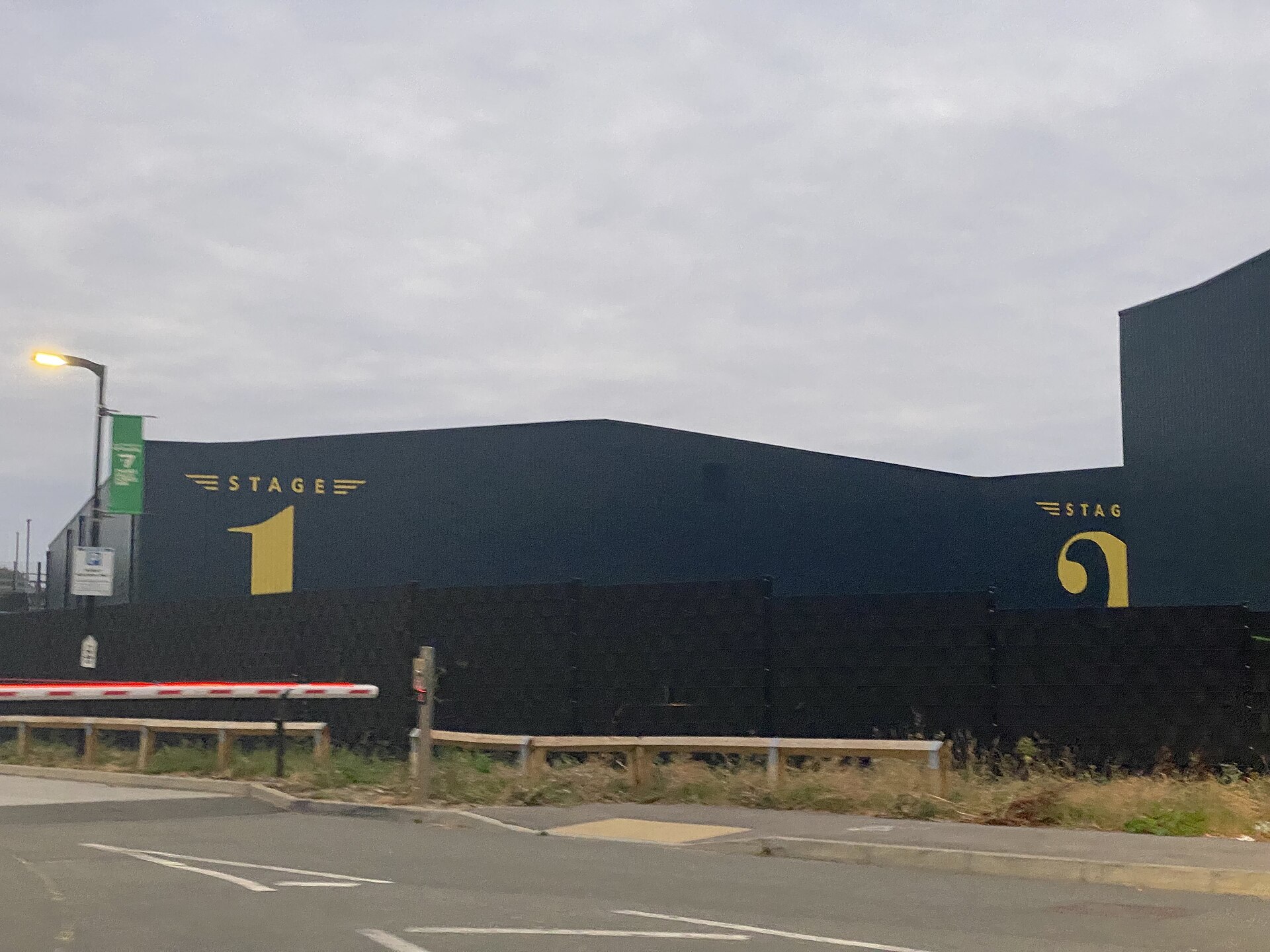
HOLLYWOOD — In an ordinary year, the big stage would have held a television drama through the fall. This December it held a corporate holiday party for a software company, a temporary forest of fake pine trees and a bar built where the standing sets used to be.
“Ten years ago I would have laughed you out of the office,” said Gerard Halloway, who books the stages at a mid-sized Hollywood complex and would not let its name be printed. “A party? On my A stage? Now I take the party. The party pays the mortgage the show didn’t come to cover.”
The production slowdown has left stages dark across the neighborhood, and the people who manage them are learning to say yes to bookings they once refused. Corporate events, product launches, immersive attractions, photo shoots, music videos, the occasional wedding — anything that needs a large, clean, controllable box and can pay by the day.
Halloway said his complex had run at a little over half its film-and-television occupancy this year, and that the events work had filled perhaps a third of the gap. It does not pay what a series pays. A drama books a stage for months and hires locally to fill it. A party books it for a weekend and brings its own people.
“It’s not the same money and it’s not the same jobs,” Halloway said. “A shoot employs my grips, my electricians, my stage hands for a season. A gala employs a caterer I didn’t hire and a decorator from out of town. My guys load in and load out. That’s it. But load-in and load-out beats a locked door.”
The stages themselves are well suited to the work, which is part of why it is available. They were built to be blacked out, wired for enormous electrical loads, and reachable by a truck. A company that wants to throw a party no one forgets can rent, for a night, a room where films were made.
Some in the industry see the trend as a worrying sign — soundstages, a scarce and protected resource in a city that has fought to keep them, drifting toward event space. Halloway waved that off, to a point.
“The day the film work comes back, the party’s out and the show’s in,” he said. “I’m not converting anything. I’m keeping the doors open until my real business returns. You don’t sell the boat because you had a bad fishing year.”
Whether the film work returns, and how soon, is the question hanging over every conversation like his. For now, Halloway has a January mostly booked, which he counts as a small triumph, even if half of it is a trade show and a sweet-sixteen.
“I run a soundstage,” he said, watching a crew string lights for the software party. “Tonight I run a ballroom. Ask me what I run tomorrow and I’ll check the calendar.”