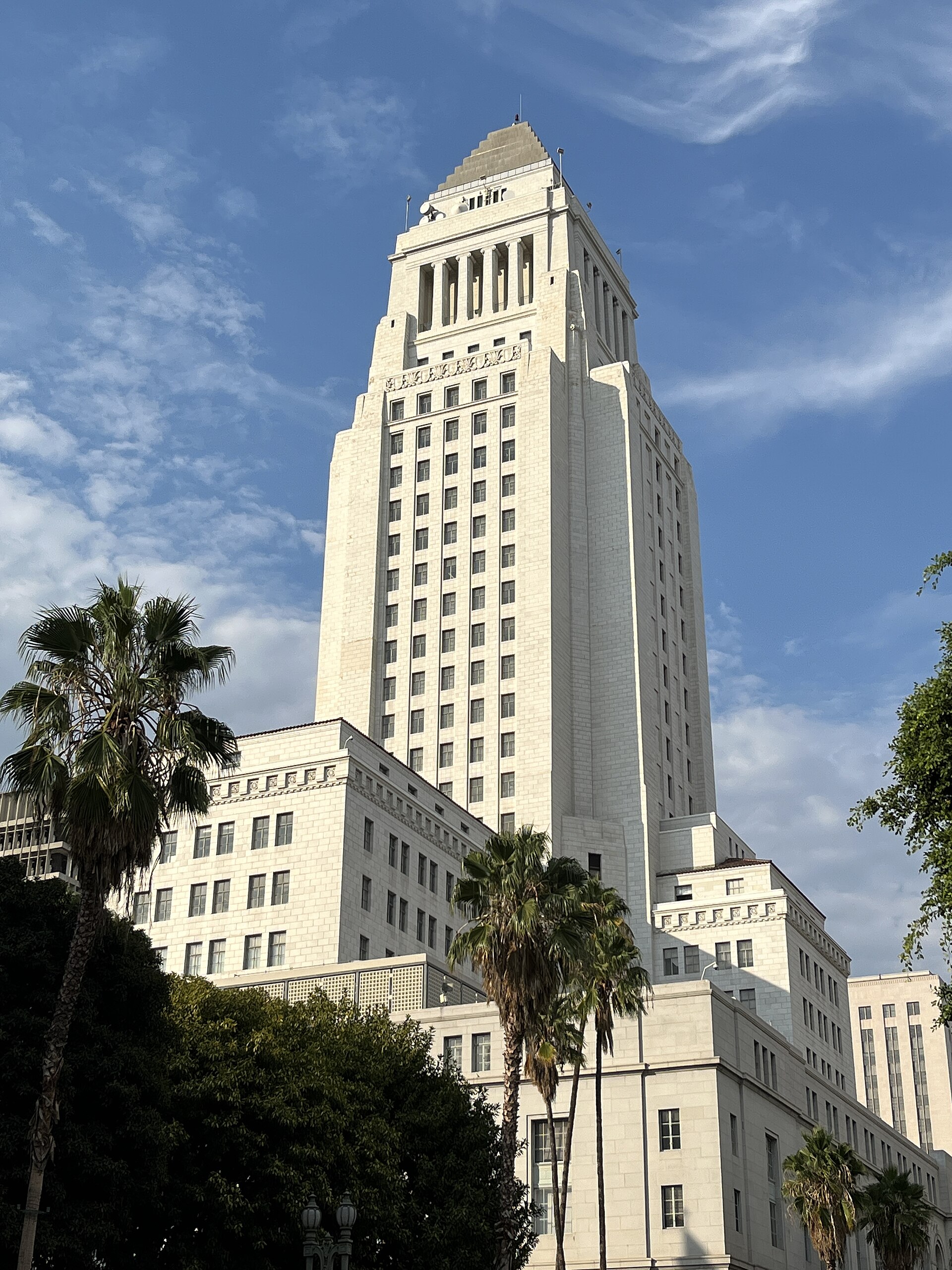
LOS ANGELES — Every spring the City Council writes a budget, and every spring a handful of small Hollywood projects wait to see whether they survived the drafting. This year, with a shortfall hanging over the whole document, the waiting has a sharper edge.
City officials have spent the season warning of a gap between what Los Angeles expects to spend and what it expects to take in, driven by rising costs, softer tax receipts and obligations that do not shrink to fit. The large lines — public safety, salaries, legal settlements — tend to hold. It is the discretionary edges, the neighborhood-scale improvements funded a little at a time, that feel a tight year first.
For Hollywood, that edge includes a familiar list. The long-promised skate park under the 101, still waiting on construction money identified in this very budget. Sidewalk repairs deferred so many times the backlog has its own backlog. Tree trimming, crosswalk upgrades, the small capital items that never quite reach the top of the pile in a flush year and slide further from it in a lean one.
“These are the projects with no lobby,” said Yusuf Adeyemi, who chairs a neighborhood council and has testified at budget hearings for six years. “Nobody downtown loses sleep over a striped crosswalk in East Hollywood. So when the number gets tight, that’s the first thing that quietly doesn’t happen.”
A representative from Councilmember Alicia Rendón’s office said the council was working to protect neighborhood priorities and cautioned that the budget remained in negotiation, with figures shifting week to week until adoption. Pressed on the skate park specifically — a project the office has called close for three years running — the representative said the construction funding remained in the proposal “as of today,” a phrase that carried its own warning.
City staff described the arithmetic without drama. A shortfall means either more revenue, which the council is reluctant to raise, or less spending, which falls hardest on the flexible items because the fixed ones cannot flex. Capital projects that have not yet broken ground are the easiest to defer, because deferring them looks, on paper, like nothing happening at all rather than something being taken away.
Advocates for the smaller projects have adopted a defensive posture, showing up to hearings less to ask for more than to argue against being cut. A parks organizer said her goal this year was modest: to keep the skate park’s line from vanishing into a study or a future phase, the bureaucratic language that has swallowed it before.
The council is expected to adopt a budget in the coming weeks, after which the neighborhood will learn which of its small hopes made the page and which slid to next year. Adeyemi said he had marked the adoption date on his calendar and would read the final document line by line, looking, as he always does, for the projects that quietly did not survive the edit.