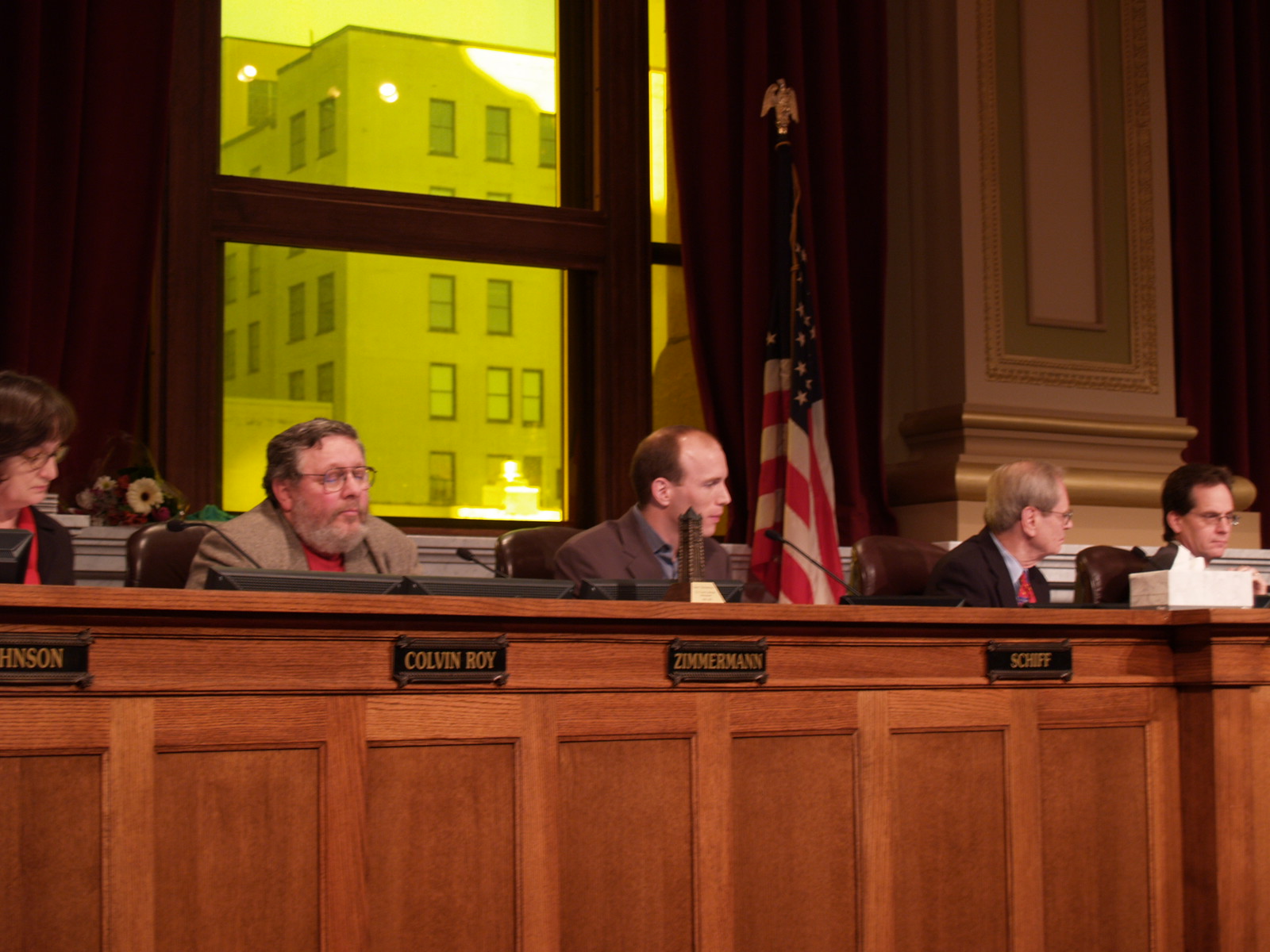
LOS ANGELES — When a City Council committee deadlocks and votes to hold an item “for further study,” the phrase carries an implication that somebody, somewhere, has been assigned a study.
In the case of the Vine Street protected bike lanes, held 2 to 2 last Thursday, nobody has. The committee’s action directed the transportation department to return with “additional analysis” of parking impacts. It did not specify what analysis, did not set a deadline, and — because the committee’s next scheduled meeting is not until the last week of August — did not create a date on which anyone must answer for it.
That is a five-week gap on a project that has been in some stage of consideration since 2019, and both sides intend to spend it.
The plan would convert a mile of Vine between Sunset Boulevard and Franklin Avenue from four travel lanes to three, add curb-protected bike lanes in each direction, and remove roughly ninety metered spaces. Councilmember Alicia Rendón, whose district contains the corridor, introduced it and voted for it. Councilmember Whit Bogardus voted against, arguing the parking loss had never been honestly costed for the businesses that depend on it. Two colleagues split the difference and the item stopped moving.
Asked this week what the study is, a transportation department spokeswoman said the department “is preparing responsive material for the committee” and could not characterize its scope or timing further. Asked the same question, a staffer in Mr. Bogardus’s office said the councilmember expects “a real accounting of the ninety spaces, not a paragraph.” Ms. Rendón’s office said the department produced a parking occupancy count in 2023, that it was in the record, and that the request amounts to asking for it again in a different font.
Both offices are, in their way, describing the same well-known mechanism. An item held for study without a scope or a date is not a request for information. It is a place to keep something.
“I have been doing this for eleven years and I can tell you exactly what happens now,” said Nadia Constantino, who owns a salon on the corridor and has opposed the lanes from the start. “Nothing happens now. Then in September somebody puts it back on an agenda when half the merchants are not paying attention, and we start over. So we are not going to stop paying attention.”
Her association has told members to expect a September push and has begun collecting the receipts it says the city never asked for: sign-in sheets showing what share of customers arrive by car, a week of hand-counted curb turnover outside four businesses, and the mileage logs of two mobile stylists.
On the other side, the cycling and street-safety groups that backed the plan have decided that the gap is best filled with the corridor’s collision record, which they consider their strongest material and their least-used. Volunteers have spent the past week assembling every reported injury collision on the mile since 2015 into a single map, keyed to the intersection and, where the report allows, the movement that caused it — 34 in all, four of them serious.
“We keep arguing about ninety parking spaces because parking is easy to count,” said a volunteer with the group, a bicycle mechanic who lives on Cahuenga. “So fine. We’ll count the other thing.”
Ms. Rendón, for her part, has stopped describing the delay as a delay. In a brief interview she called the committee’s action “a decision that gets to be called something else,” and said she would return the item to the same committee in late August with or without new material from the department.
There is one practical consequence of the gap that is not political. The department had held a paving window for the corridor in the fall, on the assumption that if the lanes were approved they would be striped as part of a resurfacing already budgeted. Doing the work together saves roughly $400,000. That window closes if the item is not resolved by the first week of October, after which the street gets repaved as it is, and the lanes — if they are ever approved — get their own project, their own funding request and their own year.
Nobody at the dais mentioned that on Thursday. The department confirmed it on Monday, in a one-sentence email, in response to a direct question.