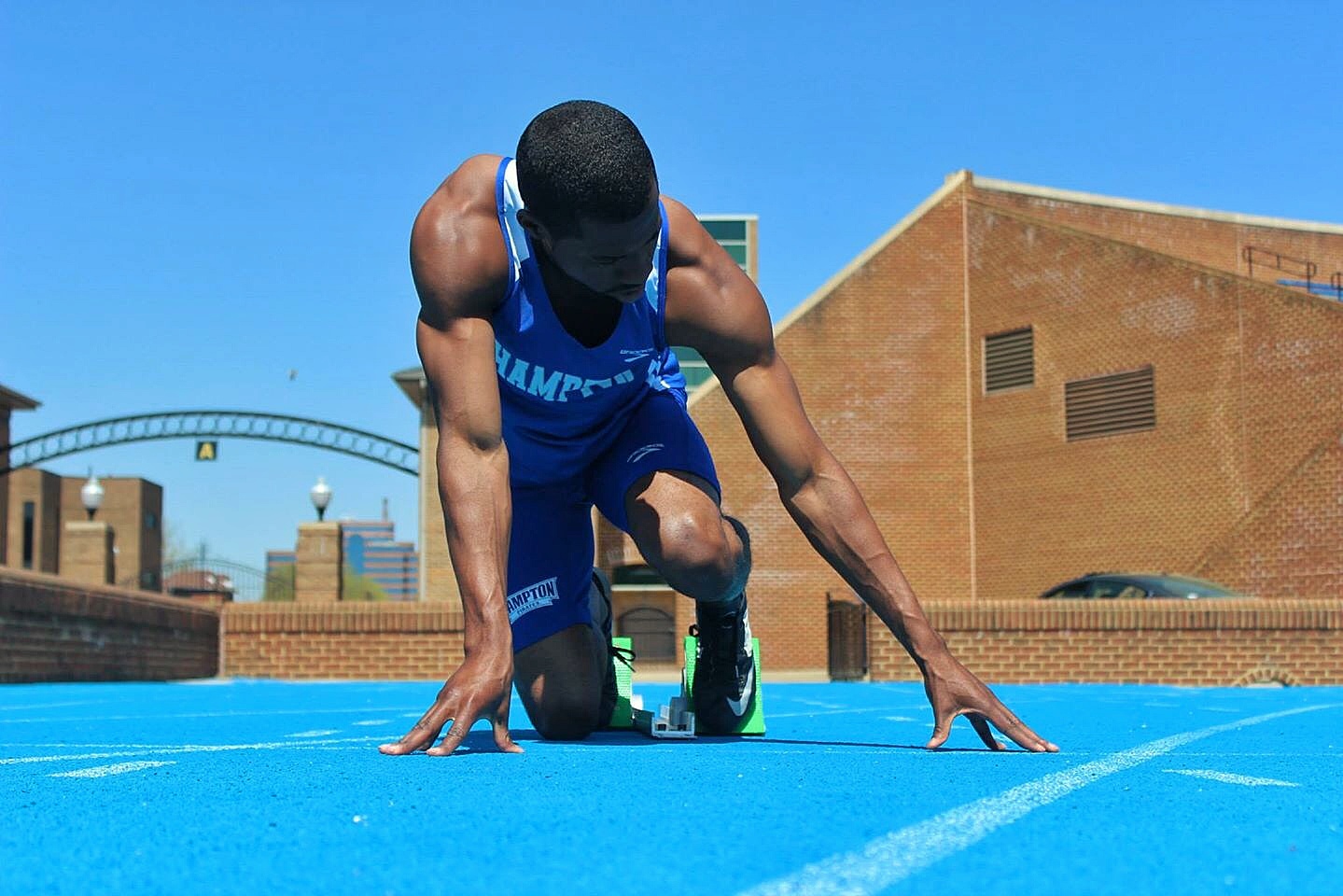
HOLLYWOOD — The coach keeps three seasons of her times in a spiral notebook, and he can name the afternoon each one dropped.
“February, sophomore year, she runs a 12.4 in the hundred into a headwind, and I put my clipboard down,” said Theo Barnes, who has coached track at Hollywood High for nine years, turning to a page he had plainly turned to before. “You can teach a kid to leave the blocks cleaner. You can teach her to run through the line instead of at it. The thing that produces a 12.4 with the wind in your face — that part shows up on its own or it doesn’t.”
The runner is Zaida Ferrer, 18, the fastest sprinter Hollywood High has turned out in longer than anyone at the school can date precisely. This spring she signed to run for a state university up in the Central Valley, on a partial scholarship that she and Barnes negotiated over a winter of emails and meet videos.
The notebook tells the story better than she will. As a freshman she ran the hundred meters in the mid-13s — quick for a ninth-grader and nothing more. By this spring she had it down to 11.79, with a 24.1 in the two hundred, times that moved her from a local name to one that college programs returned calls about.
“I don’t really think about the number when I’m in it,” Ferrer said, sitting on an overturned bucket after practice, spikes still on. “Coach thinks about the number. I think about the girl in the next lane. If I can see her, I’m not running hard enough yet.”
Barnes said the work that produced those splits was mostly invisible and mostly boring: block starts run again and again in the cool before school, a winter of weight-room sessions Ferrer never skipped, the tedium of shaving hundredths off a start she already had. She trained on a track that, until a recent patch job, had a soft turn nobody trusted.
She is the first in her family headed to a four-year school, a fact she mentioned once and then steered away from. Her mother works nights; a grandmother has driven her to most meets. Barnes said the college wasn’t the richest offer on the table, but it was the one whose coaches, he judged, would keep developing her rather than just running her into the ground for four years.
There is a version of this story that ends in the Olympics, and Barnes is careful not to tell it. Most fast high-schoolers get a little faster in college and then get on with their lives, and he said he’d count Ferrer’s four years a success if she leaves with a degree and her love of the thing intact. “The scholarship is the win,” he said. “Everything after is a bonus nobody’s owed.”
At the end of practice Ferrer ran one more start, alone, off no gun, just to feel it. Barnes clicked the watch out of habit, looked at it, and this time didn’t write the number down.