HOLLYWOOD — It was raining again on Tuesday, the kind of steady afternoon rain that empties the sidewalks, so I did what I have been doing more of this winter and went to the movies in the middle of the day.
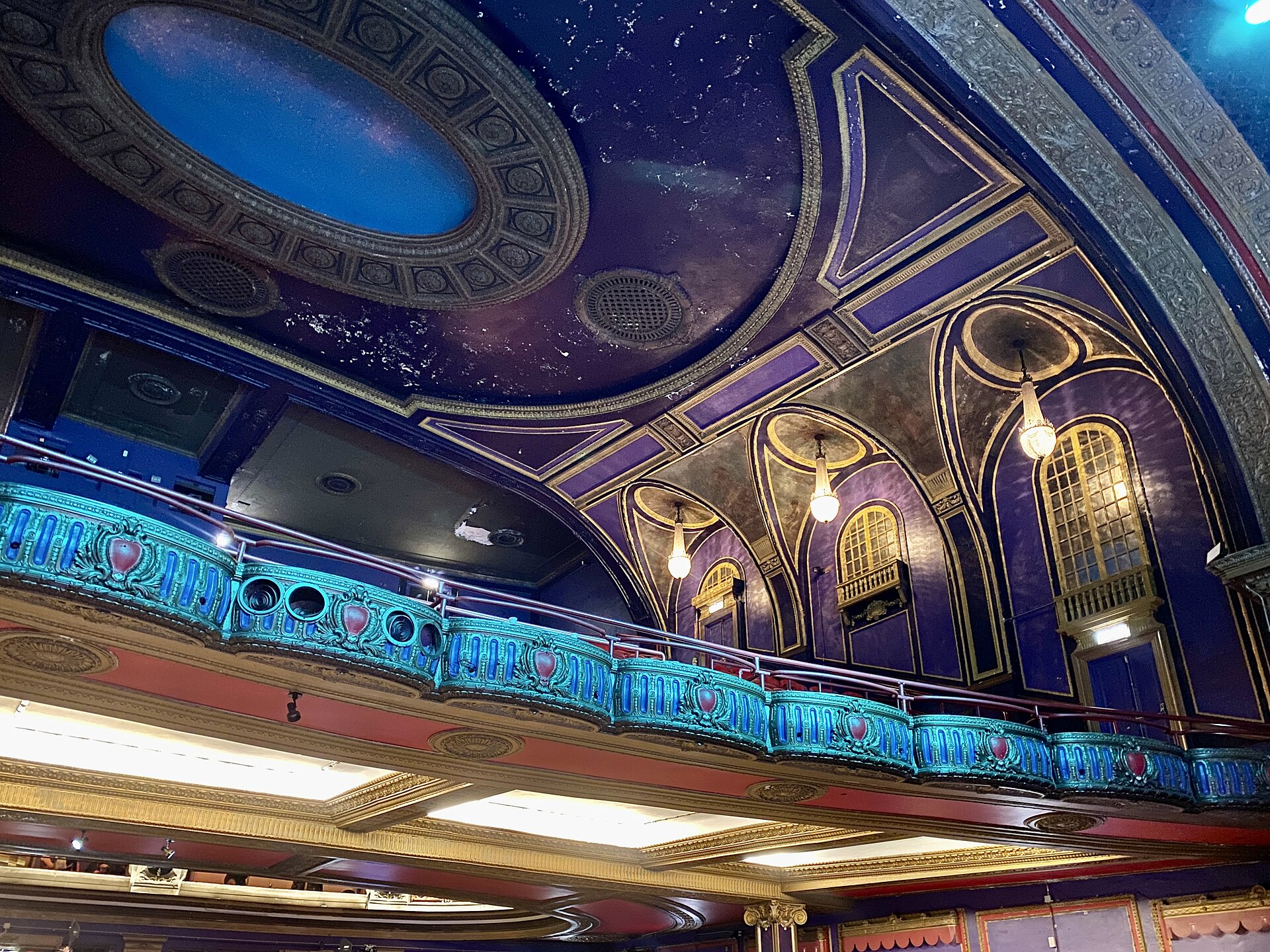
Not to a multiplex. To one of the old revival houses, the kind with a ceiling worth looking at and a screen the size of a building, where an afternoon show draws a congregation of maybe eight. I counted us as the lights went down: a couple in the back, two men sitting alone and far apart, a woman with a tote bag of groceries she had clearly not meant to carry into a matinee, and me. Eight people in a room built for a thousand, watching a film made before any of us were born.
I have come to think of this as one of the last genuinely good deals in the city. For the price of a sandwich you get two hours in a beautiful room where no one can reach you, where the phone stays in the pocket because the screen in front of you is forty feet tall and wins, and where the movie is one that a hundred people worked to make and that was never intended to be watched on a device you could drop in a puddle. The rain drums on the roof somewhere far overhead. The projector hums. It is the closest thing to church I attend.
The revival houses are not thriving, and I know it, and that knowledge is part of what sends me back to them. The economics of showing old films to eight people on a wet Tuesday are exactly as grim as they sound, and every year brings a rumor that one more of these palaces will go dark or be carved into something more profitable. The people who run them do it on devotion and a shoestring, and they will tell you, if you ask, that the afternoon crowd is thin and getting thinner. I am, I suppose, a statistic in their decline, one of a dwindling number who still thinks a movie is a place you go rather than a thing you stream.
What you cannot get at home, no matter the size of your television, is the room. The scale of it. The sense of sitting inside something that a city built when it believed the movies deserved a palace. You cannot get the balcony, or the plaster, or the particular hush that falls over even eight strangers when the curtain finally pulls back. You cannot get the feeling, increasingly rare, of having gone somewhere to do one thing and done only that.
The film ended, the eight of us blinked out into the gray afternoon, and the rain was still coming down. The woman with the groceries put up her hood and went one way; I went the other. I do not know what will become of these theaters, and I try not to spend a good matinee mourning them in advance. I would rather just keep buying the ticket while there is still someone to sell it to me.