HOLLYWOOD — Adelaide Nunnally, who spent thirty-eight years photographing motion pictures being made and the last thirty arguing about who owned the photographs, died July 23 at her home in Franklin Village. She was 93.
Her nephew Warren Kilbride said she died in her sleep.
Miss Nunnally — she preferred it, and corrected people who guessed otherwise until she was ninety — was a studio still photographer, a job that has produced most of the images by which the twentieth century remembers itself and almost none of the names. The still photographer works on set beside the camera crew, shooting the same scene the movie is shooting, in a housing called a blimp that muffles the shutter so the sound department does not come after you. The results become the posters, the lobby cards, the magazine spreads and, eventually, the photograph a person means when they say they remember a film.
She began in 1955 as a lab assistant, hired to mix chemicals, and got onto a set for the first time in 1958 when the assigned photographer did not appear and somebody handed her his camera. She worked continuously until 1993.
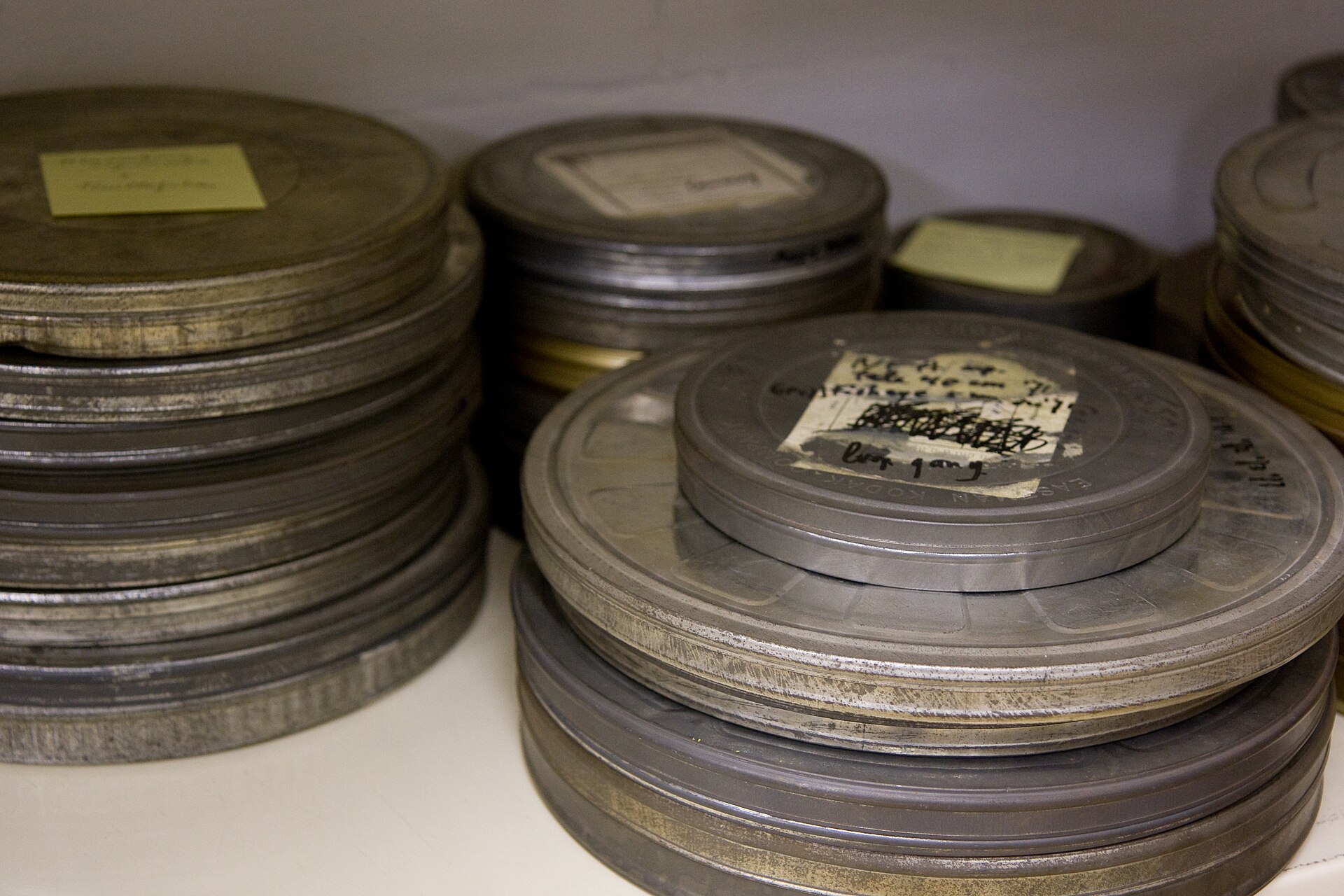
Her negatives are, by the estimate of an archivist who has spent four years with them, somewhere near 200,000.
“She is in the first rank and there is no argument about it among people who look at this material,” said the archivist, who works for a preservation collection and asked that it not be named because negotiations over the estate are continuing. “The thing about a great stills photographer is that they are making a second, parallel work — not documentation of the film but a separate set of pictures that happen to be taken in the same room. Adelaide’s are that. You can identify her frames without the credit.”
What identified them, colleagues said, was that she shot between the takes rather than during them. The standard practice was to shoot the scene as the camera saw it, matching the lighting and the blocking, producing an image usable in advertising. Miss Nunnally did that, competently and without much interest, and then spent the rest of the day photographing the crew: an electrician asleep on a case, a script supervisor’s hands, the eleven people it took to move a lamp. Studios did not want those pictures and did not know what to do with them, so for decades nobody asked her for the negatives.
Then, in the mid-1990s, people began asking.
The dispute that consumed her retirement was not about money, or was not mostly about money. Work made by a studio employee on a studio set generally belongs to the studio, a legal reality Miss Nunnally never contested. What she contested was that three different companies — successors to companies that were successors to her employers — each claimed portions of the same body of work, that none of them could produce a complete list of what they claimed, and that between them they had for years denied access to material that only she could identify.
“She had four hundred boxes in a storage unit in Glendale that she paid for out of a pension,” her nephew said. “Every year somebody’s lawyer would write and say that some of the contents belonged to them. She would write back and ask which ones. Nobody ever answered that question in thirty years.”
In 2019 she reached an arrangement with a preservation collection that resolved part of it: material from productions whose corporate ownership could be established went to the studios’ own archives, and the rest — the between-takes work, the crew pictures, the things nobody had ever wanted — was donated with her notes attached. She spent her final four years identifying frames, working four hours a day at a light table with a magnifier, until her eyes gave out in 2024.
The archivist said roughly 60 percent of the donated material now carries her identifications. The rest is, in the trade’s phrase, unattributed, and likely to remain so.
Adelaide Nunnally was born in 1933 in Pasadena. She never married. She was a fixture at a Franklin Avenue diner for fifty years, where she took, by the staff’s count, several hundred photographs of the counter, and where a print of one of them has hung in the back hallway since 1981.
She is survived by her nephew, of Altadena, and two great-nieces.
Her one stated wish about her own work, recorded in a 2011 oral history, was not about credit. Asked what she hoped would survive, she said she hoped somebody would eventually go through the crew pictures and put names to the faces, because the faces were the part she could no longer do.
“I know all of them,” she said. “That is the trouble. I am the only one who knows all of them.”