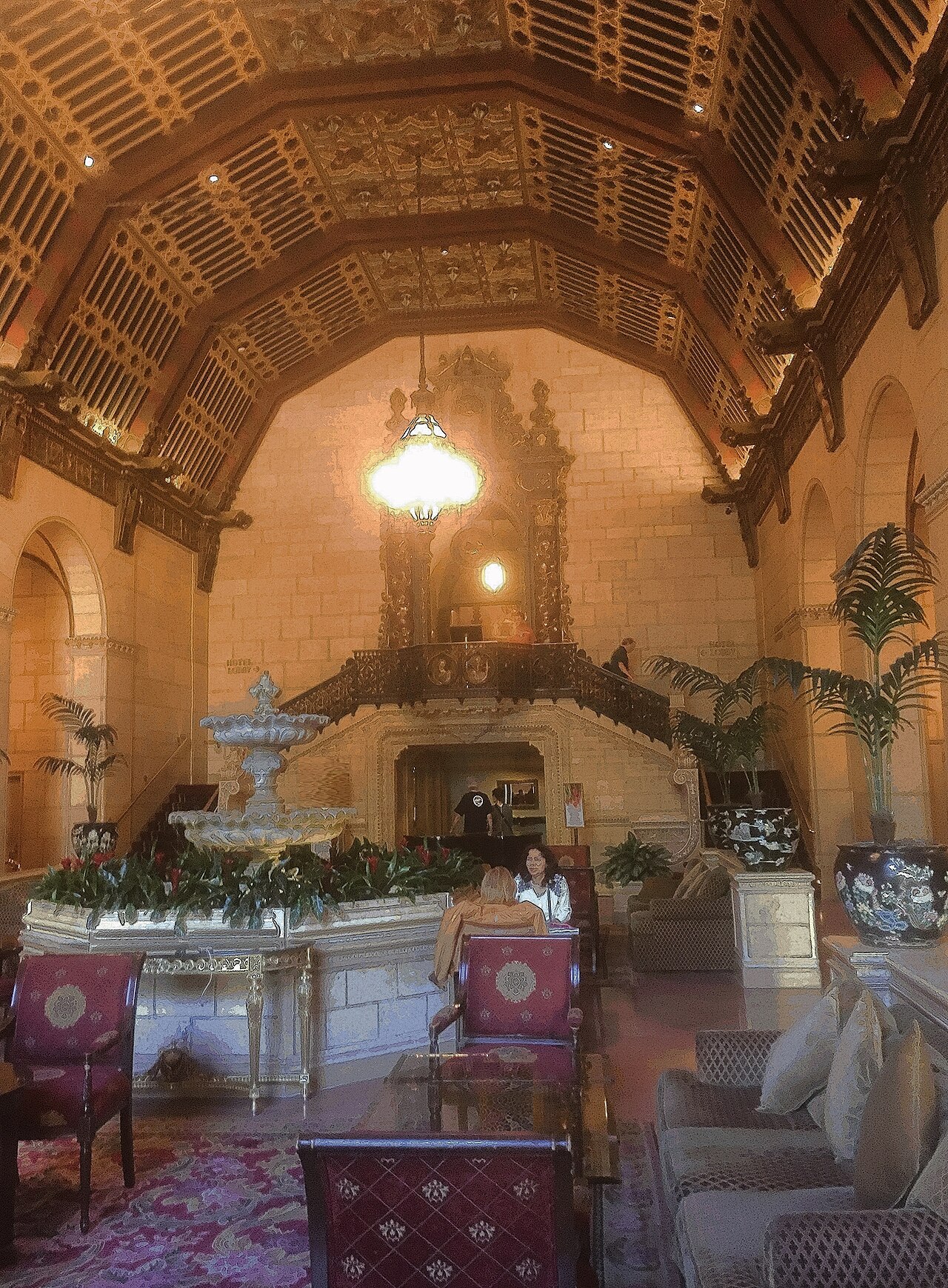
HOLLYWOOD — Look up in one of Hollywood’s surviving movie palaces and the ceiling above you — the rosettes, the scrolls, the deep gilded coffers — is plaster, and for sixty years, when a piece of it cracked or came down, the man they called was Aurelio Sabatini.
Mr. Sabatini, an ornamental plasterer who cast and restored the decorative plaster of the region’s old theaters and grand interiors, died May 6 at a hospital in Hollywood. He was 93. His granddaughter said the cause was pneumonia.
His was a trade of molds and patience. The decorative plaster of a 1920s theater was made by casting wet plaster in molds and running long cornices along a board, then setting the pieces overhead and painting or gilding them. When a section failed — from a roof leak, an earthquake, or simply the slow pull of a century of gravity — it could not be bought again. Sabatini would take a mold off a surviving rosette, cast a match, and work it in so the repair vanished into the original. Where no original survived, he carved a new model by eye from old photographs, and argued with anyone who wanted it done faster.
He knew the ceilings of the neighborhood’s theaters the way a doctor knows a longtime patient — which proscenium arch had a bad shoulder, which dome had been patched badly in the fifties and would need doing again. He climbed scaffolds into his eighties, to the alarm of the people who hired him, because he did not trust a younger hand to read the damage right or to match the gilding, which he mixed and laid himself.
“Aurelio could stand in the aisle, point up at a ceiling most of us thought was fine, and tell you exactly where it was about to let go,” said Perpetua Iglesias, a theater preservationist who worked with him on several restorations. “Then he’d cast the piece, climb up there, and set it so you’d never find it. He used to say a good repair is one that makes a liar out of the calendar.”
Aurelio Sabatini was born in 1931 and came to the craft young, apprenticing to an older plasterer when ornamental work was ordinary and every new theater and bank wanted it. He watched the trade nearly disappear as plain surfaces came into fashion and the buildings that carried his kind of work were demolished or gutted. What saved his late career, he said with some irony, was preservation — the same buildings, now protected, needing the very hands that had been trained to build them and were nearly gone.
In his final years he took a few apprentices and gave his molds, some of them lifted from ceilings no longer standing, to a group that restores historic theaters, on the condition that they be used to cast repairs and not hung on a wall.
He is survived by two daughters, five grandchildren, and by the ceilings of a handful of old theaters where audiences tilt their heads back before the show, admiring plasterwork that outlived the century largely because he refused to let it come down.