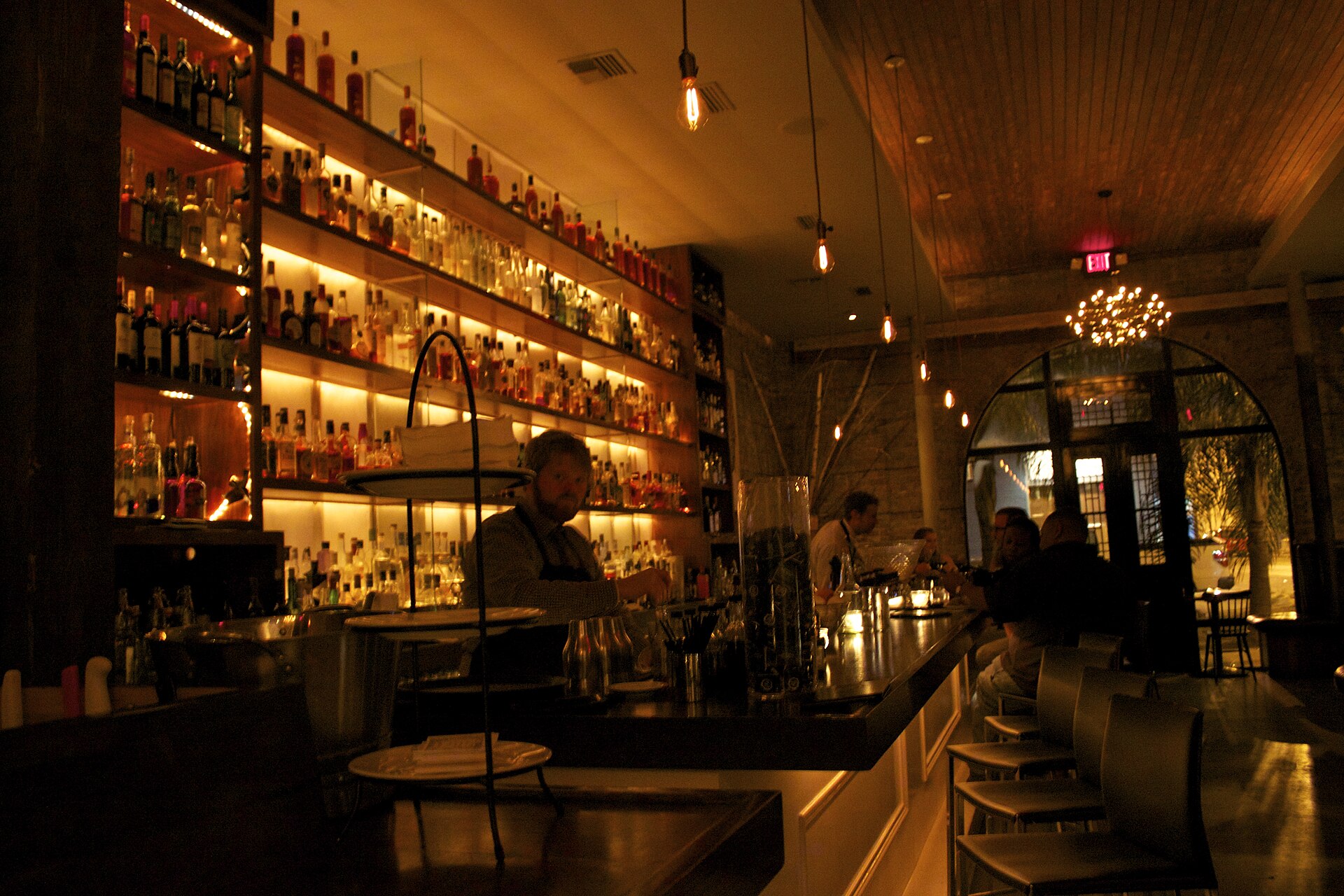
HOLLYWOOD — Dinah Corcoran could tell within a verse whether a room wanted to be sung to or sung with, and in fifty years behind a Hollywood piano she was almost never wrong.
Ms. Corcoran, who sang the American songbook from the bench of a small upright in a succession of neighborhood lounges — most famously a low-lit room off Cahuenga where she held a standing Thursday-through-Saturday engagement for nineteen years — died January 31 at her apartment in Los Feliz. She was 88. A niece said the cause was congestive heart failure.
The work she did is a nearly vanished kind. She was not a headliner and never pretended to be. She was a room singer, the musician who plays the corner of a bar four hours a night while people talk over her, and who understands that the job is not to stop the conversation but to give it a floor to stand on. She knew hundreds of songs from memory and could transpose any of them on request to suit a tipsy customer who wanted to sing along in the wrong key.
“Dinah played to the eight people who were listening, not the eighty who weren’t, and somehow that made the whole room feel better,” said Marty Sorrells, a pianist who accompanied her on and off for two decades. “She’d clock a couple who’d clearly had a fight, and forty minutes later she’d slip in ‘their’ song without a word, and you’d watch them reach across the table. That was the gig. Most people never noticed she was running it.”
Dinah Corcoran was born Doreen Corcoran in 1936 in Scranton, Pennsylvania, and came to Los Angeles at nineteen with the vague ambition every bus deposited here, which was to be discovered. She was not, in the way she had imagined. She was instead offered a fill-in shift at a piano bar when the regular player quit mid-week, and she found the thing she was actually built for. She kept the name Dinah, borrowed from a singer she admired, for the rest of her life.
She outlasted most of her venues. Rooms she sang in became parking structures, a bank branch, a juice bar, a boarded storefront and, in one case, a room that is a piano bar again under a different name. She moved down the block and kept singing. In her seventies she cut back to weekends; in her eighties, to a monthly night that regulars guarded like a secret, filling a small room to hear a voice that had gone smoky and lost none of its timing.
She never married and said, without apparent regret, that the room had been company enough. She kept a fat binder of requests scrawled on cocktail napkins, some from customers thirty years dead, and would occasionally play one unbidden, for herself.
She is survived by a niece, Carol Aldous of Pasadena, and two grandnieces. Her final engagement, a monthly Sunday she had kept up until the fall, ended the way all of them did — with the same slow ballad, the tip jar quietly full, and the bartender flicking the house lights once to say it was time.